|
|
From remarkable animal encounters to stories of resilience, loss, and a changing natural world.
|
|
|
|
|
Voices and updates from the front lines of wildlife crime and exploitation of nature
|
|
|
|
|
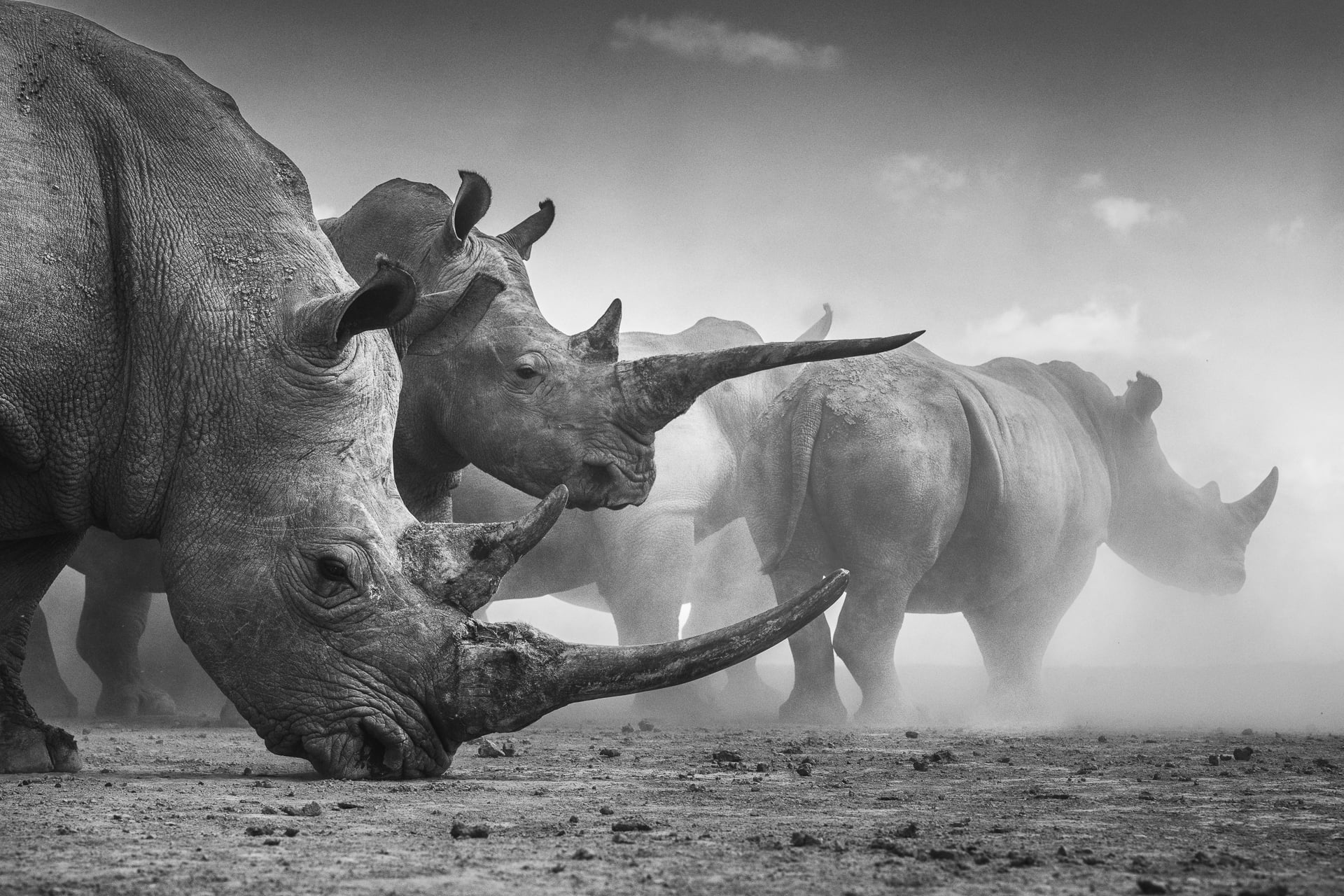
Rhinos, like these in a sanctuary in Kenya, naturally grow long horns. Across Africa, however, dehorning is a common strategy to protect them from poachers. (WPY/Federico Veronesi)
|
|
|
|
Rhino horns and circus rings: Wildlife Photographer of the Year
|
|
|
|
|
By Rachael Bale
November 6, 2026
|
|
|
|
|
Wildlife Photographer of the Year is the world’s most prestigious wildlife photography competition. Hosted by London’s Natural History Museum, it attracts some 60,000 entries each year. The jury, chaired by WIRE advisor Kathy Moran, must whittle the selection down to winners in 19 categories as well as choosing the Wildlife Photographer of the Year.
Federico Veronesi’s image above, called Sanctuary Survivors, earned him the Impact Award, for photography that inspires hope for the natural world. The rhinos live in Kenya’s Solio Game Reserve, Africa’s oldest private rhino refuge.
Private sanctuaries like Solio are a cornerstone of Kenya’s rhino conservation plan, Veronesi says, and they’re a big reason why the country’s rhino populations are growing. Heavily protected, they do not rely on dehorning to deter poachers to the same extent as parks and reserves in other countries do.
Allowed to grow naturally, an adult southern white rhino’s horn averages almost three feet long, with record-breakers measuring close to five feet.
“How lovely and rare to see rhinos that are not dehorned,” Moran says. “Conservation can work. Solio Ranch is proof.”
While Veronesi’s photo—with its perfect alignment of rhinos, the striking shape of the middle rhino’s horn, and a haze of dust that seems to evoke the species’ uncertain future—alludes to the threat of poaching and wildlife trafficking, many of the 2026 winners set out intentionally to show how the commercialization of nature affects wildlife.
These are the stories that motivate WIRE—and much of wildlife photography, as Moran has discussed with us before.
“Humans are increasingly crossing paths with wildlife,” she says, and photographers are paying more attention to uncomfortable—at times ugly—realities of what those intersections look like.
Here are some of the winning images.
|
|
|
|
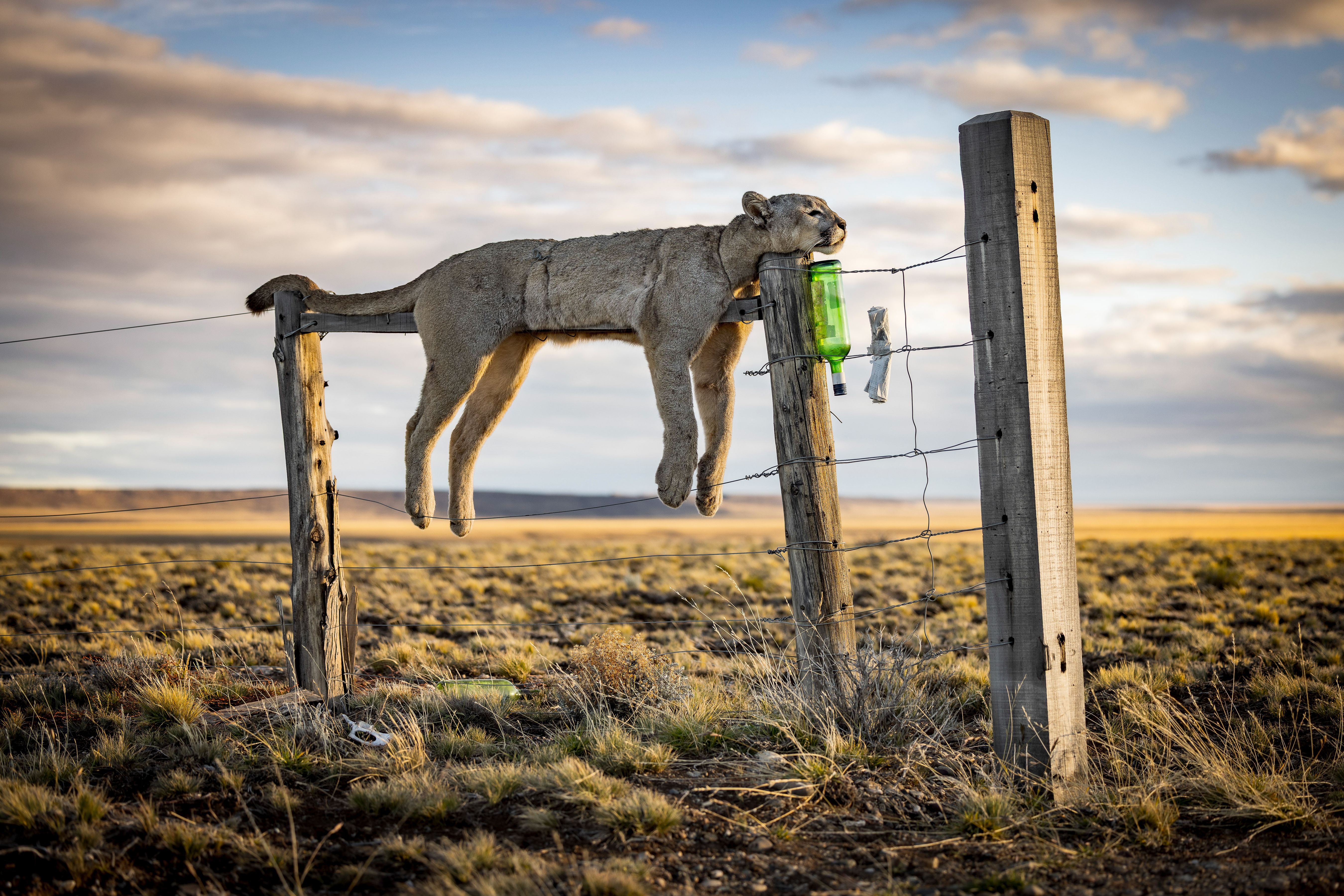
Warning Sign, by Francisco Negroni
|
|
|
|
|
A dead puma—head and tail carefully arranged, torso tied to a fence—is an Argentine rancher’s “warning” to other predators that might target cattle. This photo by Francisco Negroni won the Photojournalism category.
|
|
|
|
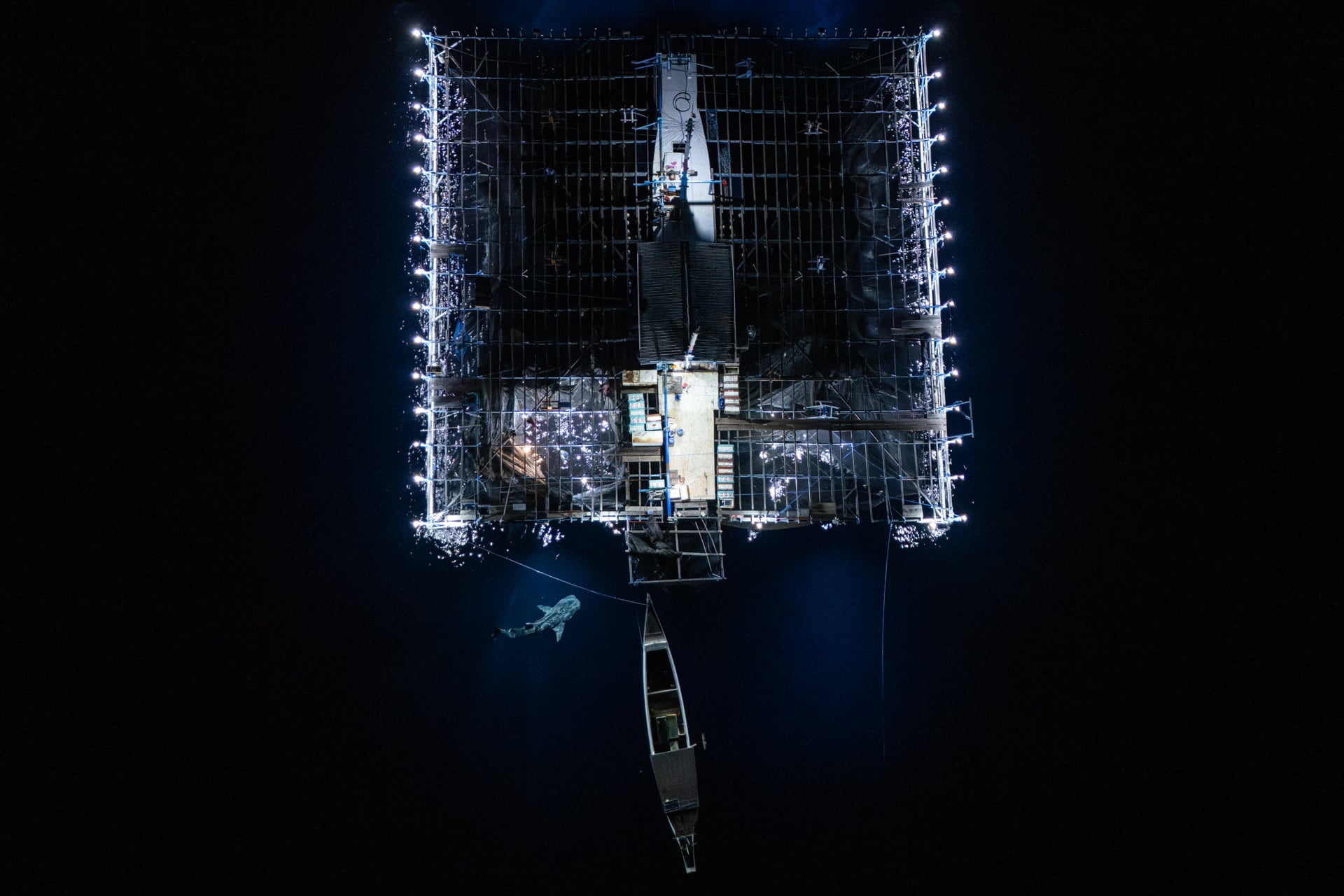
Night-Time Catch, by Alex Lindbloom
|
|
|
|
|
Look closely: A whale shark is swimming up to this mobile net-fishing platform off the island of Papua to investigate its catch. Ship strikes and entanglement in fishing gear pose bigger threats to whale sharks than fishing platforms, but the image underscores the delicate balance of the shared spaces and resources where humans and wildlife overlap. Alex Lindbloom’s image won the category of “Oceans: The Bigger Picture.”
|
|
|
|
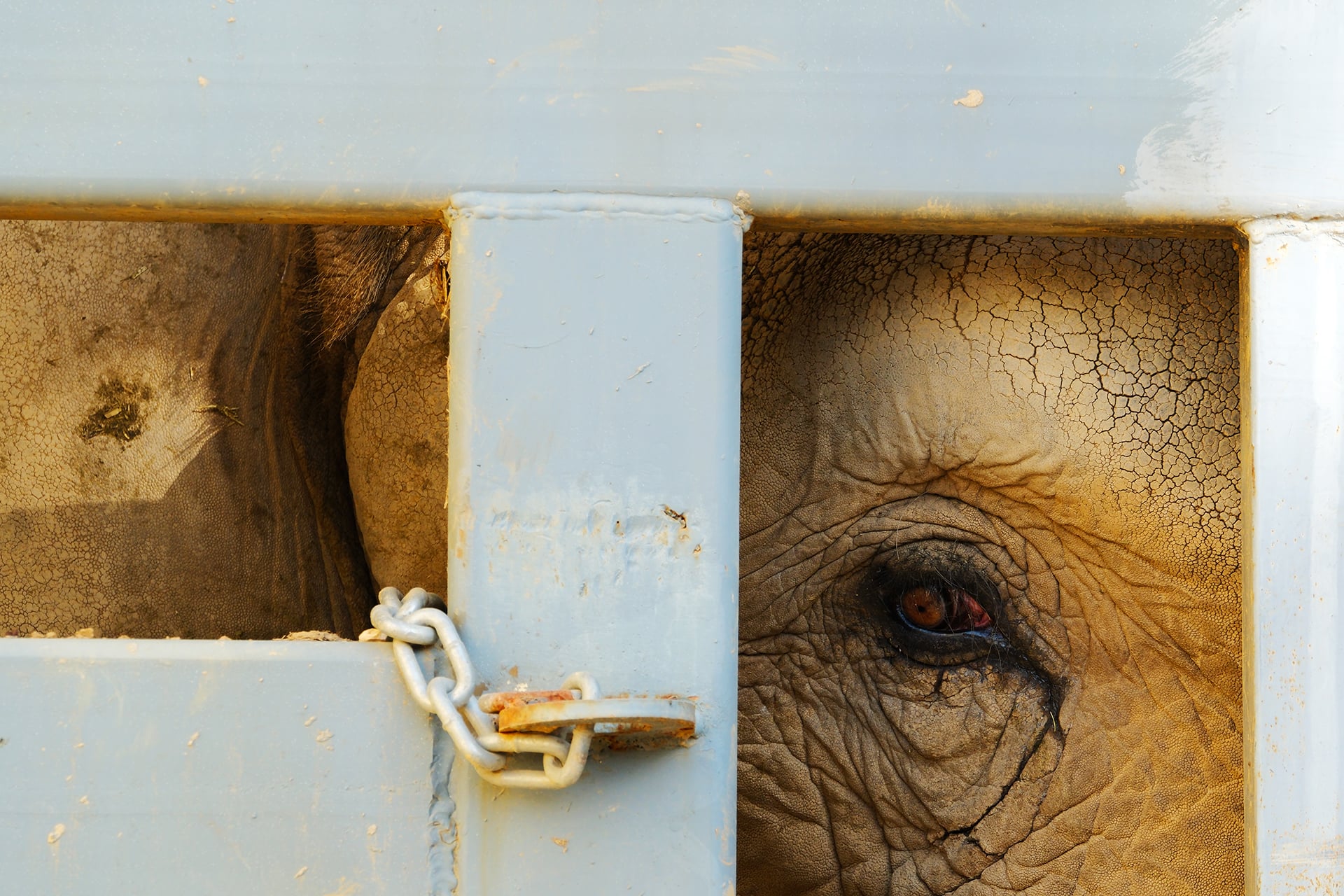
On the Inside Looking Out, by Yitong Zhao
|
|
|
|
|
In the category of Young Wildlife Photographer of the Year, ages 11 to 14, the jury commended this image by Yitong Zhao of an elephant peering through the bars of its enclosure at China’s Wuhan Zoo. “It’s really sophisticated seeing. It is so graphic,” Moran says. “It’s almost layered in that at first the colors are so soft that it takes you a minute to even recognize the horror of what [Zhao] photographed.”
|
|
|
|
Frozen in Time, by Seán O'Callaghan
|
|
|
|
|
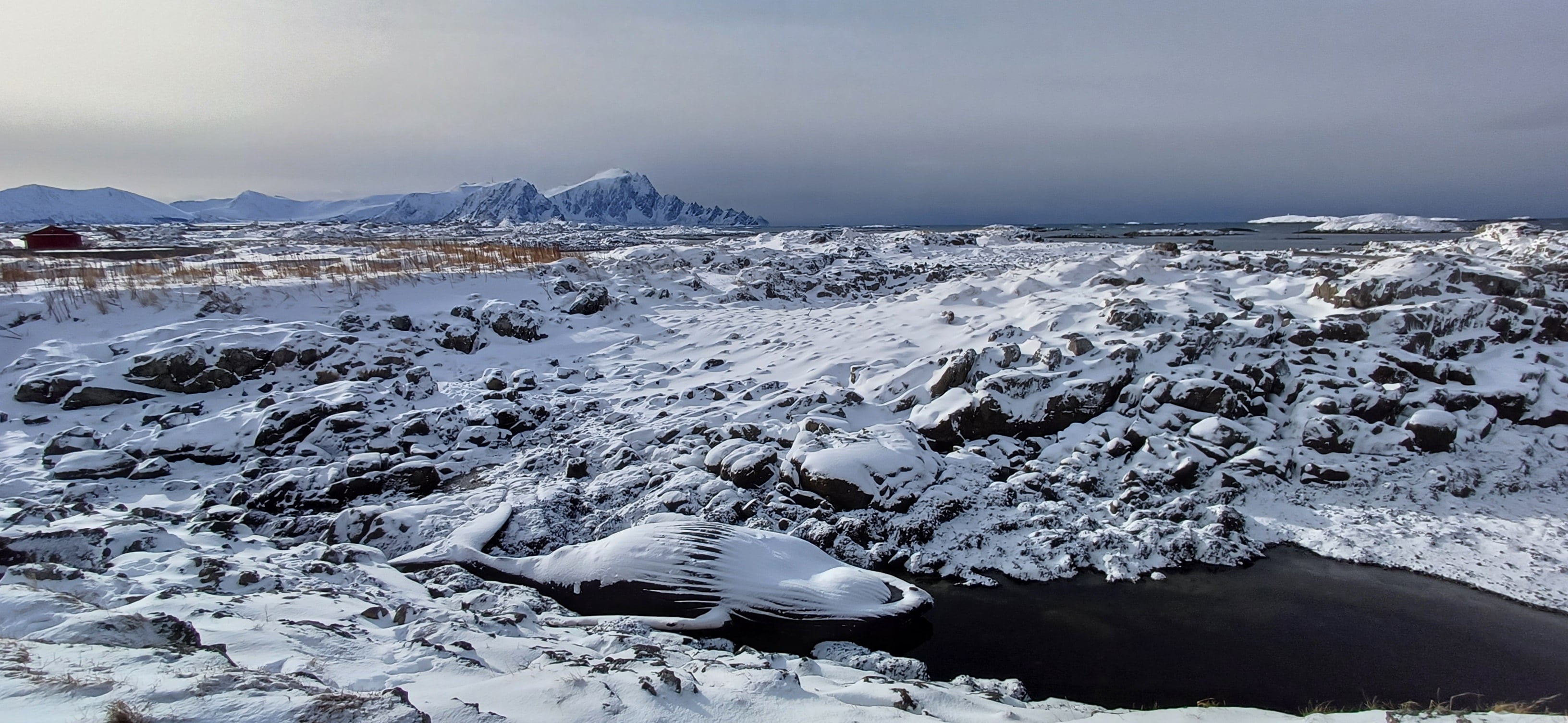
A dead humpback whale blends into the snowy Norwegian coast, its body marked by abrasions, suggesting it died after becoming entangled in fishing gear and exposing the usually invisible toll commercial fishing takes on marine life. This photograph by Seán O'Callaghan was highly commended in the Oceans category.
In this category, the jury also commended Aaron Sanders’ underwater photo of a dead gray reef shark entangled in a fishing net in Indonesia and Greg Lecoeur’s aerial photo of two sharks approaching a bleeding sperm whale, killed by a passing ship.
|
|
|
|
From Forest to Furnace, by Hugh Kinsella Cunningham
|
|
|
|
|
WPY/Hugh Kinsella Cunningham
|
|
|
|
|
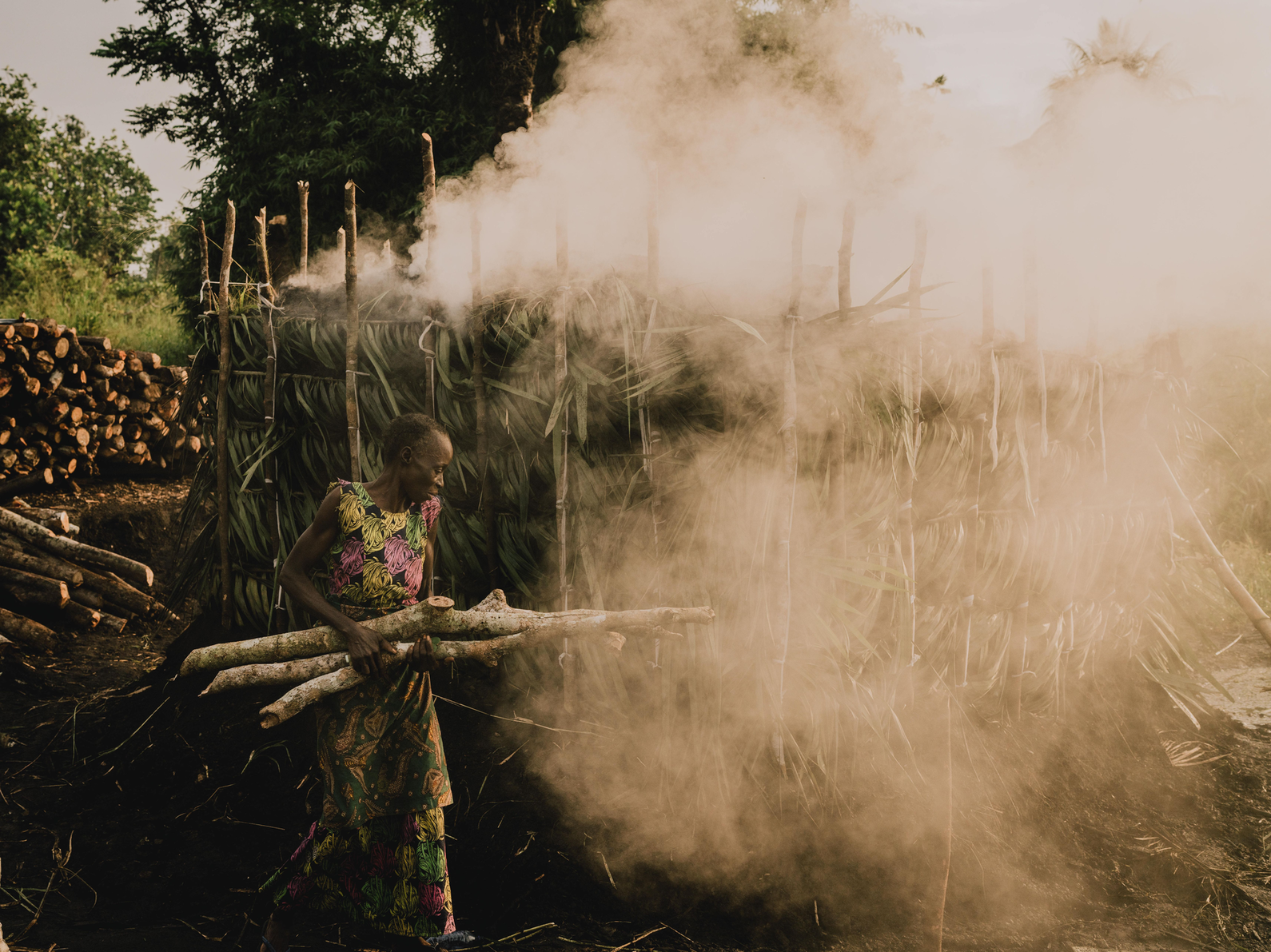
A woman at a market in the Democratic Republic of the Congo carries wood to make charcoal. The image captures a conservation dilemma: Charcoal production destroys the rainforest, but it is also a vital source of cooking fuel in communities lacking electricity. This photo by Hugh Kinsella Cunningham was highly commended in the Photojournalism category. (His aerial image of a logging depot on the Congo River was also highly commended.)
|
|
|
|
The Show Goes On, by Pietro Rojas
|
|
|
|
|
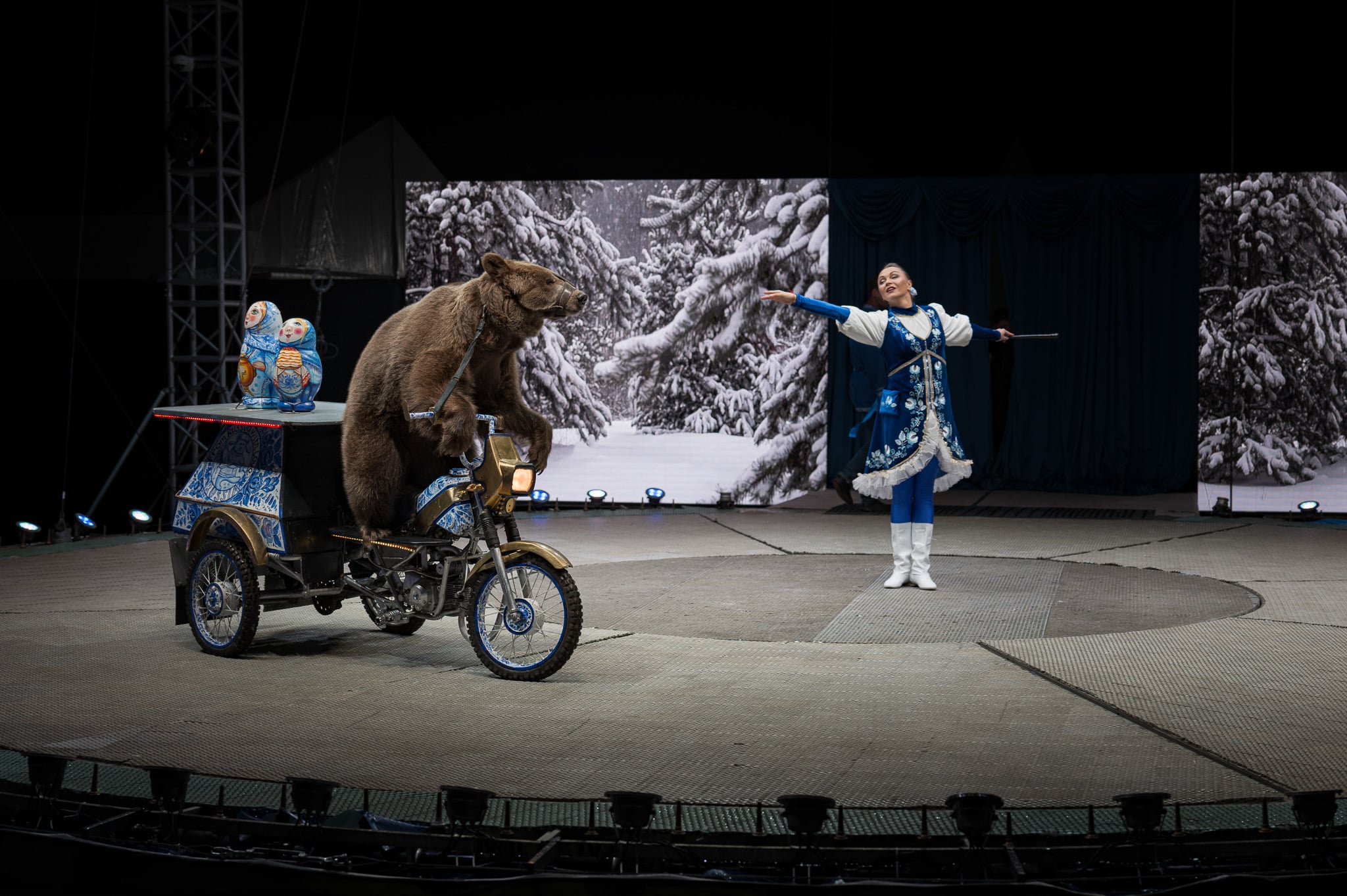
A muzzled brown bear rides a motorcycle in a circus performance in Doha, Qatar. More than 40 countries have banned wild animals in circuses, in response to documented mistreatment, inferior conditions, and changing public attitudes toward captive wildlife. This photo by Pietro Rojas was highly commended in the Photojournalism category.
|
|
|
|
|
Aside from revealing the stark realities of the commercialization and exploitation of nature, the Wildlife Photographer of the Year competition celebrates its beauty and wonder.
“A unifying thread that went through this year’s winners was a sense of cognition and awareness of emotion,” Moran says.
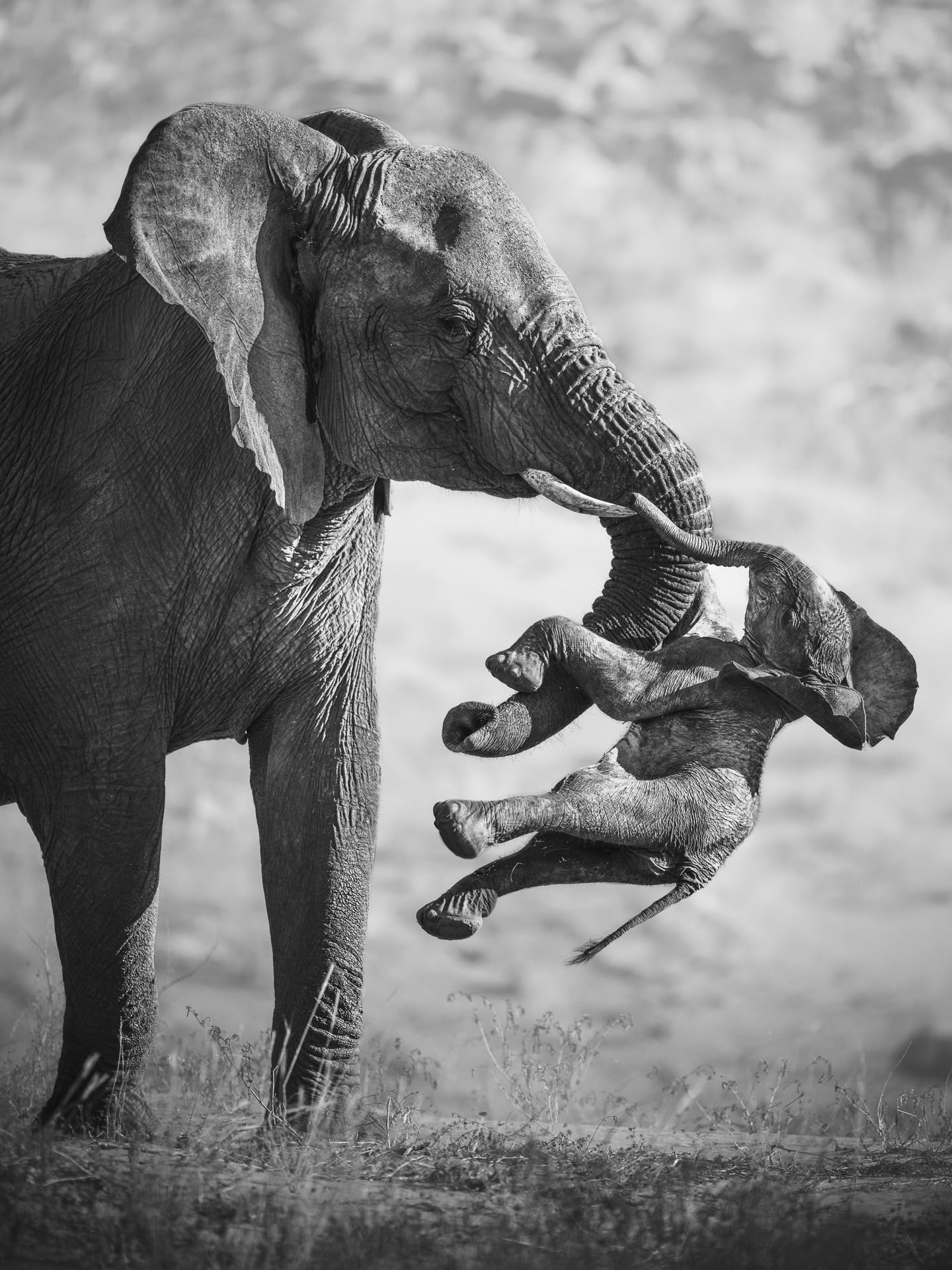
That’s what captivated the jury about the photo taken by this year’s Wildlife Photographer of the Year. In addition to winning the Impact Award for his rhino sanctuary photo, Veronesi took the grand prize for The Aftermath (below), a black-and-white image of a female elephant carrying her stillborn calf with her trunk across Namibia’s Huab River Valley. At once heartbreaking, beautiful, and unsettlingly familiar, it is further evidence that elephants, like humans, mourn their dead.
|
|
|
|
The Aftermath, by Federico Veronesi
|
|
|
|
|
Wildlife Photographer of the Year 2027 is now open. Photographers of all ages and experiences from around the world are invited to enter. The entry fee of £35 ($47) is waived for entrants age 26 or younger and for photographers from Africa, Central and South America, and the Asia-Pacific Region. The competition closes December 3. More information is here.
|
|
|
|
|
Did a friend forward this newsletter to you?
|
|
|
|
|
|
|
|
|
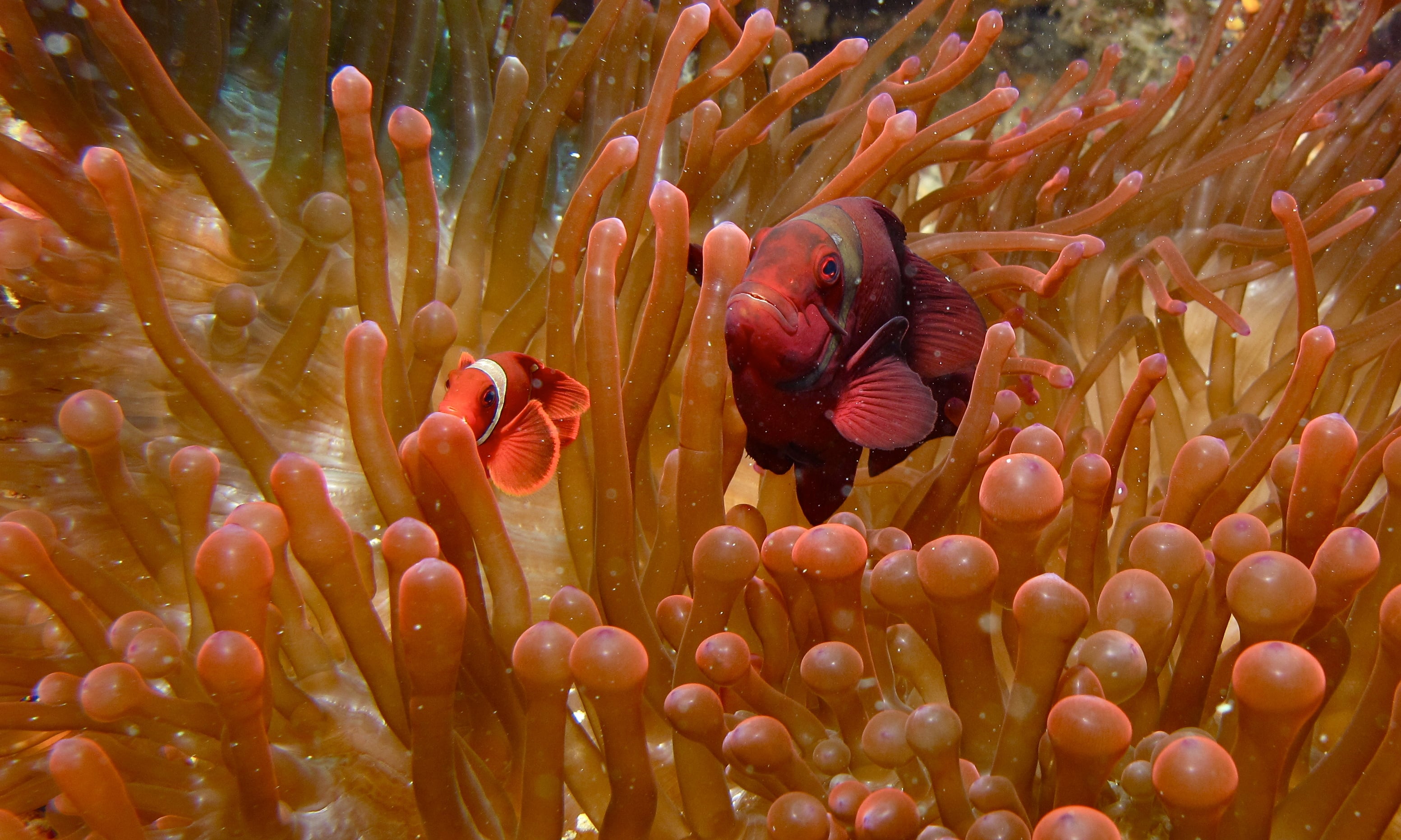
Anemonefish and other sealife may face new threats to their habitats from the emergence of underwater AI data centers. (Bernard Dupont)
|
|
|
|
-
Underwater AI data centers: A group of international scientists advising the United Nations has named underwater AI data centers among five emerging threats to marine ecosystems that warrant further scientific study. The other hazards include space debris falling into the ocean, releases of radioactive substances from deep-sea mining, the effects of armed conflict on marine ecosystems, and illegal drug dumping. Data centers, which house computer servers in sealed structures on the ocean floor, could pose risks to marine life through the discharge of heated water and other forms of pollution and habitat disturbance. The world’s first commercial underwater data center opened in the South China Sea, near Hainan Island, in 2023. The U.S. is now considering proposals from the technology company DeepGreen Holdings to build centers off Eastport, Maine and in Alaska’s Upper Cook Inlet, where a critically endangered population of beluga whales has fallen to about 330 animals.
-
California couple sentenced: Black bear gallbladders and cougar bones shipped to Vietnam. Lion teeth, shards of rhino horn, and a tiger pelt imported to Oregon. These were among the wildlife products a California couple, Linh Luu and Kevin Le, of Anaheim, helped traffic between the U.S. and Vietnam during a two-and-a-half-year period ending in May 2021. In one undercover operation, they accepted a $12,000 downpayment from U.S. Fish and Wildlife Service agents posing as rhino horn buyers and arranged to ship part of a horn to Oregon disguised as a household decoration. Luu and Le pleaded guilty to wildlife trafficking charges and were each sentenced to three years of probation and fined $10,000.
-
Illegal gold mining: Nearly 20,000 acres of Amazon rainforest along the Brazil-Colombia border has been destroyed by illegal gold mining, leaving a scarred landscape and polluted waterways, according to a new report by Amazon Conservation’s Monitoring of the Andes Amazon Program and the Field Museum of Natural History. “We have been monitoring illegal gold mining across the entire Amazon, and this area stands out as one of the most emblematic cases of transboundary environmental crime,” Matt Finer, lead author of the report said. “Illegal gold miners have been ravaging the Brazil side for years, and now they are expanding deeper into the Colombia side. The situation therefore requires a strategic, coordinated, binational response.”
-
Art fraud: A 13-year investigation by wildlife trade researchers has uncovered an extensive illicit pipeline moving walrus ivory between the U.S. and Bali. Walruses are protected under U.S. law, which generally prohibits the commercial export of their raw ivory, but allows Alaska Natives to carve and sell it as traditional handicrafts. In Bali, the researchers found strong indications that raw walrus ivory was smuggled from the U.S., carved by local artisans, and shipped back to the States to be passed off as authentic Alaskan Native art. “Everybody’s being taken advantage of,” lead study author Vincent Nijman told Science reporter Rachel Nuwer. “The Indigenous carvers in Alaska are having their opportunities outsourced to Bali; the Balinese carvers are being used because of their skills and cheap labor; and the buyers in the U.S. think they’re buying something that’s genuinely carved by Native Alaskans.”
|
|
|
|
Strange, but true
It took six cargo trucks to transport more than 10,000 critically endangered radiated tortoises rescued in 2018 from wildlife smugglers who had packed them into a two-story house in Toliara, Madagascar. About 8,900 survived and were rehabilitated by the Turtle Survival Alliance. In May 2024, the first thousand were released into a protected forest.
|
|
|
|
Like this newsletter? Share it!
|
|
|
|
|
|
|
|
Support WIRE
WIRE runs on curiosity, persistence, and generous support from people who care deeply about what happens to wildlife when no one else is watching. Investigative reporting takes time, expertise, and financial resources, especially when stories cross borders and powerful interests. Our work is funded by readers like you who believe these stories matter. Monthly supporters give us the stability to report deeply, publish independently, and follow the consequences of our investigations. If that resonates, you can support our work here:
|
|
|
|
|
|
|
|
|
Wildlife Investigative Reporters & Editors
Independent, nonprofit journalism exposing wildlife crime and exploitation of nature.
Get in touch: [email protected]
|
|
You received this email because you signed up on our website or made a donation.
|
|
|
|
|
|