|
|
How wildlife photography became a voice for animals
|
͏ ͏ ͏ ͏ ͏ ͏ ͏ ͏ ͏ ͏ ͏ ͏ ͏ ͏ ͏ ͏ ͏ ͏ ͏ ͏ ͏ ͏ ͏ ͏ ͏ ͏ ͏ ͏ ͏ ͏ ͏ ͏ ͏ ͏ ͏ ͏ ͏ ͏ ͏ ͏ ͏ ͏ ͏ ͏ ͏ ͏ ͏ ͏ ͏ ͏ ͏ ͏ ͏ ͏ ͏ ͏ ͏ ͏ ͏ ͏ ͏ ͏ ͏ ͏ ͏ ͏ ͏ ͏ ͏ ͏ ͏ ͏ ͏ ͏ ͏ ͏ ͏ ͏ ͏ ͏ ͏ ͏ ͏ ͏ ͏ ͏ ͏ ͏ ͏ ͏ ͏ ͏ ͏ ͏ ͏ ͏ ͏ ͏ ͏ ͏ ͏ ͏ ͏ ͏ ͏ ͏ ͏ ͏ ͏ ͏ ͏ ͏ ͏ ͏ ͏ ͏ ͏ ͏ ͏ ͏ ͏ ͏ ͏ ͏ ͏ ͏ ͏ ͏ ͏ ͏ ͏ ͏ ͏ ͏ ͏ ͏ ͏ ͏ ͏ ͏ ͏ ͏ ͏ ͏ ͏ ͏ ͏ ͏ ͏ ͏
|
|
|
|
|
Voices and updates from the front lines of wildlife crime and exploitation of nature
|
|
|
|
|
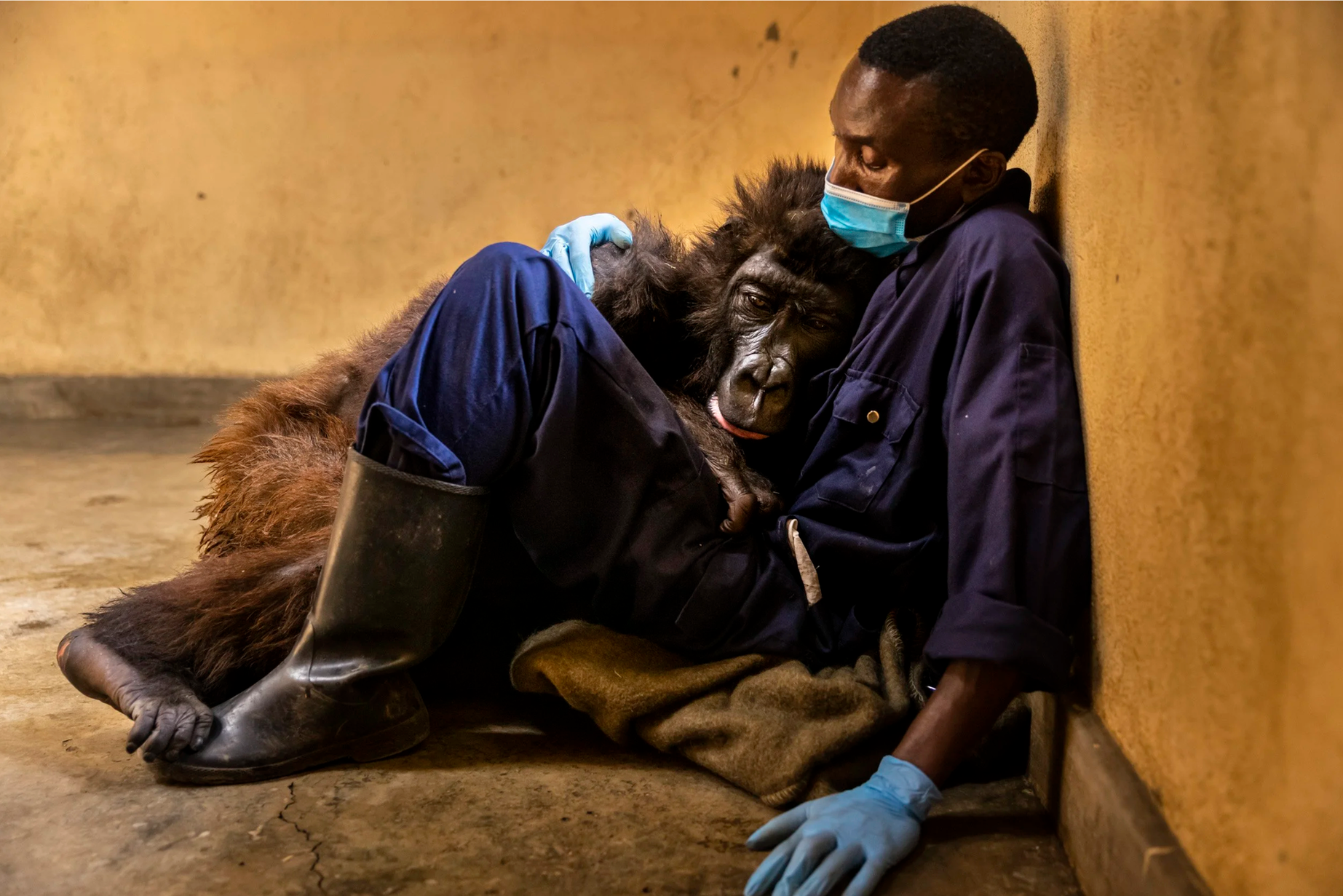
Ndakasi, an orphaned gorilla in the Democratic Republic of Congo rescued as a baby, died 14 years later, in 2021, in the arms of her lifelong caregiver, André Bauma. The photo reveals the profound connection between the pair, showing that the story of wildlife is ultimately also a human story. (Courtesy Brent Stirton)
|
|
|
|
From pretty pictures to hard truths
|
|
|
|
|
By Rachael Bale
March 13, 2026
|
|
|
|
|
Kathy Moran is widely regarded as one of the most influential figures in wildlife and conservation photography—though she’s not a photographer.
Kathy has a job that few people outside the media industry think about: photo editor. There are no bylines, no headlining gallery shows. And yet, through 41 years at National Geographic and beyond, Kathy has shaped how the world sees the wild.
She has helped craft some of the most memorable—and influential—visual narratives of the natural world. In doing so, she became a driving force behind the shift from wildlife photography as beautiful images of animals to wildlife photography as a tool for inspiring conservation action. Her portfolio, including stories on elephant and rhino poaching (edited by WIRE’s own Oliver Payne), the dangerous work of wildlife rangers, and the intimate lives of the planet’s most feared and most endangered animals, is evidence of her lasting impact on both the craft of wildlife photography and the public’s understanding of the real threats facing wildlife.
Kathy’s influence has also been personal. She’s helped launch and guide the careers of countless wildlife photographers, with clear-eyed vision and true friendship. Kathy “instinctively knows when to gently push, pull and praise,” says photographer Chris Johns, National Geographic’s editor in chief from 2005 to 2014. “I say this with conviction because for years she has guided and inspired me as a photographer, editor and friend.”
Retired-but-not-really, Kathy is now the chair of the prestigious Wildlife Photographer of the Year at London’s Natural History Museum and a freelance photo editor. We’re fortunate that she's one of WIRE’s advisors and will be photo editing our investigations.
She’s also one of my favorite people and someone I consider a mentor, so this week, Kathy and I talked about how she came to champion conservation photography and some of the most powerful photographs of animals she's ever come across.
WIRE: You joined National Geographic in 1981 during a legendary era for the magazine. How did you get your start, and what led you to specialize in natural history?
Kathy Moran: I joined in June of ‘81. The first position that I came in is what was called a “Twigger,” part of secretarial services. [Frank Twigger was the boss.] You floated all over the organization, and it didn't take long for me to recognize that the photo editing department was really where it was all happening. That was back in the days of 10 million members; the magazine couldn't spend enough, and they were reinvesting in stories left, right, and center. It really did feel intimate—you were part of a family, and you were part of something that really mattered. I think people lived so vicariously through the storytellers back then.
When I became a junior editor, it became clear that most of my colleagues weren't interested in natural history stories. They were more interested in social documentary or geography or science. It was like natural history was the “necessary little evil” that had to be done to keep readers happy. So I just kind of was like, Well, wait a minute. I think these stories sound great. I'll do it.
|
|
|
|
|
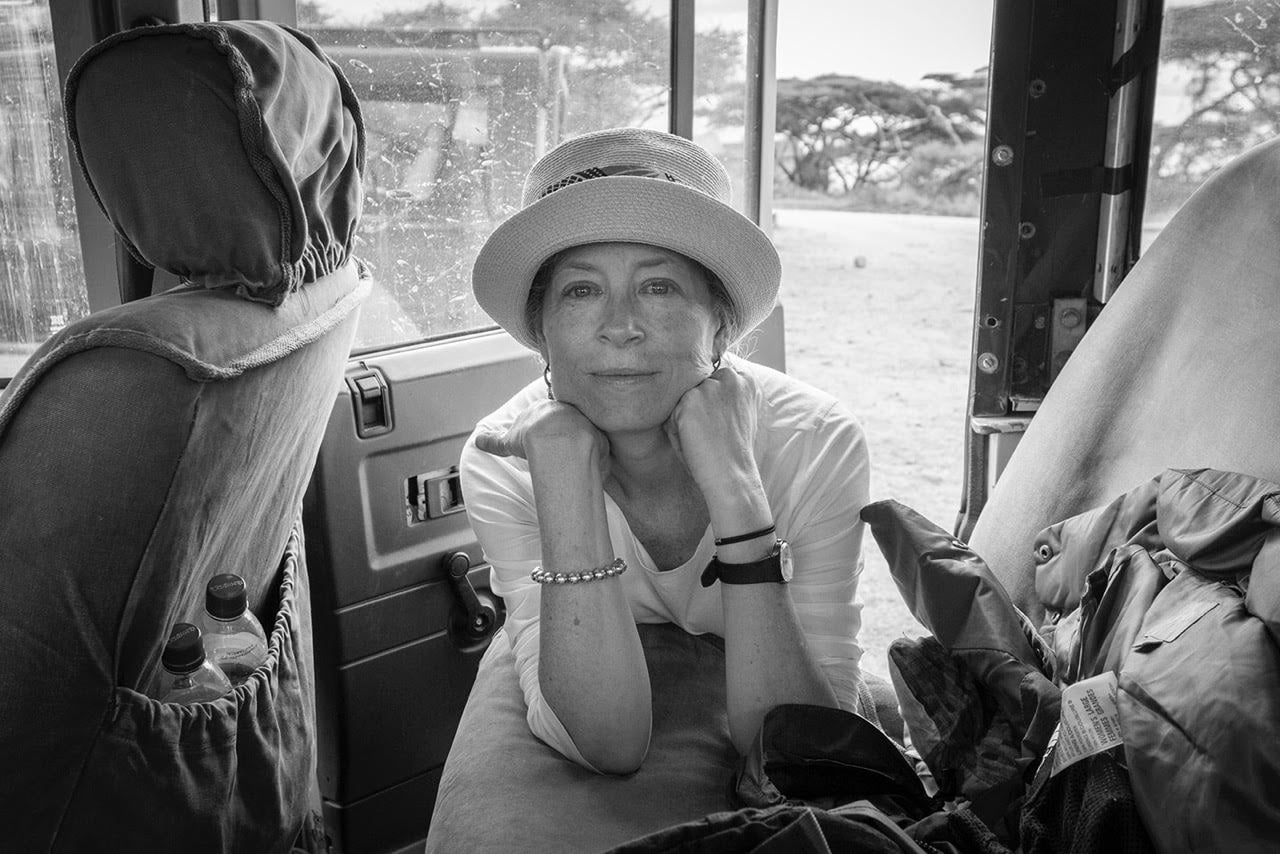
Kathy Moran accompanied photographer Nick Nichols on his fieldwork in Serengeti National Park, in Tanzania, to photograph lions in 2011. She often used her vacation time to tag along with photographers in the field because it made her a better photo editor, she says. (Courtesy David Griffin)
|
|
|
|
|
WIRE: How would you describe the traditional approach to wildlife photography and storytelling at the time?
KM: It was very formulaic. You get a portrait of the lion, you get a little lion pride behavior, or maybe you get a photograph of a scientist out in the field, looking concerned. Boom, you're done. I felt that the real issues were being missed, that closer look at the human-wildlife intersection. This bucolic natural world was being presented, and I’m sorry, it wasn’t Disneyland out there. There was not only conflict but there was real human suffering as well.
WIRE: What was the turning point for you?
KM: Ndoki, in 1981, was my first big project. The story was about the establishing of the Ndoki National Park, in the Republic of Congo, and it had been started with a senior editor named Mary Smith. Mary was one of the most highly placed editors within the organization, and she was retiring, so she handed it off to me.
It was, at that point, the most expensive story the magazine had ever done. They DHL’d an ultralight aircraft to the Congo so they could do aerial photography. It was the first time, I believe, where a photographer and not a scientist was using camera traps to try to make images. They were working in one of the most challenging environments you could possibly imagine, and trying to be groundbreaking with the imagery.
At this point, Nick [photographer Michael “Nick” Nichols] is about halfway through the coverage, Mary’s retiring, and they’re out of money. So Nick comes back into the office and finds out Mary has reassigned the story to me. And he shows up in my doorway—and I was young, OK?—and he looks and he says, “Oh, goddamn, they gave me the baby.”
I had taken his work, and I had done a complete re-edit. And he was very happy with that edit—he felt that it reflected how he saw things. And then I had to redo the entire budget, and go up and ask for a significant amount more to bring it over the finish line. And I did.
Nick was like, “Well, OK, maybe this is going to work after all.” And it turned out, it was one of the best partnerships I’ve ever experienced.
|
|
|
|
|
Did a friend forward this newsletter to you?
|
|
|
|
|
|
|
|
|
WIRE: How did that partnership with Nick lay the groundwork for what you call “photography as evidence?”
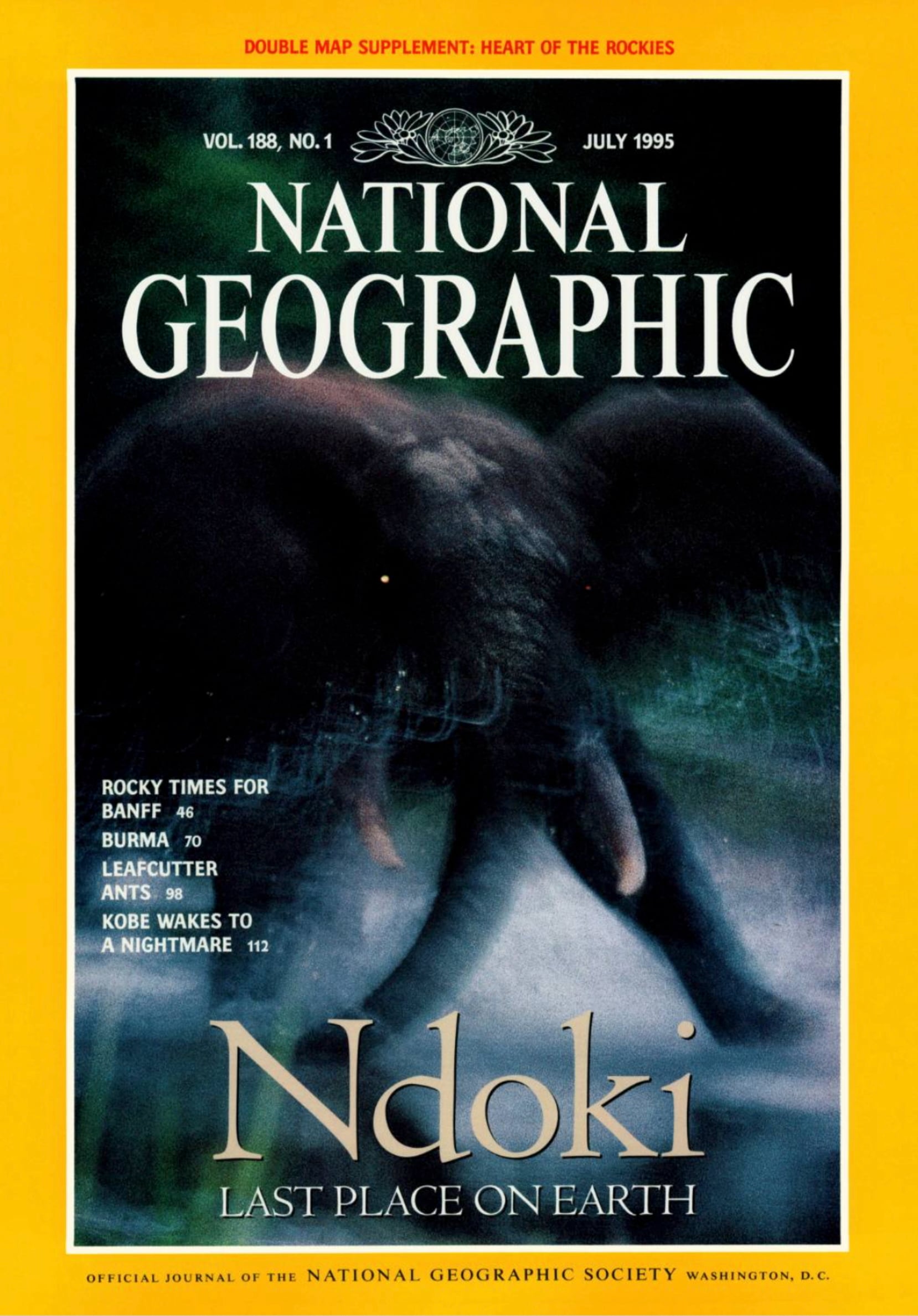
KM: The cover that we had for that story, which was the blurry charging elephant, was really controversial. People either loved it or they hated it. Where someone else says, I see a mistake, I looked at that photograph, and I saw Nick capturing the raw energy of that animal. I saw a photographer who had a unique way of seeing, and was never going to compromise that way of seeing to make any publication happy. You could either see it the way Nick saw it, or you were never going to get it.
|
|
|
|
|
The idea that photography is evidence and that photography can really impact conservation outcome was more than we had ever imagined. There’s an image of the chimps from the Goualougo Triangle. These chimps were completely naive; they’d never seen people before. It was astonishing. But the triangle was not originally part of the national park. It was owned by a German logging company.
By the time we’d published the Megatransect stories, Mike Fay took all of Nick’s photography, and he met with then-President Omar Bongo of Gabon. From that, Gabon’s national park system was created. And then, the logging company that owned the Goualougo Triangle gave it to the Ndoki National Park. It was just this lovely bow tie on the whole thing. [The Megatransect series was three articles photographed by Nichols chronicling ecologist and conservationist Mike Fay’s 2,000-mile trek across Republic of Congo and Gabon to document the wildlife and ecology of the Congo Basin]
|
|
|
|
|
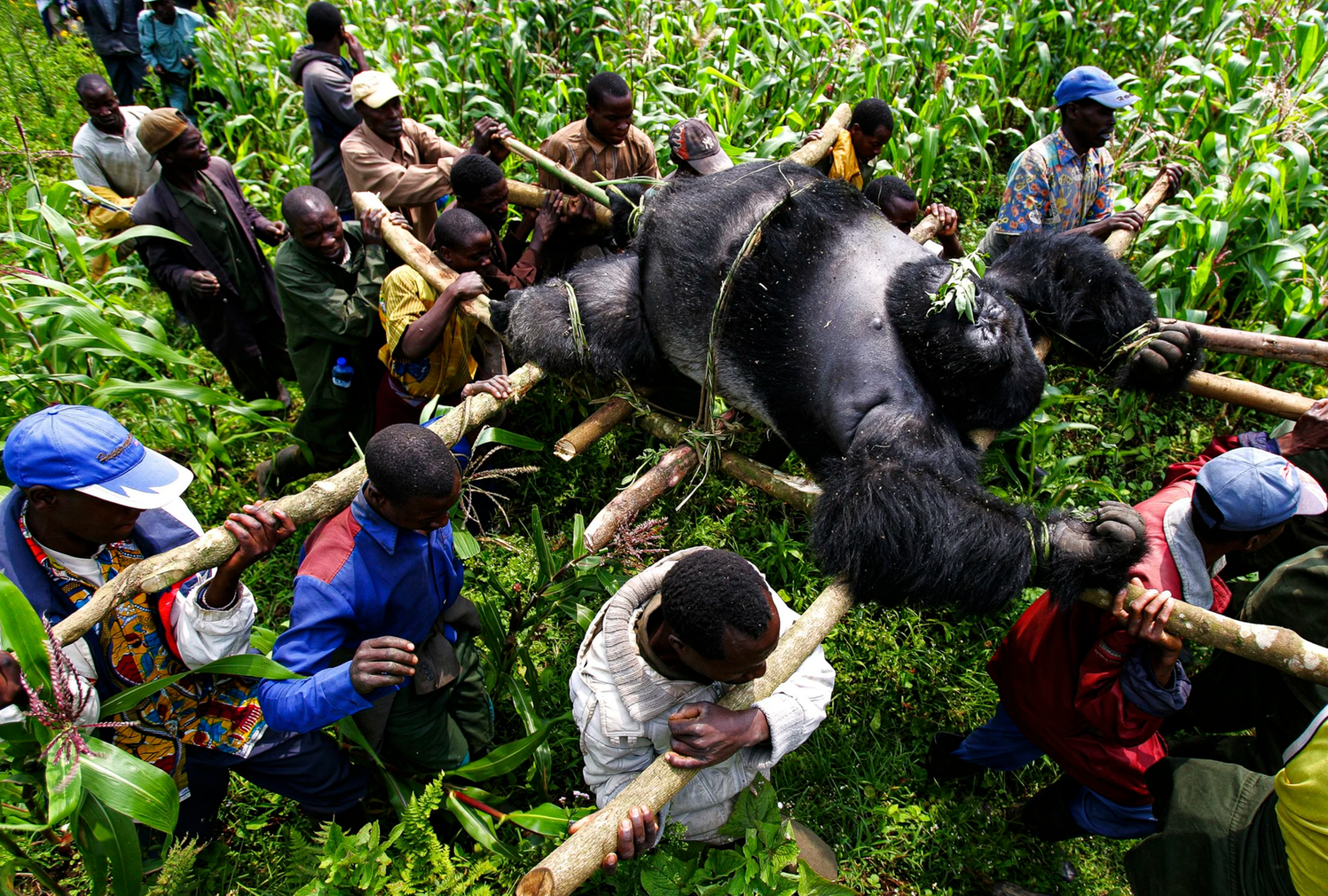
Brent Stirton’s 2007 photo of Virunga National Park rangers and people from a nearby village carrying the body of a slain mountain gorilla out of the forest in the Democratic Republic of Congo ignited global outrage. This was a watershed image for photo editors in their growing recognition that the human story is inseparable from the wildlife story, Kathy says. (Courtesy Brent Stirton)
|
|
|
|
|
WIRE: I know there was a lot in-between, but let’s jump ahead to 2007, to Brent Stirton’s image of people carrying the mountain gorilla believed to have been killed by illegal charcoal manufacturers.
KM: He made one of the most visceral images I've ever seen. It was an image of such grace and compassion for this animal. It was one photograph that really changed the dynamic. At that moment, we realized that if we were leaving people out of the storytelling, for good, for bad, then we weren't telling the story that needed to be told. If you weren't looking at the issues, you didn't have an opportunity to also explore the solutions.
WIRE: How did this begin to play out more often in stories you worked on?
KM: We did a story in 2008 with Brian Skerry on the North Atlantic right whales. We worked with researchers to get an ID of every known living whale—at the time, it was around 400. We created a gatefold in the magazine. When you opened it, you literally held the entirety of a species in your hands.
One of the biggest threats when that story was published were cows and calves being hit by ships. And so the story helped lead to speed limits being implemented in shipping lanes during migration and calving seasons. [Last week, the Trump administration announced it is considering rolling back those speed limits.]
|
|
|
|
|
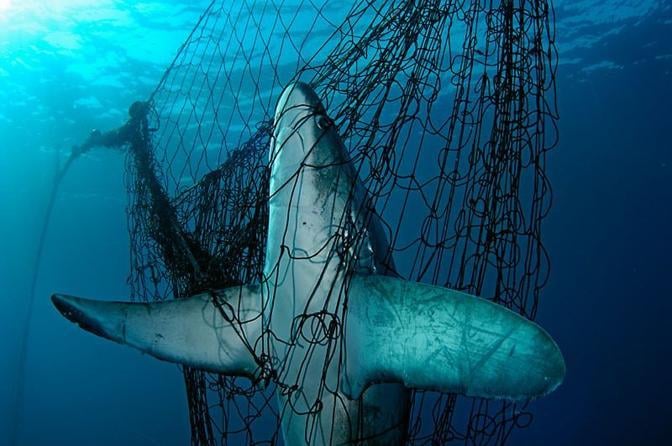
This image of a thresher shark entangled in a gillnet—one of an estimated hundred million sharks killed each year—is a compelling example of how conservation photography serves as witness to humans’ exploitation of nature. (Courtesy Brian Skerry)
|
|
|
|
|
WIRE: WIRE looks at how humans’ exploitation of nature affects wildlife. What are some other images that really confront us with that reality?
KM: Brian Skerry’s photograph of the thresher shark in the net—the crucifixion, as we all call it. If that photograph just didn't make people stand back and say, We have to rethink fishing practices. We have to rethink our relationship with animals like sharks.
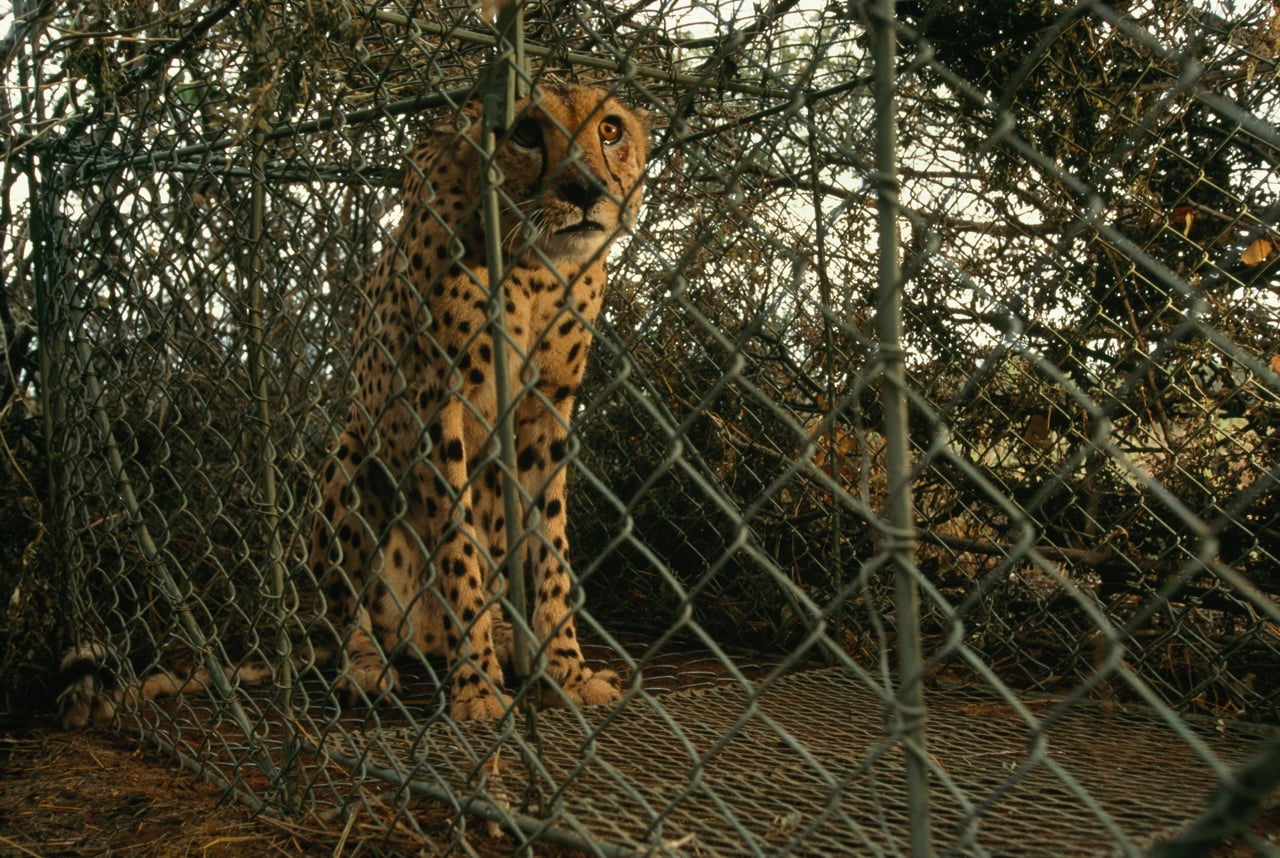
Chris Johns made one really haunting photograph of a cheetah that had been captured cowering in a cage, and another equally haunting image of four cheetah fetuses that a farmer kept in a jar on his mantel after shooting the mother. Those were images that we would have never considered before. They were both published, which was a big deal.
|
|
|
|
|
This 1999 photo of a cheetah trapped by herders in Namibia after it was found near injured calves is the kind of image National Geographic wouldn’t have published 20 years earlier, Kathy says, because it doesn’t show the natural world as “bucolic.” When the photographer, Chris Johns, became editor-in-chief of the magazine several years later, conservation-focused wildlife photography increasingly became the norm, she says. (Courtesy Chris Johns)
|
|
|
|
|
WIRE: Another image that comes to mind is of the dead rhino with its horn hacked off, the one that won Brent Wildlife Photographer of the Year in 2017.
KM: Again, how could you tell a story about what’s happening to rhinos without showing what’s happening to rhinos? The image that Brent made is so beautifully horrific. It’s a real gut punch. That’s what you do when you commoditize this animal. It was also the first time that Wildlife Photographer of the Year chose an image like that to be the overall winner. It was a very brave step because up until that moment, people were always expecting, at the end of the awards ceremony, to see this beautiful representation of wildlife. Instead, that jury said, No, we have to stand behind this photograph. We have to show what is happening in the natural world—good, bad, and in-between. That photograph was really galvanizing. [Kathy was not on the jury of WPY that year.]
WIRE: How has the transition from classic wildlife photography toward conservation-focused work broadened the range of photographers covering these stories?
KM: Taking more of a conservation approach to these stories really opened the door for a more diverse group of photographers. Wildlife photography became more appealing for photographers who weren’t interested in sitting in a blind all day with a long lens. Look at the cheetah trafficking story you did with Nichole Sobecki—that’s incredibly powerful wildlife conservation photography, and there’s not one traditional natural history image in that coverage.
WIRE: Your edits, and much of wildlife photography these days, highlights the emotional lives of animals. How did your own views about animals shape the way you approached these stories?
KM: I don't see how you can look at any animal and not see a sentient creature. This is a thinking, feeling being, and to deny them that sense of self? I’ve seen animals scared. I've seen them hurt. I've seen them full of joy. Every day there’s proof that it’s a big world, and it’s not just about us. They have to eat and they have to fight to survive the way we do too.
It was an honor to tell those stories, and it was a responsibility to tell those stories. The photographers I worked with felt that every step of the way. They gave everything to make photographs that they believed could bring a different level of understanding and compassion—and hopefully, at the end of the day, positive change.
Check out some of Kathy’s award-winning portfolios centered on conservation photography here, here, and here.
|
|
|
|
|
WIRE at NYU: “Grey Zone” screening & panel: On March 25, New York University’s Science, Health, and Environmental Reporting Program will screen WIRE’s short documentary “Grey Zone,” followed by a panel discussion with WIRE Editor-in-Chief Rene Ebersole and filmmaker Carissa Henderson. The pair will discuss the reporting behind the film, which investigates the global trade in African grey parrots—one of the world’s most trafficked birds—the challenges of documenting wildlife trafficking, and how investigative journalism and visual storytelling can help expose hidden environmental crimes. Register here to attend virtually. If you can’t make it, you can still check out the film on Rolling Stone’s Youtube channel here.
|
|
|
|
-
Eel smuggling: European authorities are ramping up enforcement against criminal networks trafficking European eels, a species that has declined by more than 90 percent since the 1980s. Writhing masses of juvenile “glass eels,” often packed into suitcases or hidden in shipments moving through airports, are smuggled from Europe to aquaculture farms in Asia, to be raised for unagi. Investigators say the multimillion dollar trade has become one of Europe’s most lucrative wildlife crimes.
-
Moving parts: A Massachusetts man has pleaded guilty to trafficking wildlife parts—–including orangutan skulls, a narwhal tusk, a leopard skin, and an otter skeleton—into the United States. Adam Beid bought the parts from sellers in Cameroon and Indonesia who falsely labeled the shipments as “decorative masks” and other items. He resold or traded them to customers in the U.S. Facing prison time and up to hundreds of thousands of dollars in fines, Beid is scheduled to be sentenced in early April.
-
RIP courageous rangers: On March 3, five rangers were killed in an armed attack on the Upemba National Park headquarters, in Democratic Republic of Congo. So far, there have been no public statements about the motivation of the attack, including whether it was targeted, like other parks in the regions, over disputes about natural resources, including charcoal, minerals, and fertile land. Paying tribute to the rangers who died, the Prince of Wales wrote on Instagram: “Environmental protection has become one of the most dangerous jobs on the planet and the bravery of those on the frontline of conservation must never be forgotten.”
|
|
|
|
Species spotlight: Pangolin
|
|
|
|
|
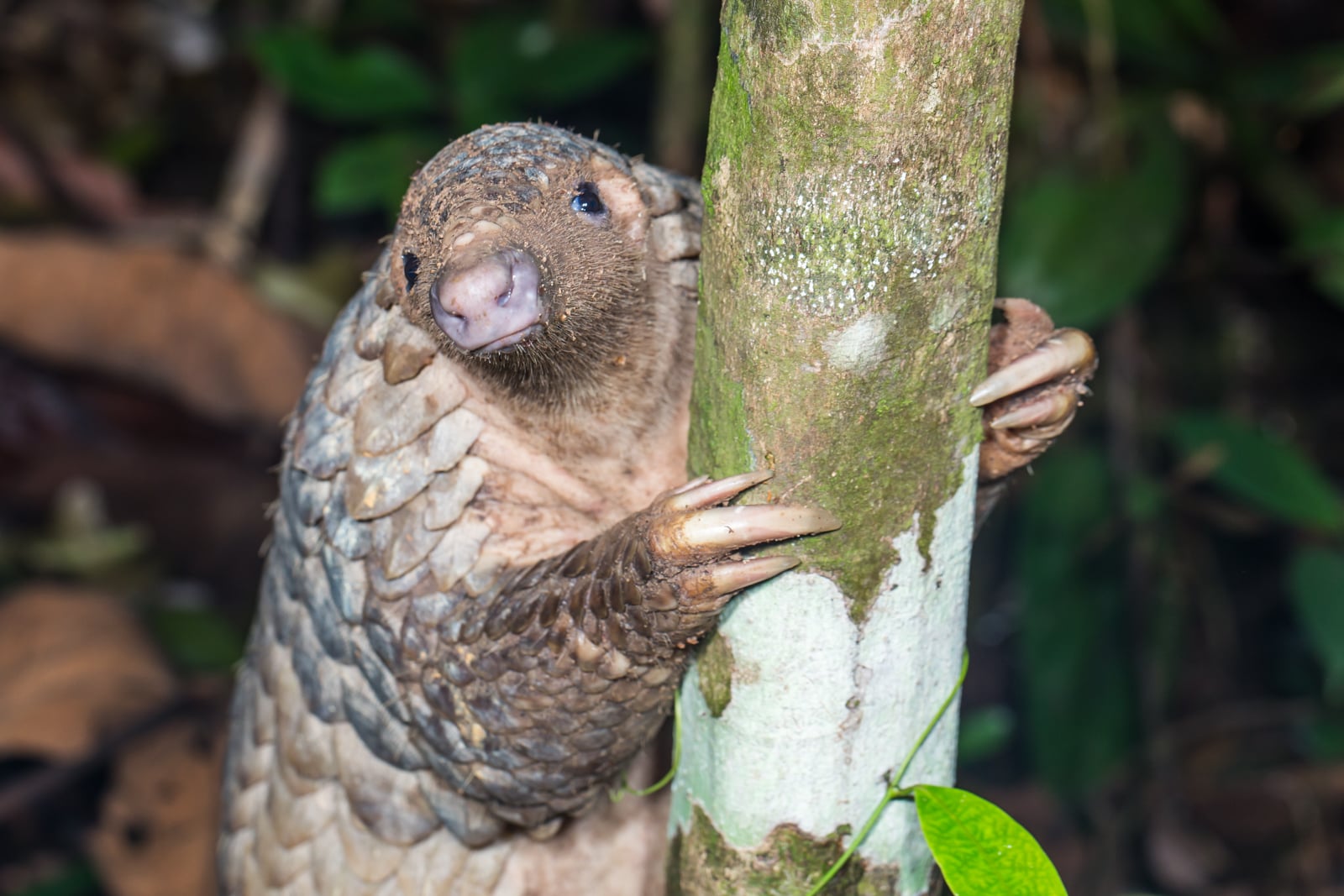
Shy, nocturnal mammals native to Africa and Asia, pangolins are prized by wildlife traffickers for their armor-like scales used in traditional medicine and luxury products. (Edwin Tan, Wildscreen Exchange)
|
|
|
|
|
Pangolins are the world’s most trafficked mammals. These shy, nocturnal mammals—often called “scaly anteaters”—are native to forests and savannas across Africa and Asia, where they use long, sticky tongues to slurp ants and termites. Their armor-like scales, made of keratin (the same material in our fingernails), are prized in traditional medicine and luxury products. A new global report found that more than half a million pangolins were involved in wildlife trade seizures in an eight-year span from 2016 to 2024—likely just a fraction of the animals illegally traded.
|
|
|
|
Strange, but true
Not even bees are safe from wildlife crime. Right now, at the height of California’s almond season, thieves are targeting the billions of honeybees trucked in each year to pollinate more than a million acres of orchards. With big money in pollination services—almonds depend almost entirely on rented hives—bee rustlers steal boxes, strip identifying marks, and lease the bees to other growers. In early February, over 170 hives were stolen from an orchard in the heart of San Joaquin Valley. A record heist occurred in 2017, when authorities recovered 2,500 stolen hives worth nearly $875,000.
|
|
|
|
Like this newsletter? Share it!
|
|
|
|
|
|
|
|
Support WIRE
WIRE runs on curiosity, persistence, and generous support from people who care deeply about what happens to wildlife when no one else is watching. Investigative reporting takes time, expertise, and financial resources, especially when stories cross borders and powerful interests. Our work is funded by readers like you who believe these stories matter. Monthly supporters give us the stability to report deeply, publish independently, and follow the consequences of our investigations. If that resonates, you can support our work here:
|
|
|
|
|
|
|
|
|
Wildlife Investigative Reporters & Editors
Independent, nonprofit journalism exposing wildlife crime and exploitation of nature.
Get in touch: [email protected]
|
|
You received this email because you signed up on our website or made a donation.
|
|
|
|
|
|