|
|
What happens when the law stops protecting the habitats where endangered species live?
|
|
|
|
|
Voices and updates from the front lines of wildlife crime and exploitation of nature
|
|
|
|
|
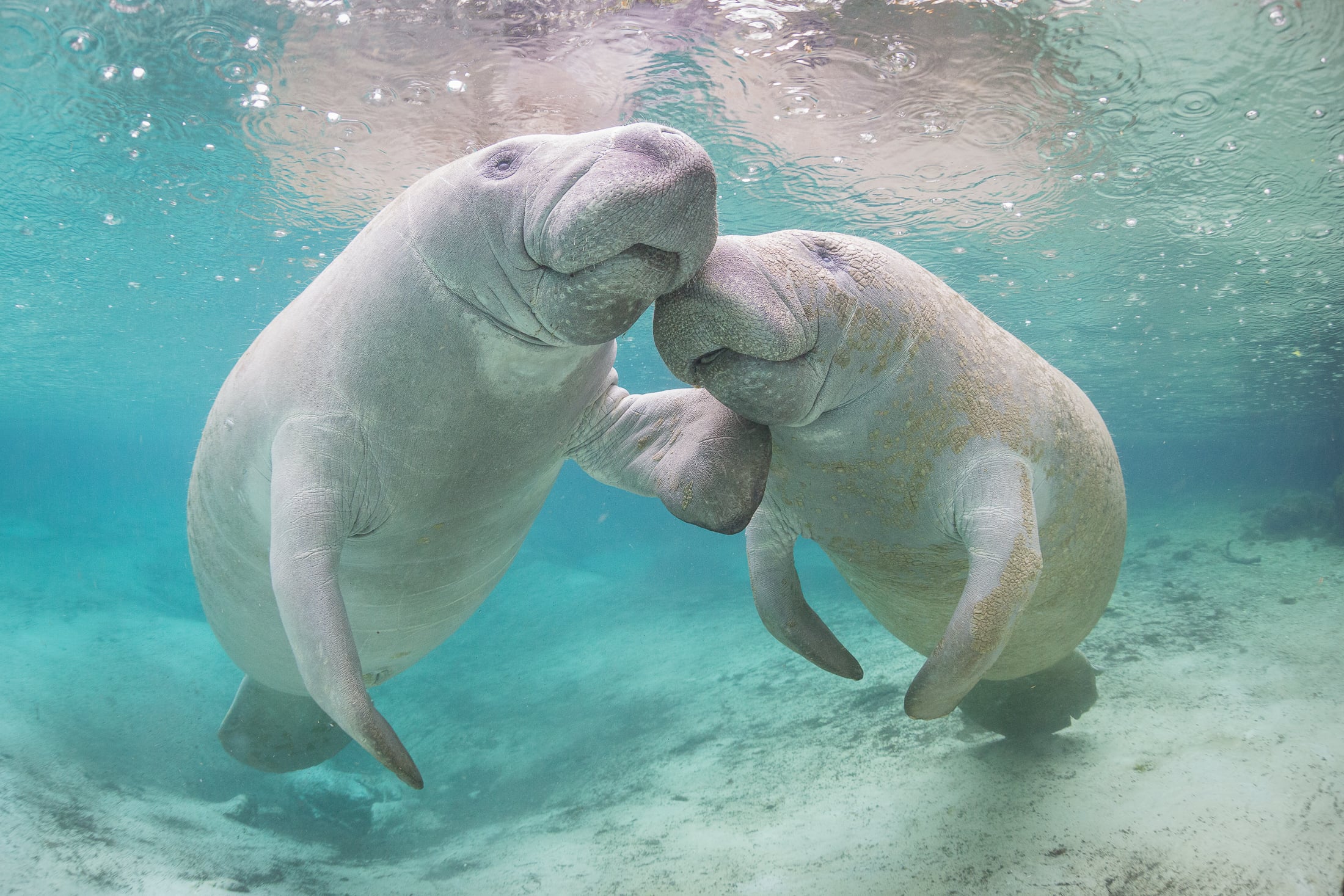
When the Endangered Species Act was passed in 1973, about a thousand Florida manatees survived in the wild. The animals remain threatened by degradation of their natural springs, a shortage of food, and collisions with boats. (Mac Stone)
|
|
|
|
Trump’s war on wildlife protections puts Florida’s manatees in the crosshairs
|
|
|
|
|
By Rene Ebersole
October 23, 2026
|
|
|
|
|
President Trump has been taking a wrecking ball to the nation’s bedrock wildlife-protection law with the same zeal his administration brought to demolishing the White House’s East Wing for a 90,000-square-foot ballroom unauthorized by Congress.
Florida manatees are some of the first animals to pay the price. A federal appeals court has overturned protections for the state’s beloved marine mammal in the wake of the administration’s rollback of a key provision of the Endangered Species Act (ESA) intended to prevent animals from being harmed because their habitat has been bulldozed, polluted, or destroyed.
More than 1,250 manatees died along Florida’s Atlantic coast in an unprecedented mortality event from December 2020 to April 2022 caused largely by starvation. Years of water pollution had fueled algal blooms and widespread losses of seagrass, a crucial food source for the animals.
In April 2025, U.S. District Judge Carlos Mendoza ruled that Florida’s Department of Environmental Protection had violated the ESA by failing to adequately regulate wastewater and septic system discharges into the northern Indian River lagoon, a 156-mile-long estuary designated among the most diverse ecosystems of its kind in North America. The following month, he ordered the state to monitor the manatees’ health, provide supplemental food, and temporarily halt new septic system permits in part of the watershed.
But the legal ground beneath those protections shifted in July, when the Trump administration rescinded a longstanding regulatory definition of “harm” under the ESA. On October 8, the Eleventh Circuit Court of Appeals vacated Mendoza’s judgment and injunction, sending the case back to the lower court to reconsider in light of the rule change.
“Since the unusual mortality event, we’ve seen nice seagrass recovery,” says Elizabeth Neville, director of environmental law and policy with conservation group Save the Manatee. “However, we are concerned that any loss of momentum could lead to another crisis.”
She says it’s her organization’s position that the administration’s reinterpretation to the harm rule is “unlawful.” The sudden loss of more than 1,200 manatees from Florida’s Atlantic population, now around 7,000, “demonstrates a very clear example of habitat destruction that led to widespread death of an imperiled species.”
Patrick Parenteau, a professor of law emeritus at Vermont Law and Graduate School, is concerned about how Trump’s attack on the ESA will affect not only manatees but many other species. He has spent decades defending endangered species, earning the nickname “the owl’s lawyer” for his work protecting the northern spotted owl and its old-growth forest habitat from logging in the early 1990s. He was among the attorneys who urged for the broad interpretation of the Endangered Species Act’s definition of “harm” to be upheld in a landmark 1995 Supreme Court case.
Three decades later, Parenteau is watching the protections he helped defend unravel. As the Trump administration rewrites the rules, he sees a threat to one of the law’s most important safeguards: the ability to save animals from extinction by preserving the places where they live.
“They’re gutting the protection of habitat.”
|
|
|
|
|
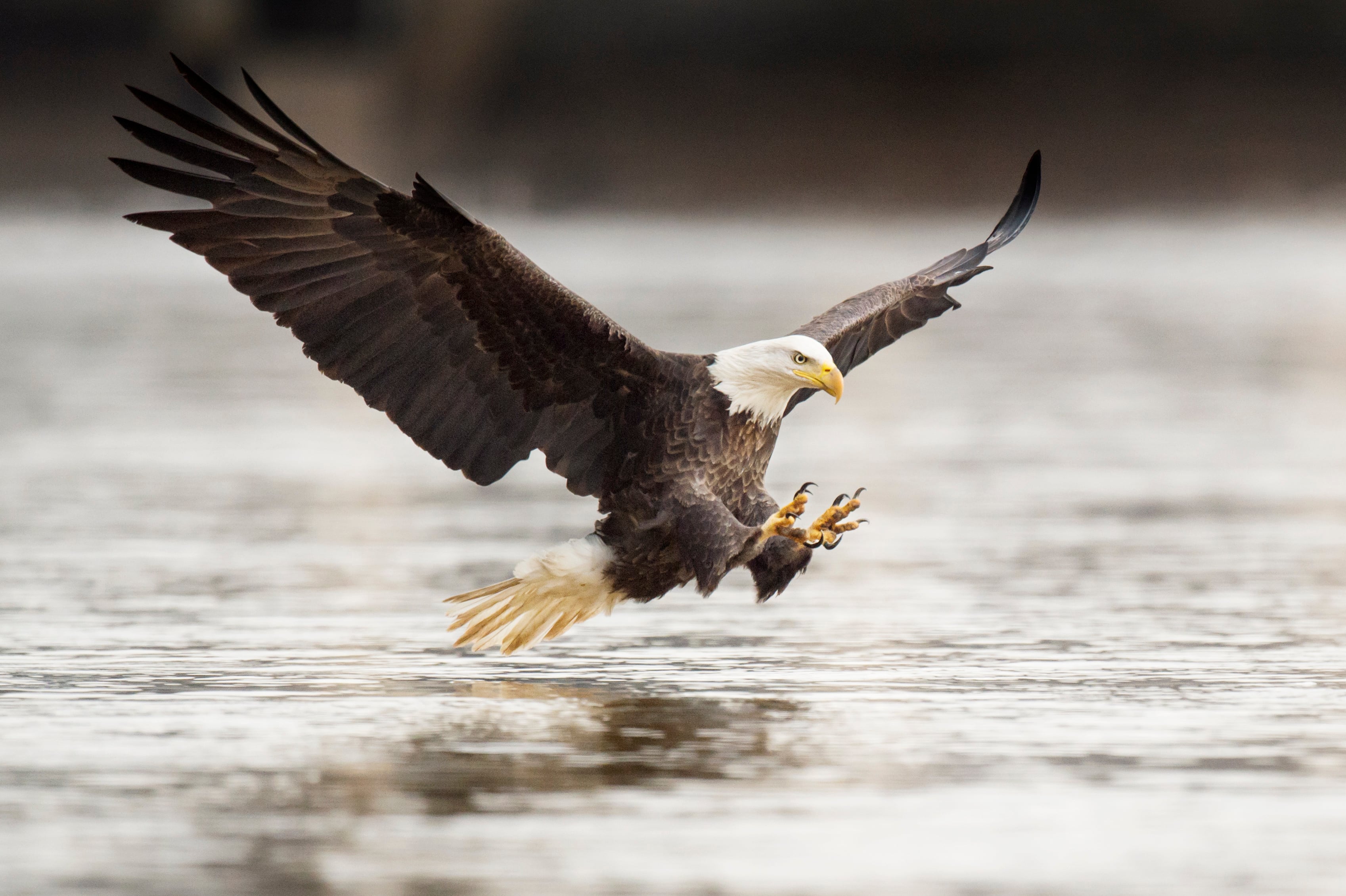
In 1973, a year after a national ban on DDT, the Endangered Species Act provided federal funding for an experimental program to help restore bald eagle populations. The national bird was removed from the Endangered Species List in 2007; scientists estimate more than 310,000 soar across the country today. (Ray Hennessy)
|
|
|
|
|
The stakes couldn’t be higher for a wide variety of animals—from turtles and whales to birds, bats, and bears, including nearly 300 species spared from extinction in large part because of the law passed more than a half-century ago. “We know that loss of habitat is the leading cause of endangerment and extinction, not just here but globally,” Parenteau says. “If we continue losing habitat, we’re going to lose these species. They’re not going to recover. Some of them won’t even survive.”
Protective shield
When President Richard Nixon signed the Endangered Species Act on December 28, 1973, the country was in the midst of an environmental reckoning. New York, Los Angeles, and Chicago were shrouded in thick smog, spurring Congress to pass the Clean Air Act in 1970. In 1969, pollution so fouled Cleveland’s Cuyahoga River that it caught fire, becoming a powerful symbol of the nation’s water pollution crisis and propelling passage of the Clean Water Act in 1972. A year later, the United States banned most uses of DDT, a pesticide applied liberally on farmland and suburban neighborhoods, even as children played in the spray. The chemical had helped push bald eagles—symbol of the nation—and other birds to near extinction.
With the ESA, the federal government gained a powerful legal shield to protect imperiled wildlife, even when doing so meant putting limits on industry and development. Unlike laws aimed primarily at pollution, the ESA gave the government a way to protect species from the degradation of the places they need to survive.
|
|
|
|
|
Did a friend forward this newsletter to you?
|
|
|
|
|
|
|
|
|
That protection is at the center of a legal fight that began in 1995, when Oregon landowners and logging interests challenged the federal government’s interpretation of the ESA’s prohibition on “harm.” In Babbitt v. Sweet Home, they argued that the law should cover direct injury to animals, not habitat destruction that indirectly causes injury or death. Interior Secretary Bruce Babbitt defended the government’s broader interpretation, and the Supreme Court upheld it. Justice Antonin Scalia dissented, arguing that “harm” should apply only to direct injury to individual animals.
For three decades, the decision has allowed federal agencies to treat habitat modification or degradation as unlawful harm when it kills or injures protected wildlife indirectly by impairing their ability to feed, find shelter, or reproduce. That makes the provision one of the ESA’s most consequential protections, Parenteau says. “It resulted in 40 million acres of habitat being protected that otherwise would have received no protection under federal or state law—no protection,” he emphasizes, adding that if it had been enforced more aggressively, it would have saved even more.
“So now along comes the Trump administration, and what does it do? Repeal the harm rule—lock, stock, and barrel,” he says. “No replacement, no redefinition, nothing. They have removed, in my view, the single most important protection for habitat and species under the law.”
Triple blow
Florida’s wildlife has been hit particularly hard by the Trump administration’s depredations on the ESA. In March, the administration convened the so-called “God Squad”—the Endangered Species Committee, made up of senior federal officials appointed by the president. In a meeting that lasted just 15 minutes, the committee exempted oil and gas activities in the Gulf of Mexico from compliance with the law, putting protected marine life such as Kemp’s Ridley sea turtles, Rice’s whales, and Florida manatees at greater risk.
The administration took another big swing at the ESA last month, when it sought to narrow the law’s definition of “take.” The term has long covered not only the killing or capture of protected animals but also harm or harassment, including injuries caused by habitat destruction.
In an internal memo on September 14 to the U.S. Fish and Wildlife Service staff, the administration directed the agency to adopt a tighter interpretation of the existing law by which a prohibited “take” would require an intentional act directed at an individual animal. The memo quotes Justice Scalia’s position on what would qualify as a “take”: feeding an animal poison, spraying it with mace, chopping down the tree in which it’s nesting, or even destroying its entire habitat for the purpose of capturing it—for instance, draining a pond to collect a turtle. What no longer qualifies, according to the memo: “A vessel that inadvertently strikes a whale has not taken it, because the vessel’s course was not set against the whale. Felling a tree is not a take of the bats roosting in it unless the tree is felled for the purpose of killing or capturing them.”
Similarly, pollution that kills seagrass, leaving manatees without enough food to survive, might not have legal consequences for the animals’ deaths if harming the manatees was not the intended outcome.
Neville, of Save the Manatee, says taking habitat destruction and degradation “out of the scope of things that are not allowed by the Endangered Species Act—our most important federal law to protect manatees and other imperiled species—really degrades the law's ability to make sure that they continue to survive.”
Parenteau warns that the memo sends a crippling message: “Don’t enforce the law unless you think we can prove an intentional act to kill something.”
He doubts the memo will survive a court challenge but calls the move “deviously clever” because “it’s damn near impossible to prove that but for this memo, a species would have been protected, now it’s dead.”
The administration’s adoption of Scalia’s dissenting interpretation of the harm rule is facing multiple court challenges, and the Justice Department has introduced the controversial “take” memo into that litigation, putting its legality before the courts, Parenteau says. The outcome could help determine how far the administration can go in wiping away protections Congress intended the ESA to provide.
Alarmed by the legal challenges, conservation biologists say the administration is bypassing the kind of public debate that helped build bipartisan support for the ESA.s. “Previously, there would be hearings,” says Stuart Pimm, a conservation ecology professor at Duke University “I’ve testified before House and Senate committees, where there was due process and a chance to debate what the Endangered Species Act does. Republicans and Democrats didn’t always agree, but they broadly agreed not to gut the law. The fact that it has remained in effect for 50 years is a measure of how much support it really had.”
Parenteau’s concerns are even broader. He sees a growing “hush” around environmental issues, with politicians across party lines increasingly reluctant to speak forcefully about protecting nature. Public support for the ESA remains strong, according to polls, even as the political will to enforce it is eroding.
“I don’t think we need more policies,” Parenteau says. “We don’t need amendments to the law. Not right now. In the future, yes. But right now, we need better politicians. We just desperately need that.”
|
|
|
|
- Sloth ban introduced: After the deaths of dozens of wild sloths shipped from South America to Orlando’s now-shuttered Sloth World, some federal lawmakers want to halt wild sloth imports to the U.S. The newly introduced SLOTHS Act is co-sponsored by two representatives from Florida, Democrat Maxwell Alejandro Frost and Republican Laurel Lee. “What happened at Sloth World cannot be undone,” Lee said at a press conference, “but we can learn from it and ensure that more sloths are not brought here to face the same risks.”
- USAID update: The sudden elimination of USAID support in 2025 has led to a resurgence in poaching and wildlife trafficking, a new report from the advisory firm One Earth Partners says. Multicountry networks that fight wildlife trafficking have collapsed, and anti-poaching efforts at sites across Africa and Asia have been curtailed. The loss of these projects has not only left wildlife and critical habitats vulnerable, it has also reignited intertribal violence, destabilized communities susceptible to extremism, and allowed other illicit activities, such as coca production, to become reentrenched.
- The eight-year rhino trial: Rodney Landela, once a highly respected regional park ranger at South Africa’s Kruger National Park, was arrested more than a decade ago by his subordinates as he fled the scene of a slaughtered rhino, his shoes covered in its blood. After eight years of court proceedings, beset by delays, that concluded this month, he and an accomplice, Kruger veterinary tech Kenneth Muchcocho, were convicted and sentenced to 10 years in prison. The case highlighted the growing issue of wildlife trafficking networks recruiting park insiders.
- The fish your fish eat: A new investigation published by The Outlaw Ocean Project in New York Times Magazine traces the true cost of farmed seafood back to the ocean, revealing forced labor, pollution, overfishing, deadly working conditions, and other crimes. It turns out farmed fish isn’t as sustainable as it seems. Here it is in a nutshell: What do farmed salmon eat? Fishmeal, made from huge amounts of small ocean fish such as anchovies and sardines that make up the base of the ocean food chain as well as the diets of coastal communities. Where is fishmeal made? In factories that emit carcinogenic chemicals. Who buys the fishmeal? Fish farms, whose farmed fish produce noxious waste that can smother marine life. Who buys the farmed fish? Us.
|
|
|
|
|
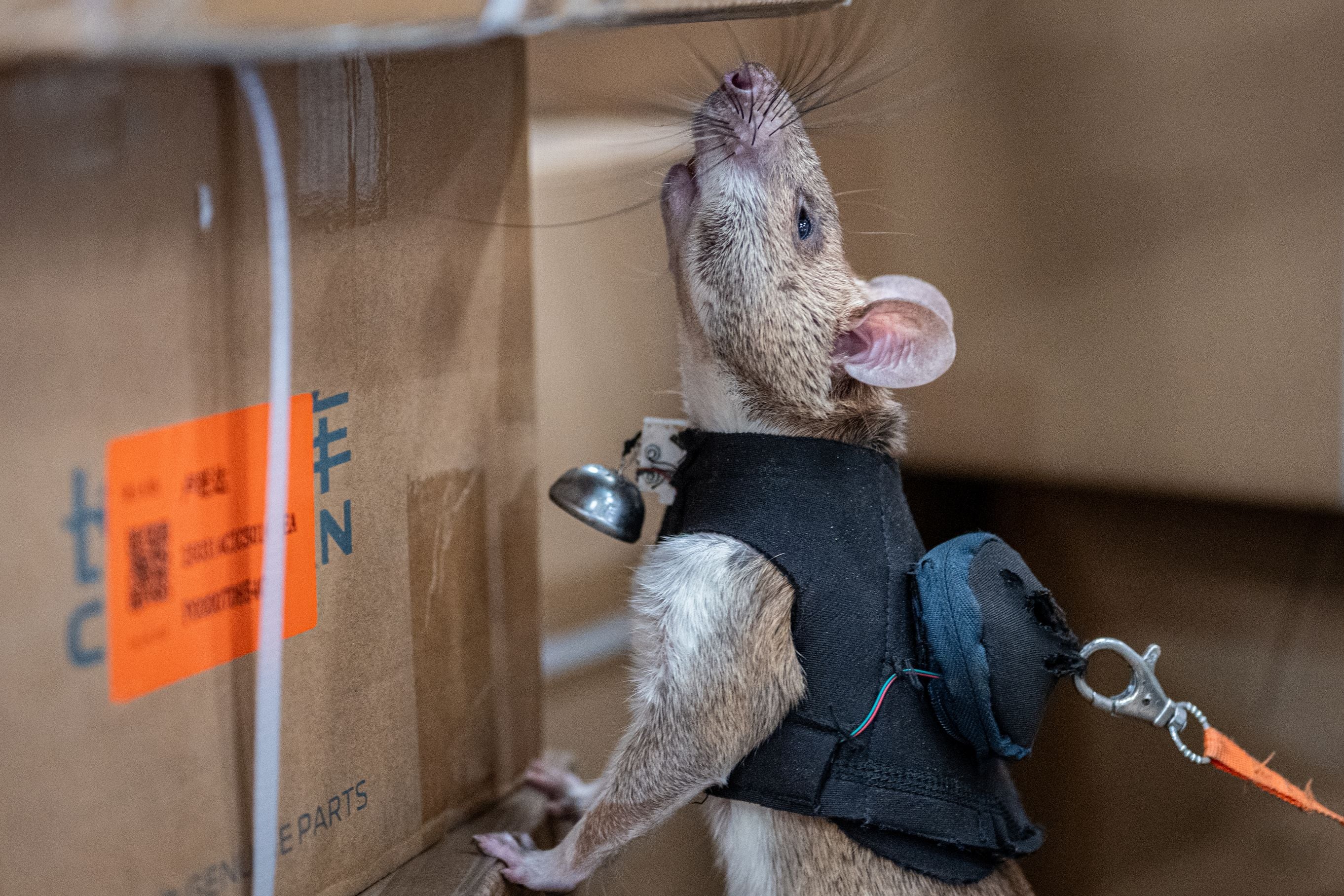
A giant pouched rat trained to detect ivory and other wildlife products sniffs cargo. (Courtesy APOPO)
|
|
|
|
Strange, but true
Maybe you’ve heard of the rats that sniff out landmines, but have you heard about the rats sniffing out elephant ivory? APOPO, a Belgian nonprofit, first trained giant pouched rats to detect landmines in the late 1990s, then tuberculosis in the early 2000s. It now has trained rats to detect ivory, rhino horn, pangolin scales, giraffe hide and hair, and ebony. They have an 85 percent detection rate and can screen an entire cargo container in less than five minutes. Why giant pouched rats? They’re smart, trainable, and can smell as acutely as most dogs. They’re also small—at about two pounds and a foot long (not counting their tail), they can fit into small spaces between boxes, crates, and luggage, or be lifted up to sniff through the ventilation screens of sealed shipping containers.
|
|
|
|
Like this newsletter? Share it!
|
|
|
|
|
|
|
|
Support WIRE
WIRE runs on curiosity, persistence, and generous support from people who care deeply about what happens to wildlife when no one else is watching. Investigative reporting takes time, expertise, and financial resources, especially when stories cross borders and powerful interests. Our work is funded by readers like you who believe these stories matter. Monthly supporters give us the stability to report deeply, publish independently, and follow the consequences of our investigations. If that resonates, you can support our work here:
|
|
|
|
|
|
|
|
|
Wildlife Investigative Reporters & Editors
Independent, nonprofit journalism exposing wildlife crime and exploitation of nature.
Get in touch: [email protected]
|
|
You received this email because you signed up on our website or made a donation.
|
|
|
|
|
|