|
|
'Hold them like they're you're small baby,' an expert advised the officers intercepting the carload of animals
|
|
|
|
|
Voices and updates from the front lines of wildlife crime and exploitation of nature
|
|
|
|
|
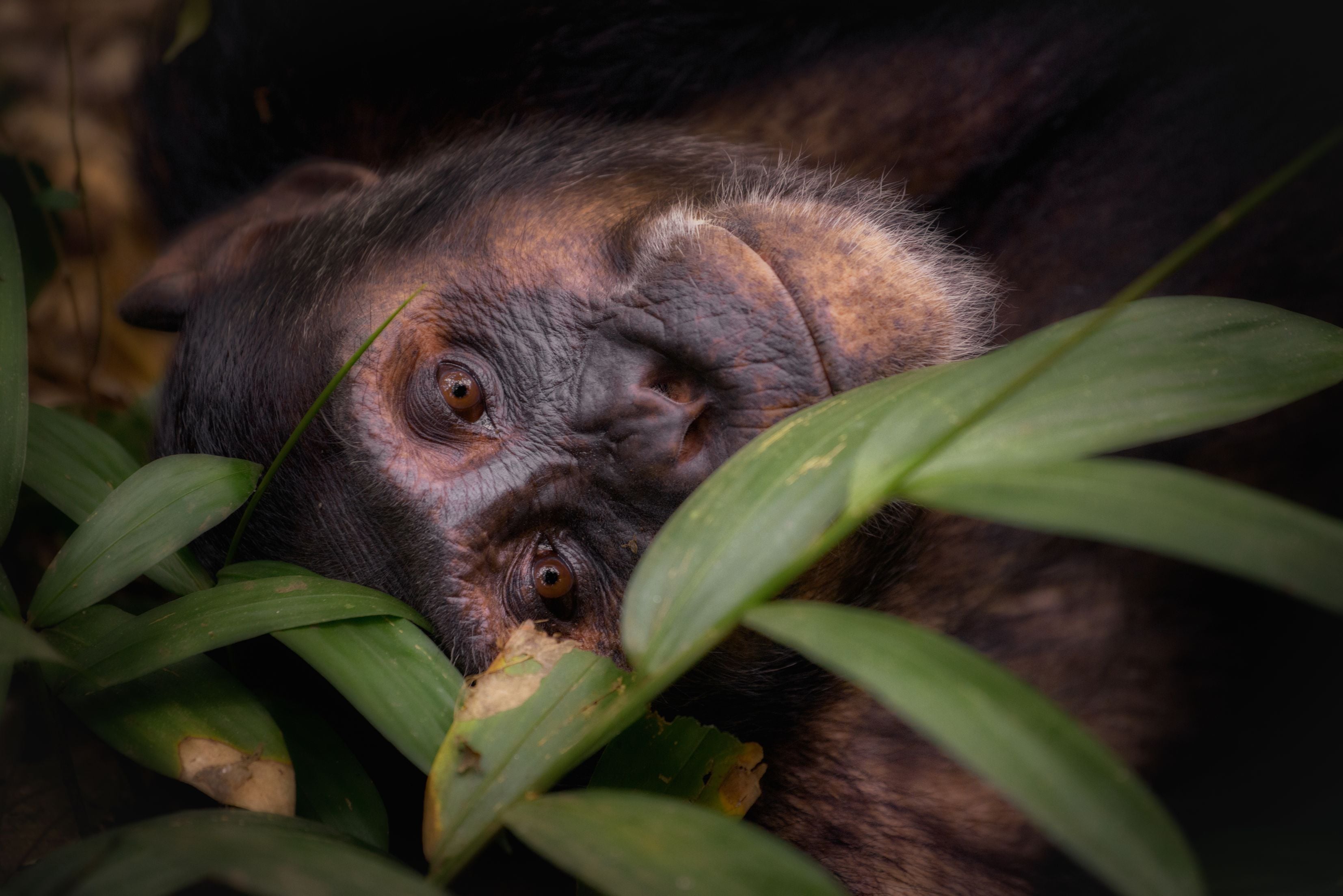
Endangered chimpanzees face many threats, including habitat loss, human diseases, and poaching for bushmeat and the exotic pet trade. (Simone Sbaraglia)
|
|
|
|
Inside the mission to save six baby apes
|
|
|
|
|
By Rene Ebersole
September 24, 2026
|
|
|
|
|
In the beginning, there were six: two infant gorillas and four baby chimpanzees.
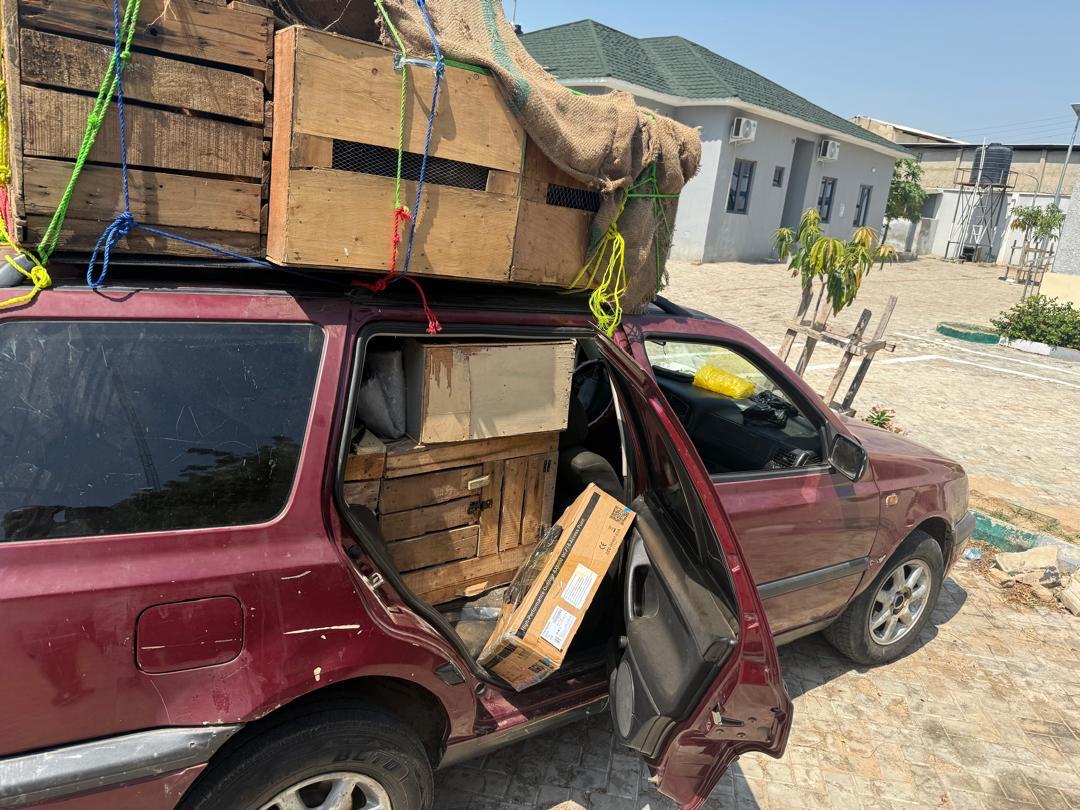
It was August 26, and Nigeria Customs Service officers acting on intelligence had pulled over a vehicle suspected of trafficking wild animals. Wooden crates and boxes nearly spilled from the car’s roof. Inside, the vehicle was packed so tightly that officers struggled to pull the contents free.
What they found was an incredible haul: 19 greater bustards, large turkeylike birds; five red patas monkeys, the greyhounds of the primate world, with long, slender limbs built for speed; six rockfowl, ground-dwelling birds known as bald crows for their brightly colored, mostly naked heads; four medium-size wild cats called caracals; two albino crocodiles; two mona monkeys, with bluish-gray faces; two pottos, slow-moving, nocturnal mammals; a honey badger; and a catlike creature called a civet.
And then someone mentioned a “baboon.”
Lindsay Maess was hundreds of miles away, watching the unpacking on a video call with the customs officers. She’d spent 25 years working with rescued primates, and now as a primatologist with Focused Conservation, a nonprofit that supports government and law enforcement agencies in combating wildlife trafficking, she advises Nigeria’s Customs Intelligence Unit Special Wildlife Office on the rescue and care of confiscated animals.
“A lot of times, local people will call a gorilla or chimp a baboon,” she explains. Apes are critically endangered, so no one’s going “to rightfully tell them, ‘There’s a gorilla inside my vehicle.’”
As the officers talked with Maess, they held a camera up to the narrow slats of a crate. “All I could see were these little eyes,” Maess remembers. “Gorilla eyes.” The crate contained a pair of infant gorillas. A second crate had three infant chimps. A third held a lone, slightly older chimp, roughly two to three years old.
They’d been packed into the interior of the car, with little ventilation and temperatures soaring into the 90s—life-threatening conditions for fragile young apes. Maess remembers telling the officers, “Get them out! Get them out now!”
|
|
|
|
|
On August 26, Nigeria Customs Service officers intercepted a vehicle carrying 48 animals, from gorillas and monkeys to bustards and caracals, and arrested three suspects on wildlife trafficking and conspiracy charges. (Courtesy Focused Conservation)
|
|
|
|
|
Maess knew the clock was ticking—and she wasn’t close by. She’d been on a trip to the southeastern part of the country to deal with some immigration paperwork. Now she began the long journey to Kano, a 12-hour drive in the rain over roads riddled with holes deep enough to swallow trucks, followed by two connecting flights. Because Maess’s trip was so arduous, Focused Conservation named the mission Operation Traverse, and the apes the Traverse Six.
Three suspects were ultimately arrested and charged with conspiracy and the unlawful possession of 48 protected wild animals. The defendants have pleaded not guilty and were remanded to a correctional facility until their scheduled appearance on October 7.
For the animals, their seizure marked the beginning of another traumatic journey.
“The report of an animal seizure may seem like the happy end to a wildlife trafficking story—but it’s just the beginning for the animals who now face recovery from injuries and sometimes serious illness,” says Tim Santel, a retired U.S. Fish and Wildlife Service special agent who serves as a senior advisor for Focused Conservation.
Demand for exotic pets drives trafficking of live animals. Rare species can command tens of thousands of dollars, creating powerful incentives for middlemen to pay poachers in poor countries to capture and move wildlife across borders. Animals taken from Africa pass through networks of brokers and smugglers before ending up in private collections in Southeast Asia, the Middle East, Europe, the U.S., and elsewhere. The trip can be deadly.
|
|
|
|
|
Did a friend forward this newsletter to you?
|
|
|
|
|
|
|
|
|
Trafficked animals suffer stress, injury, disease, and neglect. Some don’t survive—particularly great apes, which are susceptible to many of the same diseases as humans. Some studies have estimated mortality rates up to 90 percent among infant chimpanzees trafficked from the wild, with many dying before reaching their final destination.
Based on their physical characteristics, Maess thinks the chimpanzees in her care are a subspecies from along the Nigeria-Cameroon border that are among the world’s most threatened apes. Only 3,000 to 5,000 may remain in the wild. The gorillas are harder to identify. Maess says they’re likely Western lowland gorillas, whose range extends across Central Africa. But there’s a chance that they could be Cross River gorillas, a critically endangered population found in a small area along the Nigeria-Cameroon border; only about 250 of them are thought to survive in the wild. Genetic testing will soon provide a more definitive answer about where the animals came from.
|
|
|
|
|
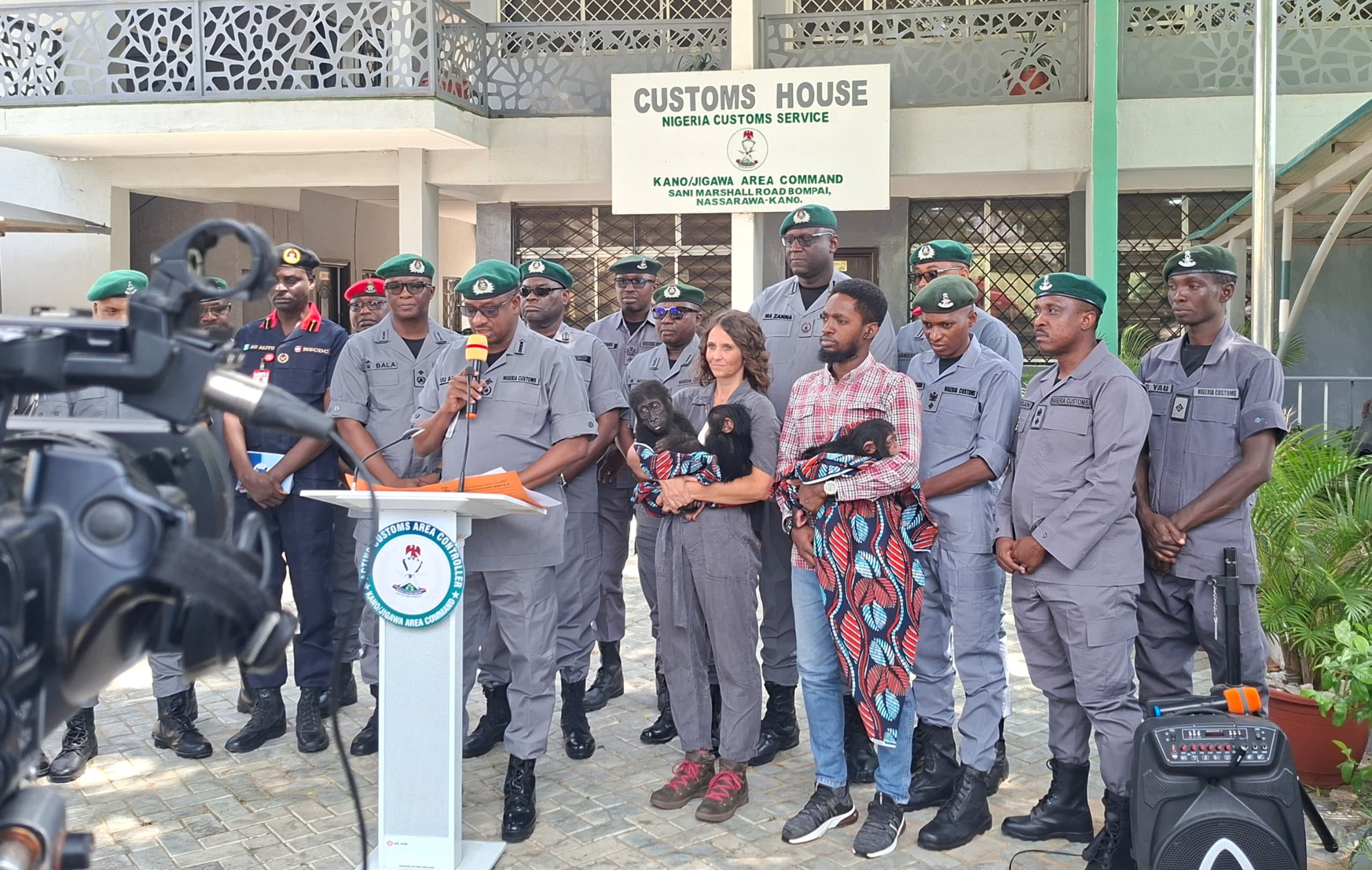
At a press conference in Kano, officials heralded the success of Operation Traverse and announced the arrest of three suspects charged with trafficking six apes and dozens of other wild animals. (Courtesy Focused Conservation)
|
|
|
|
|
“Transnational criminal organizations and trafficking networks are opportunistic,” Santel says. In Nigeria, which can be both a source country and a transit route for wildlife trafficked from neighboring countries, great apes and other primates are in high demand, along with pangolins, lions, and parrots.
Because ape families are fiercely protective, poachers generally can’t simply grab an infant. They must kill the mother, Maess says. “That’s the only way she’s going to give up that baby.” Other members of the group may be killed as well. Sometimes, Maess says, poachers slaughter an entire adult family. Terrified and shaken, the infants are then passed along a chain of brokers, sellers, and couriers.
By the time the Traverse Six arrived in Kano, they’d endured the horror of being taken from their families, shoved in crates, and transported hundreds of miles. And then a customs officer pried open their crates.
Maess told the officers that as soon as the apes were out of their crates, they needed to be hugged. “Hold them like they’re your small baby,” she said. The men looked at her as if she’d lost her mind. “You’re going to be a father for the next day and a half until I get there,” she told them.
When Maess finally arrived, she scooped the apes into her arms, gave them names, and began assessing their wounds and ailments. “Their immune systems, their digestive systems, their emotional status, everything has just been knocked completely off course,” Maess says. “We’re receiving these animals on death’s door—it’s a challenge from the start.”
Shuka, a three-month-old female chimpanzee, was so young she could barely crawl. She was malnourished, losing weight, and would soon develop a chronic respiratory infection.
Tabo, a nine-month-old female chimpanzee, arrived with a fever, broken wrist, finger, and toe, infected wounds, and scars on her face and hands.
Ebbie, a female chimpanzee between two and three years old, had wounds on her ankles consistent with having been restrained with wire. She’d adopted Belel, an eight-month-old male, feeding and comforting him even though she herself was still a young.
|
|
|
|
|
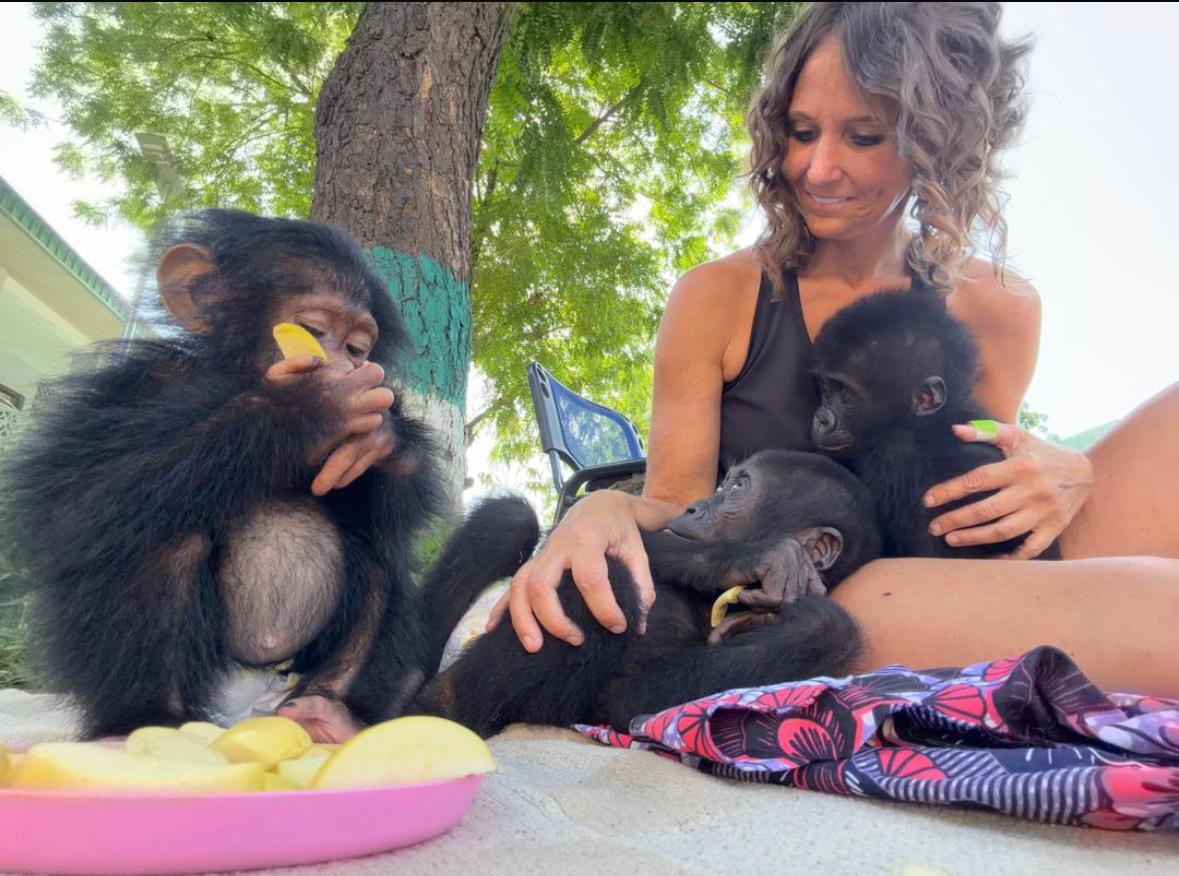
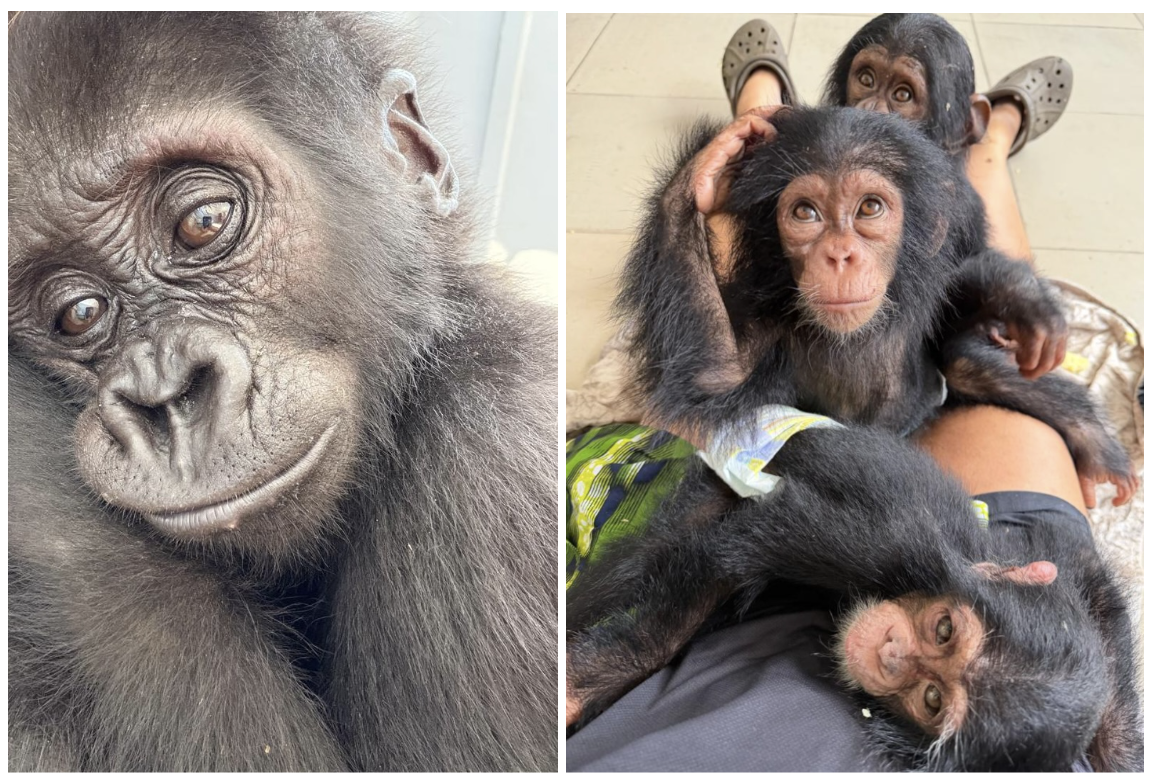
Primatologist Lindsay Maess holds two of the rescued gorillas, Yaya (left) and Maraya (right). Sitting nearby, Tabo, a nine-month-old female chimp arrived with broken bones and infected wounds. (Courtesy Focused Conservation)
|
|
|
|
|
The youngest gorilla, Maraya, who was six to eight months old, developed raspy breathing from a likely infection. Yaya, a one-year-old male, was also sick and showed behavior Maess interpreted as psychological trauma. He was old enough, she believed, to remember what had happened to him in the forest. He was listless and withdrawn, and when she reached for his hand, he sometimes flinched.
“He sleeps with his hand covering his head, like he’s afraid he’s going to be beaten,” she says. “I presume he was beaten by his tormentors.”
Maess’s entire focus is on keeping the apes in her care alive, often through the night. In the early morning, the apes get milk and food. Then she brings them outside onto a blanket beneath a tree or cares for them indoors. She administers medication, tends their injuries, holds them, and watches their breathing.
“It’s just feed, milk, feed, and caring for them throughout the day,” she says, angling her phone camera so I can see Maraya and Yaya sleeping on her chest and Tabo and Shuka resting on a blanket stretched in the grass. “Holding them, tending to their wounds, giving them medication. All day, it’s just this.”
Even as a young child, Maess, now 43, dreamed of working with primates in Africa. She remembers reading with fascination National Geographic stories about Dian Fossey and Jane Goodall. Five years into becoming a field biologist in Nigeria, in 2016, she contracted the most severe and deadly form of malaria. “Basically, I nearly died,” she says. “I couldn’t breathe. I could barely swallow. I lost my speech. I lost the ability to hold my head up. I became paralyzed in my face, the left side of my body. It all progressed within a matter of hours.”
The worst of her symptoms continued for three years, and she’s still dealing with some of the lasting effects. With medical treatment, she was able to return to Nigeria in 2023 and began caring for three rescued apes—a gorilla and two chimpanzees. She’d developed a firsthand understanding of what prolonged recovery can look like.
“Day by day, we all kind of rehabilitated each other,” she remembers.
Caring for infant apes is exhausting work, and it comes with no guarantee that the animals will ever be able to return to the wild. Nigeria’s few facilities equipped to take in confiscated great apes have limited capacity. Maess and Focused Conservation have plans to work with the Aspinall Wildlife Trust, which has experience rewilding gorillas, to build new rescue facilities in Nigeria and work toward reintroducing more rehabilitated apes to the wild.
But before rescued apes can be rewilded, they have to survive the aftermath of being taken from the forest.
A day after my first interview with Maess, she texted me with news about Maraya.
“Sadly, the little female gorilla passed away this morning,” she wrote. “This is the hard reality of caring for trafficked gorillas—and why not many survive—even under the most watchful care.”
|
|
|
|
|
Both Maraya, left, and Shuka, seen here wearing a diaper in the pile of chimps on Maess’s lap, developed severe respiratory illness. (Courtesy Focused Conservation)
|
|
|
|
|
On Wednesday morning, Maess sent another audio text: “As you know, Shuka was in critical condition yesterday. We managed to get her some pretty powerful antibiotics, and then I took her home last night to the hotel and gave her fluids every half hour or so. I managed to keep her alive all night. And then this morning, she just crashed. We lost her a little bit ago.”
Now there are four baby apes.
|
|
|
|
|
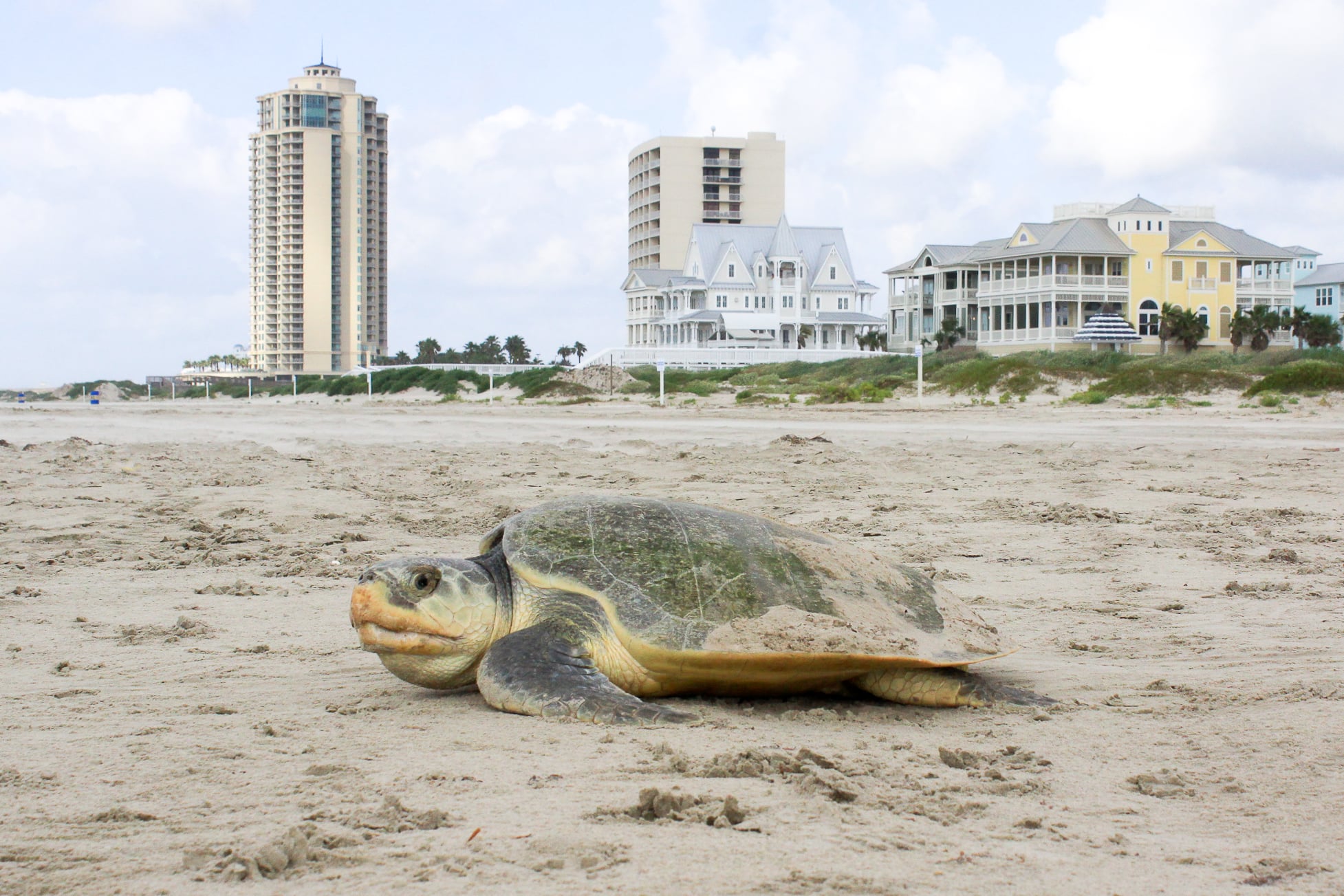
An endangered Kemp’s ridley sea turtle heads back to the ocean after laying her eggs on East Beach, in Galveston, Texas.
|
|
|
|
-
World Rhino Day: On Tuesday, a day of special recognition for rhinos celebrated the five species and sought to raise awareness about the threats they face, especially poaching for their horns for traditional medicine and decorative pieces. Four of the species are threatened with extinction. The newly released 2026 State of the Rhino report found that white, black, and greater one-horned rhino numbers have increased since 2001, but only an estimated 50 Javan rhinos and up to 47 Sumatran rhinos survive today.
-
Re-endangering species? The Trump administration is moving to eliminate a core protection of the Endangered Species Act, an internal memo obtained by the New York Times shows. Only the intentional killing or injuring of a protected animal would be considered a violation, according to the September 14 directive, which redefines what it means to “take” an endangered species. This would be a major shift because most endangered species in the U.S. are killed inadvertently, in the course of economic activity. Think of a northern right whale struck by a cargo vessel, a commercial fishing boat ensnaring a loggerhead sea turtle, or a northern long-eared bat being crushed when loggers fell its roosting tree. This memo comes on the heels of a July regulatory change that redefined what it means to “harm” an endangered species, a move that cleared the way for businesses and people to destroy the habitat of protected species without violating the law.
-
Young orangutans rescued: Five young orangutans were found alone in a forest on September 8 in the Indian state of Odisha. Orangutans, which are critically endangered, are found only on the islands of Borneo and Sumatra, thousands of miles away. It’s unknown how they got to India, but officials suspect that they were trafficked into the country and then abandoned. They’re now being monitored and held in quarantine at the Nandankanan Zoological Park.
|
|
|
|
Strange, but true
People are often surprised to learn that medical treatment by leech is not entirely a thing of the past. They eat pooled blood and secrete an anticoagulant—important for people who’ve just had reconstructive or plastic surgery and whose reconnected microveins are easily blocked. Today, leeches used in hospitals are raised in sterile “leech farms” under strict protocols, but back in the 19th century, the European medicinal leech nearly went extinct in the wild because of its popularity in treating everything from tuberculosis to dental pain. Today, the international trade of wild European medicinal leeches is limited. Of course, that didn’t stop one man from trying to smuggle 5,000 into Canada in 2019.
|
|
|
|
Like this newsletter? Share it!
|
|
|
|
|
|
|
|
Support WIRE
WIRE runs on curiosity, persistence, and generous support from people who care deeply about what happens to wildlife when no one else is watching. Investigative reporting takes time, expertise, and financial resources, especially when stories cross borders and powerful interests. Our work is funded by readers like you who believe these stories matter. Monthly supporters give us the stability to report deeply, publish independently, and follow the consequences of our investigations. If that resonates, you can support our work here:
|
|
|
|
|
|
|
|
|
Wildlife Investigative Reporters & Editors
Independent, nonprofit journalism exposing wildlife crime and exploitation of nature.
Get in touch: [email protected]
|
|
You received this email because you signed up on our website or made a donation.
|
|
|
|
|
|