|
|
What's changed—and what hasn't
|
|
|
|
|
Voices and updates from the front lines of wildlife crime and exploitation of nature
|
|
|
|
|
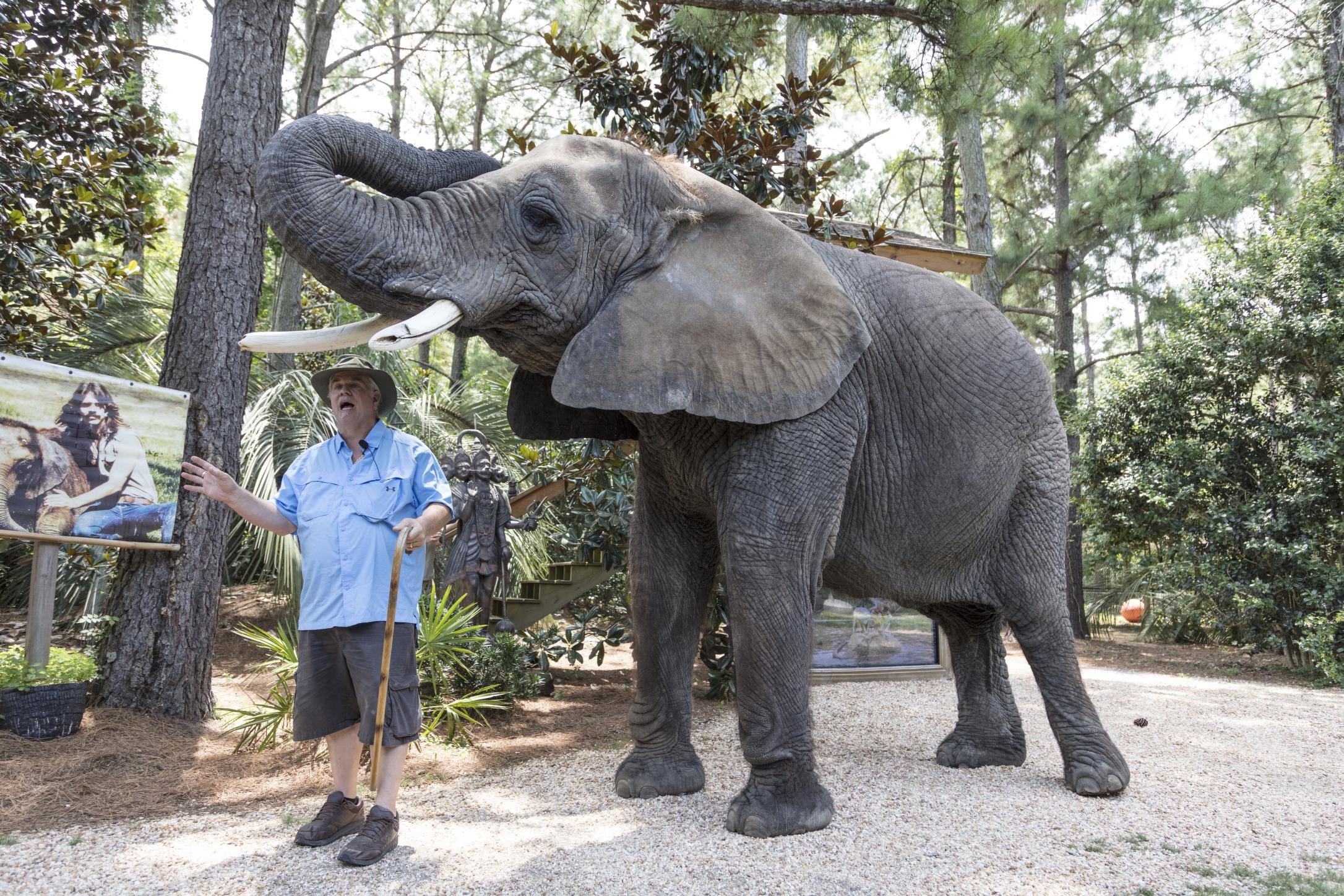
Bhagavan "Doc" Antle, addresses guests on a tour of Myrtle Beach Safari in 2017. He was recently released from federal prison for conspiracy to traffic wildlife and launder money. (Carol M. Highsmith)
|
|
|
|
|
Rachael Bale
July 17, 2026
|
|
|
|
The big cat ban stopped cub petting. It didn’t stop ‘Doc’ Antle’s business.
|
|
|
|
|
Who remembers the show “Tiger King?” Early in the pandemic, Netflix had us hooked on the documentary miniseries about Joseph “Joe Exotic” Maldonado and his animal park in Oklahoma. It had “wild animals, ex-felons, a brief presidential campaign, polygamy, a murder-for-hire plot, and a huge cast of eccentric characters,” I wrote in 2020. No wonder we were all obsessed.
Joe Exotic is in prison now, serving a 21-year-sentence for plotting to kill animal activist Carole Baskin, as well as for wildlife crimes that included killing tigers and trafficking protected animals. In the years since he was incarcerated, he has divorced, remarried (to a fellow prison inmate), sued a slew of government agencies and acquaintances, launched another presidential campaign, and introduced a cannabis line. …Just in case you were wondering.
When people asked me about “Tiger King,” I’d always say it did some good by exposing the ugly truth behind the cub petting industry and thus contributed to its collapse. But it also missed a real opportunity to help viewers learn how to distinguish bona fide zoos and sanctuaries from fake ones. (Look, I acknowledge it’s a TV show aiming to entertain after all.) Now I also point out that it demonstrates just how light the penalties for wildlife crimes often are.
Joe Exotic’s sentence is two decades long, not mainly because of wildlife crimes but because he tried to have a person killed. As a society, we tend to frown on that.
Then there’s Bhagavan “Doc” Antle, the owner of Myrtle Beach Safari in South Carolina, whose cult-like lifestyle was featured across several episodes of “Tiger King.” Like Mr. Exotic, it wasn’t wildlife crimes that first landed him in federal court. It was an FBI money-laundering sting in 2022. (Wildlife charges followed a few weeks later). By the time Antle was sentenced last July, he had pleaded guilty to one count of conspiracy to launder roughly $500,000 he believed had been made from smuggling migrants and a second count of conspiracy to traffic wildlife. He forfeited $200,000 and three chimpanzees, paid a $55,000 fine, and received concurrent prison terms of one year and one day for each count.
|
|
|
|
|
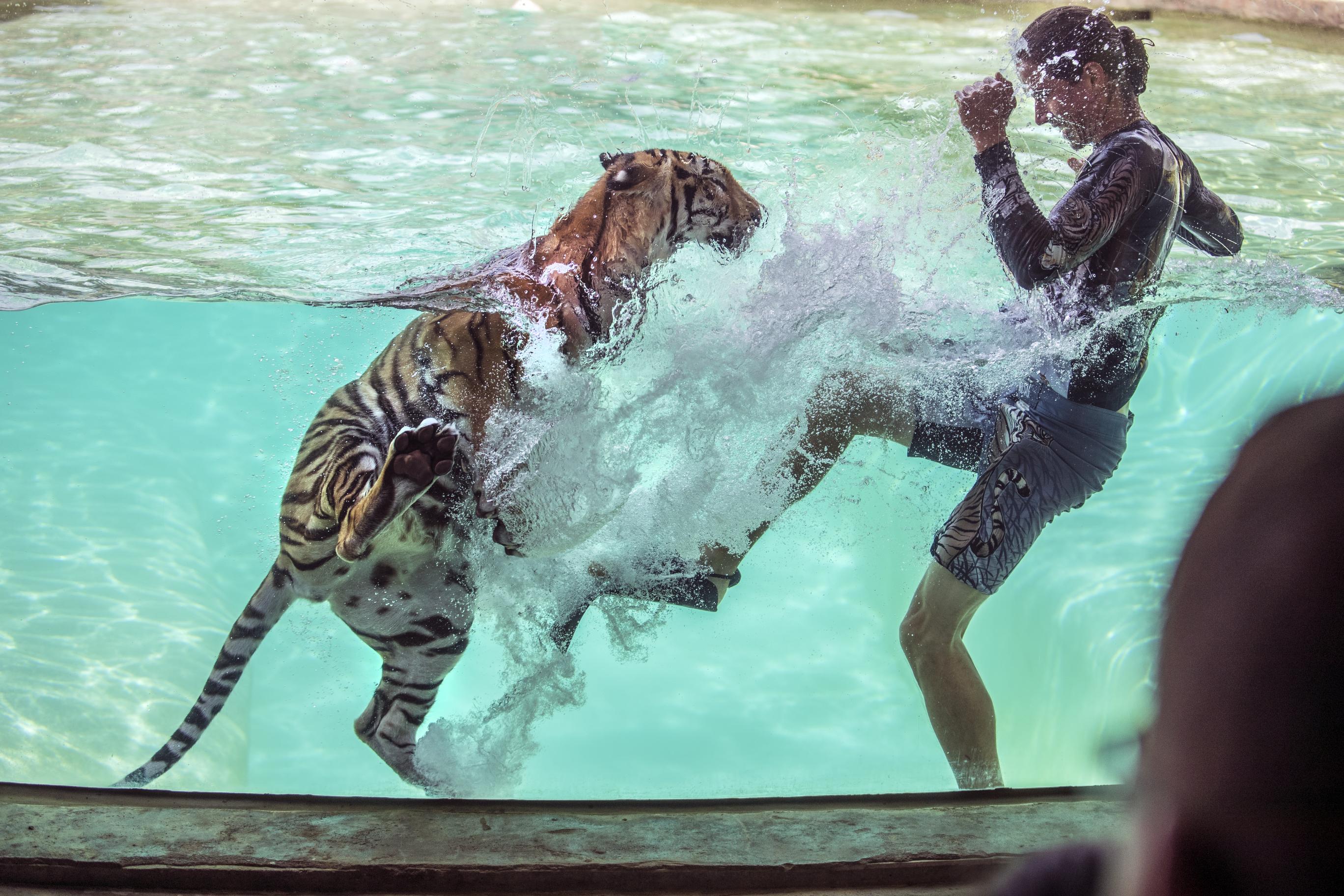
A trainer at Myrtle Beach Safari swims with a tiger in 2017. Under the Big Cat Public Safety Act, visitors can no longer bottle-feed lion cubs or pet tigers, but the unaccredited facility continues to offer other wildlife interactions. (Carol M. Highsmith)
|
|
|
|
|
That FBI arrest came just weeks before Antle was to stand trial in a separate case in Virginia: state wildlife trafficking charges. The case involved two of his daughters, a shady wildlife breeder, and what prosecutors described as a “pipeline” of lion cubs from Virginia to South Carolina to ensure Myrtle Beach Safari had a steady supply for its cub-petting photo encounters. Antle was convicted in 2023 and sentenced to two years in prison—suspended. (The charges against his daughters were dropped).
And now, those convictions have been overturned. In June, the Virginia Supreme Court ruled that state law makes it illegal to sell endangered species but not to buy them. Because prosecutors argued that Antle was the buyer, the court found that under the statute, he couldn’t be convicted of wildlife trafficking or conspiracy to traffic wildlife.
Antle called the ruling “total vindication,” according to TMZ. “Today the highest court in Virginia confirmed what I have said since the day these charges were filed: I broke no law. Not one.” (Antle and Myrtle Beach Safari did not respond to WIRE’s request for comment.)
|
|
|
|
|
Did a friend forward this newsletter to you?
|
|
|
|
|
|
|
|
Still, the ruling “does not change the fact that [Antle] bought days-old lion cubs who had been taken from their mothers prematurely so he could exploit them for profit at his roadside zoo,” says Brittany Peet, of the Animal Legal Defense Fund. “Justice can be slow, but accountability is catching up.”
Antle is now out of prison, and Myrtle Beach Safari continues to operate. The facility’s USDA exhibitor license is now held by China York, one of Antle’s romantic partners, and its website continues to promote the Rare Species Fund, the nonprofit that Antle pleaded guilty to using to launder money. The nonprofit’s board includes York, Antle’s daughter Tilakam Watterson, his son Kodi, and Moksha Bybee, whom Antle has identified as another romantic partner. Bybee pleaded guilty in 2023 to violating the Endangered Species Act and was sentenced to probation.
All this has led to one significant change: no more cuddling with lion cubs or posing alongside tigers. The Big Cat Public Safety Act, signed into law in 2022, bans contact by the public with big cats. The bill had been introduced a decade earlier, but “Tiger King”—which showed how dangerous these interactions can be for people and how cruel they are for cubs—helped galvanize support for the measure.
At Myrtle Beach Safari, visitors can still feed tigers—using tongs through a tube set in a thick plexiglass wall—or interact with African wild cats, including servals and caracals, which are not covered by the federal ban. As of June, the facility housed 58 tigers, nine lions, nine gray wolves, chimpanzees, orangutans, an elephant, and dozens of other animals, according to a USDA inspection report. It also recently added four capybaras for a “capybara cafe experience.”
Learn more:
|
|
|
|
|
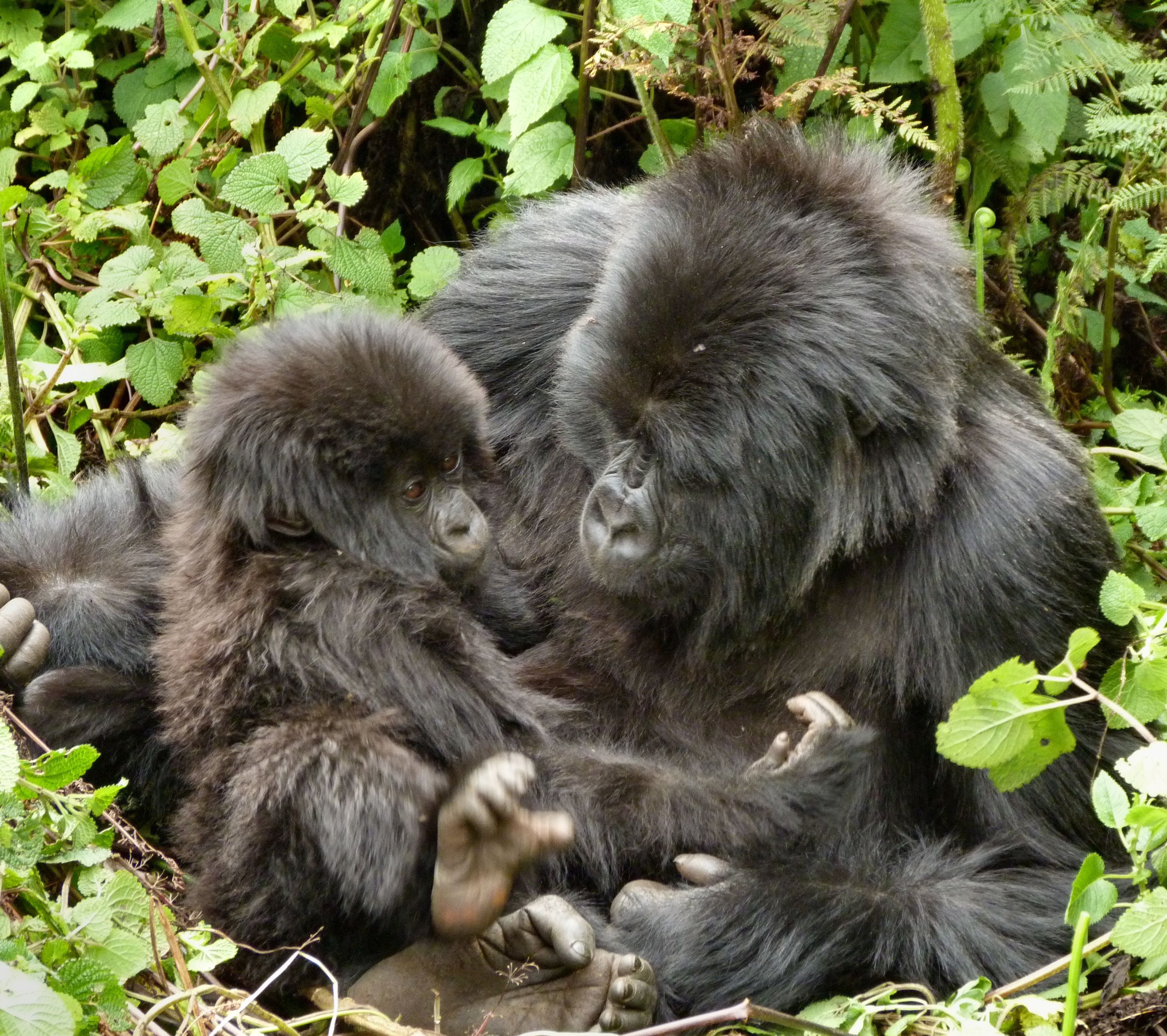
The illegal ape trade threatens the survival of some of the world’s most endangered primates. To capture infants for the pet trade, poachers often kill entire gorilla and chimpanzee families. (Charles Kinsey)
|
|
|
|
-
Wild bust: Australian authorities investigating a commercial cannabis operation at a house in New South Wales got a startling surprise: a four-foot saltwater crocodile in the bedroom. In addition to the illicit croc, law enforcement seized more than 50 hydroponic marijuana plants, 11 kilos of cannabis leaves, a rifle, dozens of deadly snakes, lizards, hedgehogs, and other animals kept without permits. The alleged offender was charged with drug, weapons, and illegal animal offenses, highlighting the frequent overlap between wildlife crime and other forms of criminal activity.
-
Lost gorilla: An endangered infant gorilla died after being rescued last week from wildlife traffickers in northern Nigeria. The effort to rescue the ape—suffering from severe sepsis, extensive internal injuries, sustained physical trauma, and the effects of prolonged abuse—was an extraordinary undertaking, Tim Santel, a senior advisor to the nonprofit group Focused Conservation, which provided support to Nigerian authorities, wrote in an announcement. “Although they could not save him, they gave him something his traffickers never did. Compassion. He spent his final moments with people who cared deeply for his survival, not surrounded by violence, fear, and hate.”
-
Wildlife politics: The Trump administration has appointed Interior Department official Jenifer Chatfield to lead the U.S. delegation to the this week’s CITES Animals Committee meeting in Geneva, marking the first time such a delegation would be headed by a political appointee rather than a conservation scientist, according to reporting from Mongabay about conflict-of-interest concerns. (CITES is the global treaty that governs international wildlife trade.) Chatfield faces allegations of using her position as a wildlife regulator to intervene in decisions that have helped wildlife breeding facilities, including her family’s Florida-based 4J Conservation Center, which raises endangered lemurs. In an April letter, members of the U.S. House Committee on Natural Resources requested that the Office of the Inspector General launch an investigation into whether Chatfield “has violated federal ethics rules and/or federal law” because “she appears to be involving herself in decisions that would directly benefit her family business and those of her allies.”
|
|
|
|
Strange, but true
The swim bladder of the totoaba—an endangered fish weighing up to 300 pounds and growing to six feet—can sell for as much as $80,000 a kilogram (about $36,300 a pound) on the black market supplying traditional Chinese medicine and luxury cuisine. Native to the Gulf of California in Mexico, totoaba are targeted by illegal gillnet fisheries that have also pushed the critically endangered vaquita, a tiny porpoise found only in the northern Gulf of California, to the brink. Fewer than 10 vaquitas are believed to remain in the wild, making them the world's rarest marine mammal.
|
|
|
|
Like this newsletter? Share it!
|
|
|
|
|
|
|
|
Support WIRE
WIRE runs on curiosity, persistence, and generous support from people who care deeply about what happens to wildlife when no one else is watching. Investigative reporting takes time, expertise, and financial resources, especially when stories cross borders and powerful interests. Our work is funded by readers like you who believe these stories matter. Monthly supporters give us the stability to report deeply, publish independently, and follow the consequences of our investigations. If that resonates, you can support our work here:
|
|
|
|
|
|
|
|
|
Wildlife Investigative Reporters & Editors
Independent, nonprofit journalism exposing wildlife crime and exploitation of nature.
Get in touch: [email protected]
|
|
You received this email because you signed up on our website or made a donation.
|
|
|
|
|
|