|
|
Hawk killings, butterfly smugglers, wolf politics—the remarkable career of a wildlife crime investigator
|
|
|
|
|
Voices and updates from the front lines of wildlife crime and exploitation of nature
|
|
|
|
|
Many morpho butterflies sold to collectors are legally sourced from butterfly farms, but some of the world’s most spectacular and endangered species in the wild are threatened by poaching for the illegal wildlife trade. (Luis Mata)
|
|
|
|
From undercover agent to podcaster
|
|
|
|
|
By Rene Ebersole
July 31, 2026
|
|
|
|
|
Pigeons were falling from the sky.
In backyards across Los Angeles, men gathered for roller pigeon contests to watch their Birmingham rollers—named for Birmingham, England, where the competitions originated—tumble through the air in dramatic backward somersaults. The pigeons’ synchronized flips cascaded through the flock like a waterfall. Since the early 1900s, fanciers have judged the rolls’ depth, speed, and synchronization with the same intensity cockfighters evaluate a rooster’s combat style.
But to a falcon or hawk, the spectacle looks like a buffet of injured prey. Raptors can spot the tumbling birds from miles away.
The solution, many roller pigeon breeders decided, was simple:
Kill the hawks.
The pigeon fanciers’ deadly campaign against Los Angeles’s hawks was one of the first—and most memorable—major investigations of Ed Newcomer’s career after he became a special agent with the U.S. Fish and Wildlife Service (FWS) in the early 2000s. Over the next two decades until his retirement in 2022, Newcomer investigated butterfly smugglers, reptile traffickers, and global poaching networks. Now, through his podcast, Nature’s Secret Service, he’s giving listeners a front row seat to the investigations.
“Throughout my career, I absolutely loved hearing the stories of other agents—I fed on it,” he says. “I was always so impressed by the work our agents were doing, not just in L.A., but all over the country.” What frustrated Newcomer was that those stories rarely reached anyone outside FWS. “It’s a public agency, right? The taxpayers should know what we do.”
|
|
|
|
|
Ed Newcomer served as a U.S. Fish and Wildlife Service special agent for two decades until 2022. Last year, he launched the podcast Nature’s Secret Service, where he interviews fellow law enforcement agents, biologists, historians, prosecutors, and journalists about wildlife crime. (Clement Gargoullaud, Al Jazeera)
|
|
|
|
|
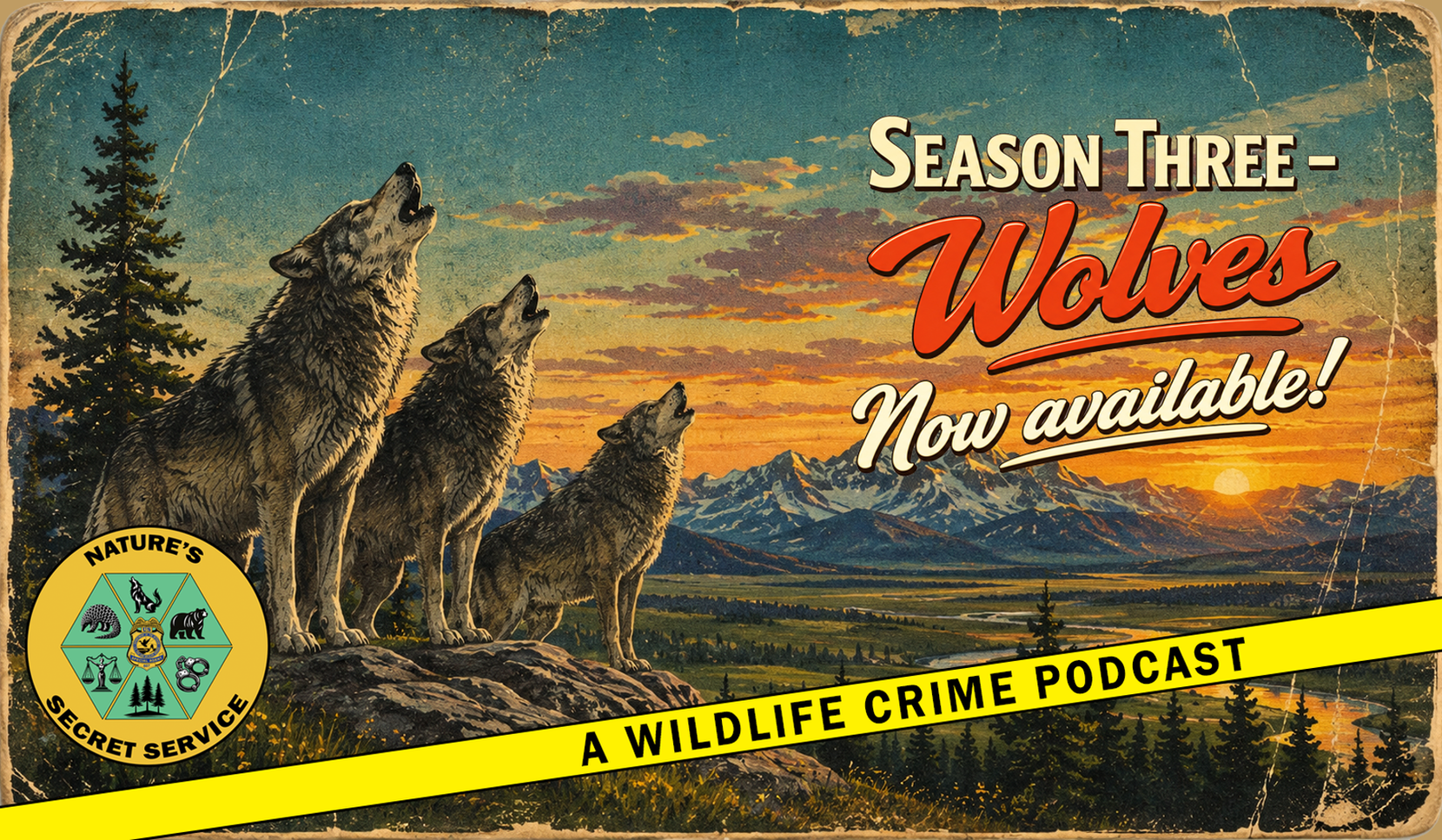
He’s especially proud of the podcast’s current season, devoted entirely to wolves. The idea came during a road trip through Yellowstone with his niece, a wildlife biology student. Watching tourists line the park pullouts with spotting scopes while listening to biologist Rick McIntyre on audiobook talking about the political battles surrounding wolf recovery, Newcomer saw a gap: Millions of people value wildlife enough to travel across the country to see a wolf, yet few understand the conflicts—and crimes—that determine whether those animals survive. “Wolves belong here,” he says, and he wants listeners to understand what it will take to protect them—and what’s standing in the way.
|
|
|
|
|
Did a friend forward this newsletter to you?
|
|
|
|
|
|
|
|
|
Season three of the Nature’s Secret Service podcast focuses on the story of wolf reintroduction in the United States and the law enforcement investigations launched to stop people from illegally hunting and killing the animals. (Courtesy Ed Newcomer)
|
|
|
|
|
Newcomer’s interest in law enforcement began when he was a kid growing up in Denver, Colorado. Bullied, he escaped into TV cop shows and dreamed of protecting the vulnerable—children, the elderly, animals. In college, a flyer introduced him to a career he never knew existed: special agent with the U.S. Fish and Wildlife Service. “I realized this was like an FBI agent for wildlife,” he says. After four rejected applications, he began volunteering with state game wardens and landed the job on his fifth try—just months before aging out at 37.
Newcomer was dispatched to Los Angeles, where he soon began working undercover investigations. Which is how he found himself on that roller pigeon case, where raptors were systematically being slaughtered. Killing a hawk is a crime under the Migratory Bird Treaty Act, punishable by up to a $15,000 fine for each bird and six months in jail. “They weren’t selling the carcasses or the feathers. It wasn’t to make money. They hated hawks and falcons,” Newcomer says. “It reminds me so much of the hatred right now being directed at wolves and other predators around the West.”
He infiltrated the roller pigeon community, including the inner circle of the National Birmingham Roller Club (NBRC), the sport’s governing organization. Playing a down-on-his-luck hobbyist eager to learn, he secretly recorded nearly every breeder discussing how they killed hawks. “It was so brazen,” he says, “these guys would email me instructions on how to catch hawks and kill them.”
Some blasted them from the sky with shotguns. Others lured them into wire goshawk traps, then shot them with pellet guns or beat them to death with sticks. He remembers one particular pigeon breeder, Rayvon Hall, who delighted in killing hawks by spraying their faces with a mixture of bleach and ammonia, creating toxic chlorine gas that slowly suffocated the birds. “Most bragged about killing at least one per month,” Newcomer says, adding that during the investigation, “the president of the NBRC, Juan Navarro, bragged on recorded video about killing 40 in a single year.”
|
|
|
|
|
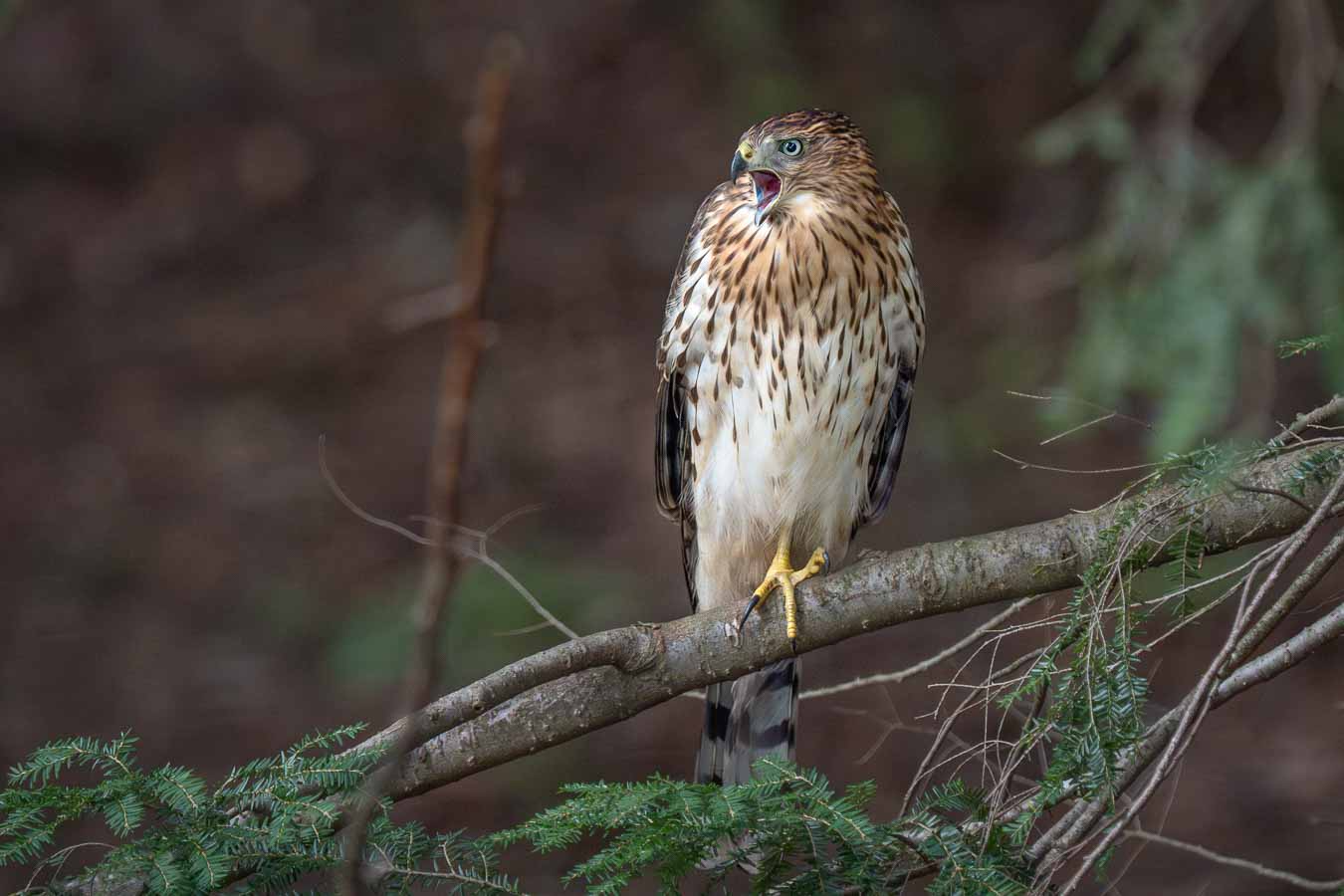
Cooper’s hawks hunt medium-size birds—pigeons, starlings, doves—on the wing, making the raptors targets for pigeon fanciers who sometimes kill them to protect their valuable competition “roller” pigeons. (Melissa Groo)
|
|
|
|
|
As the evidence mounted, Newcomer realized the scale of the killing. The Los Angeles chapter of the NBRC had about 250 members. If each killed 10 mostly juvenile Cooper’s hawks a year—a conservative estimate, he calculated—that amounted to roughly 2,500 raptors shot, trapped, or poisoned annually in a single metropolitan area. Because many of the birds would have dispersed or migrated to breed elsewhere, the losses could ripple far beyond Southern California, reducing populations across a much broader region. When Newcomer showed the preliminary evidence to his supervisor, what had been considered a low-priority bird case became a high-priority investigation.
And when he learned that another agent, in Oregon, was looking into similar crimes, the cases merged into Operation High Roller, a nationwide investigation. On a single day in 2007, agents from across the country served more than a dozen search and arrest warrants, seizing firearms, traps, and records.
Every defendant in Southern California received the same basic sentence—six months in prison, suspended depending upon their completing five years probation, fines, restitution payments for raptor conservation, and forfeiture of the traps and firearms used in the crimes. Then-NBRC president Navarro paid $10,000 in fines and $15,000 in restitution. But the most lasting consequence, Newcomer says, was public accountability. Several Los Angeles defendants were required to publish letters admitting their crimes in three consecutive issues of the National Birmingham Roller Club magazine. “We went scorched-earth on them,” Newcomer says. If the agents uncovered another crime—illegal firearms, building code violations, whatever it was—they charged them or referred it to the appropriate agency. The investigation also sparked debate within the roller pigeon community and emboldened fanciers who had long opposed killing hawks to speak out.
The best news came about a year and a half later, when the Golden Gate Raptor Observatory reported that their long-running hawk migration count had just recorded more juvenile Cooper’s hawks than in any year in three decades. “We can’t scientifically say that this was because of Operation High Roller, but there’s no other explanation,” Newcomer says. “That really felt good.”
Looking back, Newcomer says witnessing animal cruelty was one of the hardest parts of the job. He coped by focusing on making perpetrators accountable. “When I saw the worst of the worst, in my brain, I thought, I’m gonna get these guys,” he says. “I’m gonna charge them. I’m gonna put handcuffs on them. I’m gonna ruin their day. We’re gonna stop this. And that’s how I got over it.”
There’s one case Newcomer gets asked about more than any other. It centered around a Japanese man who touted himself as “the world’s most-wanted butterfly smuggler.” The dealer, Hisayoshi (Yoshi) Kojima, ran a global network shipping protected butterflies to high-paying collectors. Suspicious and paranoid, he spent years evading investigators.
|
|
|
|
|
Ed Newcomer displays an endangered male (top) and female Queen Alexandra’s birdwing, the world’s largest butterfly by wingspan, which can reach almost 10 inches. (Courtesy Ed Newcomer)
|
|
|
|
|
Newcomer received a tip that Kojima was going to be at “the bug fair,” an annual event held at the Natural History Museum of Los Angeles. Playing a wide-eyed, curious, wannabe hobbyist named “Ted Nelson,” Newcomer struck up a conversation with Kojima.
Kojima gave him a box of butterflies—and his email address. That opened a door to a years-long undercover investigation conducted through coffee meetings, emails, and late-night Skype calls. Kojima bragged about smuggling rare species, and he taught “Nelson” how to elude “the fish and wild guys.” Newcomer secretly recorded every word.
The operation nearly collapsed more than once—Kojima froze him out as a competitor and at one point even turned him into authorities. The case seemed doomed, until at the bug fair where they’d met years earlier, Newcomer rebuilt Kojima’s trust by pretending to be a fellow outlaw. It was the breakthrough that allowed Newcomer to gather the remaining incriminating evidence he needed to finally secure an indictment: dozens of recorded calls, shipments, and meticulously documented illegal butterfly deals.
When Kojima flew back to Los Angeles in 2007, agents were waiting at the airport to arrest him. Kojima pleaded guilty, and a judge deemed his crimes serious enough to sentence him to more than 21 months in federal prison—longer than the recommended federal sentencing guideline—before he was deported to Japan. “He’s prohibited from ever coming back,” Newcomer says. “Last I heard, he was selling Japanese antiques out of a storefront in Kyoto.”
Listen to Nature’s Secret Service online, or on Spotify, Apple Podcasts, or wherever you get your podcasts.
Read more about Newcomer’s undercover investigations:
|
|
|
|
-
Meta marketplace: A new investigation details how Meta’s platforms—Instagram, Facebook, WhatsApp, Threads—have evolved into the world’s largest online global marketplace for illegal wildlife, where traffickers use social media to advertise and sell protected animals and products. Algorithms, engagement tools, and monetization systems have become helpful tools for criminals operating lucrative illicit wildlife business online.
-
Laos exposed: An undercover Guardian investigation revealed how Chinese tourism in Laos is fueling demand for illegal wildlife products. The team documented dozens of shops openly selling illegal wildlife items—elephant ivory, pangolin scales, and other endangered animal parts—and restaurants serving freshly killed pangolin for lunch.
-
Turtle crisis: A new report from ADM Capital Foundation reveals Hong Kong’s role in the global turtle trade crisis, with rare and endangered species targeted for the global exotic pet market. The report shows growing demand for turtles and tortoises, including critically endangered species such as the Madagascan big-headed turtle, and warns that illegal trade is hastening population declines.
|
|
|
|
|
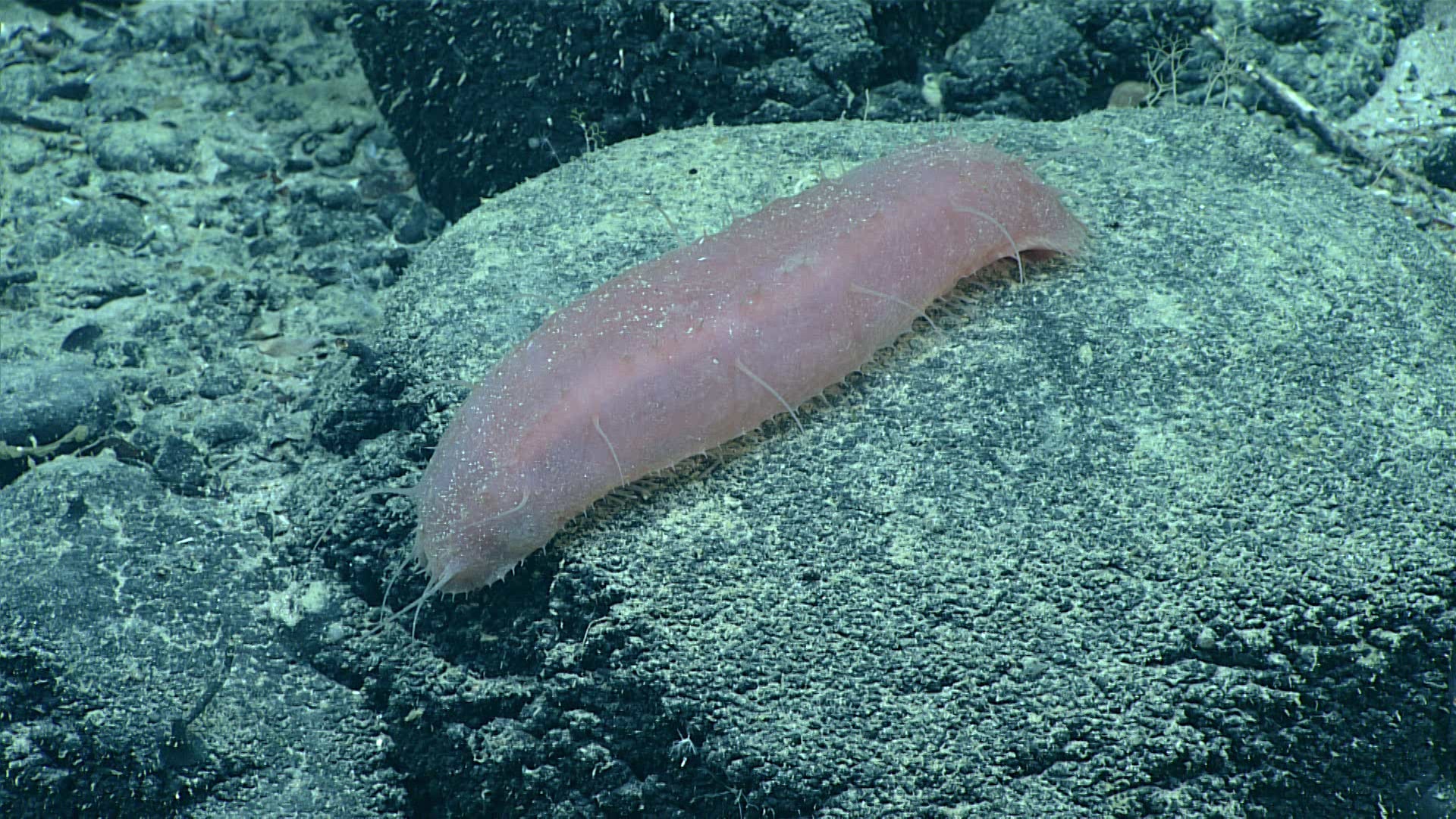
Known as the “vacuums of the sea,” sea cucumbers inch across the ocean floor, digesting the nutrients in sediment. (NOAA)
|
|
|
|
Strange, but true
Sea cucumbers look like slow-moving underwater sausages—but some species are so sought-after by Asian seafood markets, they can sell for hundreds of thousands of dollars a kilogram. Their popularity has made them one of the world’s most heavily exploited marine animals.
|
|
|
|
Like this newsletter? Share it!
|
|
|
|
|
|
|
|
Support WIRE
WIRE runs on curiosity, persistence, and generous support from people who care deeply about what happens to wildlife when no one else is watching. Investigative reporting takes time, expertise, and financial resources, especially when stories cross borders and powerful interests. Our work is funded by readers like you who believe these stories matter. Monthly supporters give us the stability to report deeply, publish independently, and follow the consequences of our investigations. If that resonates, you can support our work here:
|
|
|
|
|
|
|
|
|
Wildlife Investigative Reporters & Editors
Independent, nonprofit journalism exposing wildlife crime and exploitation of nature.
Get in touch: [email protected]
|
|
You received this email because you signed up on our website or made a donation.
|
|
|
|
|
|