|
|
Here comes another "rattlesnake roundup" in Texas
|
͏ ͏ ͏ ͏ ͏ ͏ ͏ ͏ ͏ ͏ ͏ ͏ ͏ ͏ ͏ ͏ ͏ ͏ ͏ ͏ ͏ ͏ ͏ ͏ ͏ ͏ ͏ ͏ ͏ ͏ ͏ ͏ ͏ ͏ ͏ ͏ ͏ ͏ ͏ ͏ ͏ ͏ ͏ ͏ ͏ ͏ ͏ ͏ ͏ ͏ ͏ ͏ ͏ ͏ ͏ ͏ ͏ ͏ ͏ ͏ ͏ ͏ ͏ ͏ ͏ ͏ ͏ ͏ ͏ ͏ ͏ ͏ ͏ ͏ ͏ ͏ ͏ ͏ ͏ ͏ ͏ ͏ ͏ ͏ ͏ ͏ ͏ ͏ ͏ ͏ ͏ ͏ ͏ ͏ ͏ ͏ ͏ ͏ ͏ ͏ ͏ ͏ ͏ ͏ ͏ ͏ ͏ ͏ ͏ ͏ ͏ ͏ ͏ ͏ ͏ ͏ ͏ ͏ ͏ ͏ ͏ ͏ ͏ ͏ ͏ ͏ ͏ ͏ ͏ ͏ ͏ ͏ ͏ ͏ ͏ ͏ ͏ ͏ ͏ ͏ ͏ ͏ ͏ ͏ ͏ ͏ ͏ ͏ ͏ ͏
|
|
|
|
|
Voices and updates from the front lines of wildlife crime and exploitation of nature
|
|
|
|
|
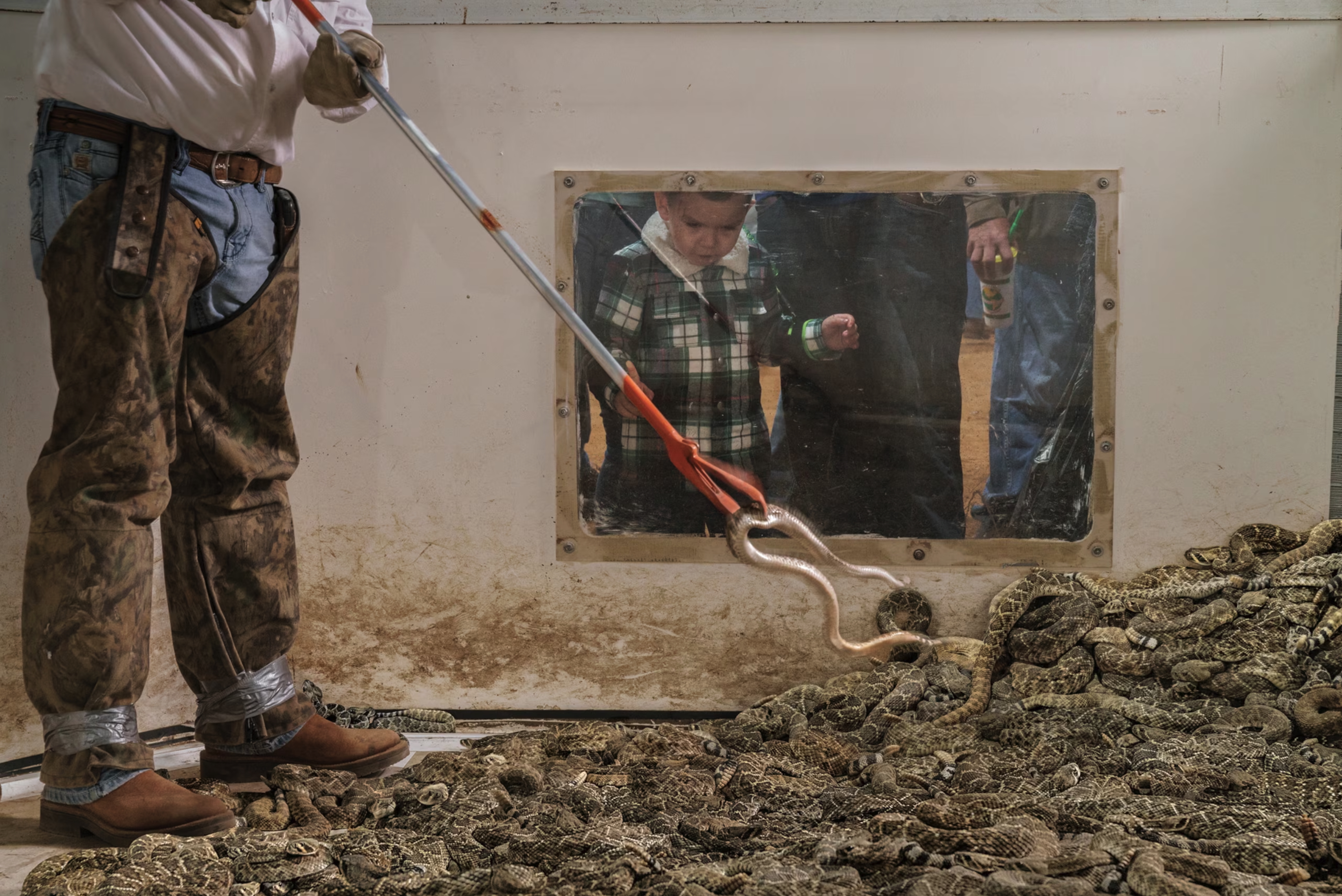
At the Sweetwater Rattlesnake Roundup, in Texas, which opened in 1958, visitors of all ages look on as handlers poke, pick up, drop, and antagonize hundreds of western diamondbacks. Many snakes are killed for snacks and souvenirs. (Javier Aznar González de Rueda)
|
|
|
|
This Texas town built a festival around rattlesnake slaughter
|
|
|
|
|
By Rachael Bale, Executive Editor
February 13, 2026
|
|
|
|
|
Growing up on the Southern California coast, I learned to walk through the brush with my head down, scanning the ground just ahead, ears perked for a telltale rattle. Rattlesnakes sunned themselves on the blacktop of the elementary school, took shelter in our backyards, cooled off in rockpiles at the edges of parking lots. When we got to the playground, we knew first to stomp around a bit to give any rattlers the chance to bolt before we started playing. There was the occasional scary encounter, but in general, caution served us just fine. Rattlesnakes don’t go looking for trouble.
Wildlife photographer Javier Aznar González de Rueda has been making photos of rattlesnakes for years, focusing on our contradictory ability to both revile and revere them. Science journalist Elizabeth Royte joined Aznar a few years ago to report a story about our complex relationship with “these antiheroes of the American West” for National Geographic. One of their stops was the “World’s Largest Rattlesnake Roundup,” in Sweetwater, Texas, held each March. With the 68th iteration of this gruesome event just a month away, I wanted to talk to Royte and Aznar about their experiences.
The roundup begins with people gathering hundreds, sometimes thousands, of rattlesnakes from the wild. “Some are collected on roadsides,” Royte writes, “but most are captured by hunters who cruise the state, busting up rocky cracks and crevices with crowbars and flushing their quarry from dens with aerosolized gasoline.”
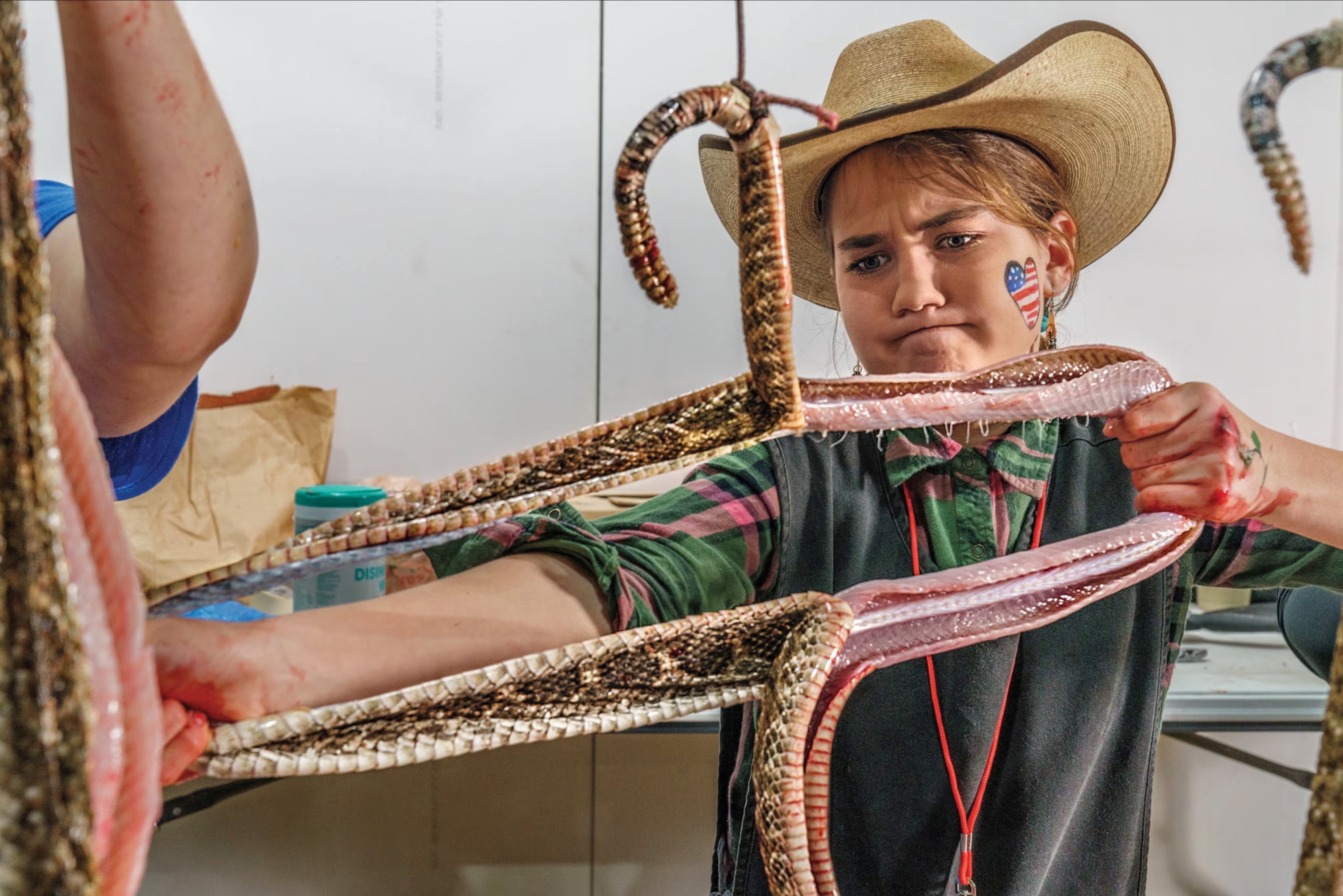
The snakes are brought to the Nolan County Coliseum, the roundup venue where most will be slaughtered, battered, and fried for attendees. The rest are sold to vendors to make boots, wallets, and souvenirs. But first, they’re dumped in writhing, rattling masses into “education” pits where handlers prod them and toss them about while calling out rattlesnake factoids to spectators. Later, some are selected for another pit, where spectators pay a small fee to try their hand at skinning a freshly beheaded rattlesnake.
|
|
|
|
|
A young girl skins a rattlesnake at the Sweetwater Rattlesnake Roundup after a local volunteer severed its head. (Javier Aznar González de Rueda)
|
|
|
|
|
Each year, about 30,000 people attend the weekend-long Sweetwater roundup, injecting millions into the local economy. The organizers, the Sweetwater Jaycees, donate the roundup’s proceeds ($63,000 in 2023) to local charities. They call the event educational and cultural.
Some rattlesnake roundups in the U.S.—including a handful in Pennsylvania, Florida, and Georgia—are now “no-kill” events, intended to reveal the benefits of these often maligned creatures before setting them free again. Of the remaining "traditional" roundups, Sweetwater remains by far the largest.
I talked to Royte and Aznar about rattlesnakes and roundups.
WIRE: Javier, how did rattlesnakes come to be a focus of your photojournalism?
Javier Aznar: I’ve always loved all kinds of snakes. I’ve been working with them for many years. I was living in Texas with my girlfriend, and I just wanted to see a rattlesnake. I went to the Davis Mountains with a friend, and this is where I saw my first rattlesnake. I fell in love. The fact that they have a rattle—it makes them more special than other snakes.
WIRE: Elizabeth, before this story, you hadn’t reported on rattlesnakes. What was your initial reaction when you started researching?
Elizabeth Royte: I’d always thought rattlesnakes were beautiful and fascinating. When I first heard about roundups, I couldn't believe it was true. To go around hunting wild animals and dragging them indoors, into these pits, and treating them so cruelly—and charging money. People were flocking to these places to see animals taunted and ridiculed. I think that I was more shocked that they did this openly. This wasn't like cockfighting, which is on the down-low.
|
|
|
|
|
Did a friend forward this newsletter to you?
|
|
|
|
|
|
|
|
|
WIRE: Tell me about what it was like attending the event.
ER: I was prepared for seeing the snakes two feet deep in these pits, moving around the edge of the pit, looking for ways to escape. There was the constant rattling, which indicates severe stress, and the smell of this acrid musk that they release when they're afraid or stressed out.
There’s a handler in each pit who’s wearing boots and has a snake stick and, of course, a big hat. There’s a lot of red-meat- and testosterone-fueled-energy. They’re sticking balloons in the face of snakes, teasing them and getting them to strike. And then when they do, it’s like, OK, this is a vicious animal.
I was surprised that there was no pretense of handling snakes gently, or celebrating their beauty, or teaching visitors about the importance of being respectful of other species. They talk about the snakes being “mean” and “dangerous” and “ugly,” and it seems to be that classic attempt to rationalize what they’re doing.
|
|
|
|
|
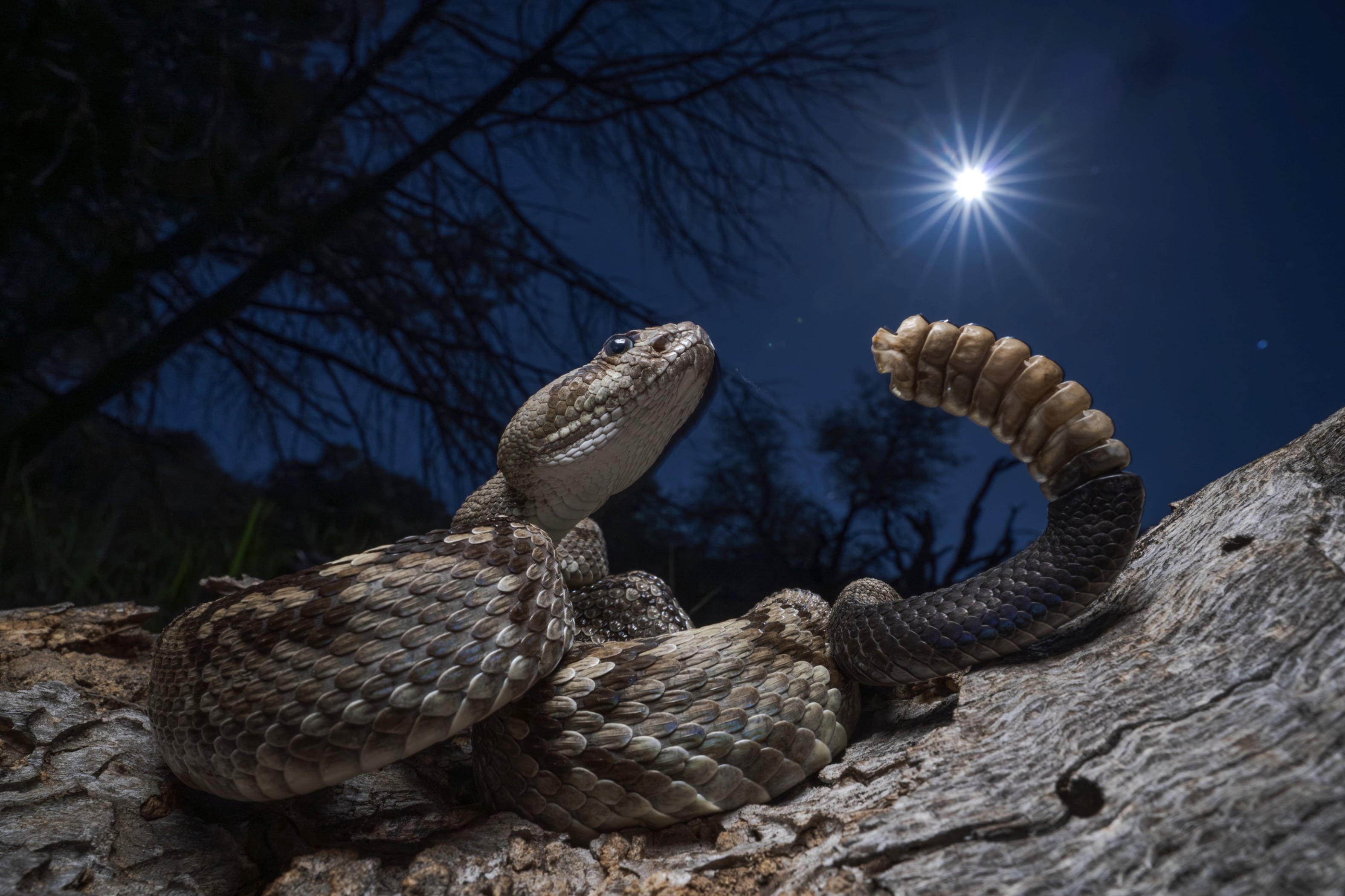
An eastern blacktailed rattlesnake curls on top of a log after a driver moved it from the road. This is one of several images that won Aznar Wildlife Photographer of the Year’s 2025 photojournalist story award. (Javier Aznar González de Rueda)
|
|
|
|
|
WIRE: What do you wish people knew about rattlesnakes? Why should we want to keep them around?
JA: They eat rodents and help control their population. At the same time they’re also eating other medically relevant animals like ticks, which carry Lyme disease and other diseases. That’s really important. But also rattlesnakes are food for other animals, like roadrunners, badgers, many birds, and coyotes. They’re part of the ecosystem. Other animals feed on them, and they feed on others. If you kill them, you are breaking the chain.
|
|
|
|
|
WIRE: Knowing that, why do rattlesnake roundups persist?
ER: The Jaycees, who run the roundup, defend it as educational. They say they’re teaching people how to be safe around snakes. They also tout the roundup's economic value to the town. There’s some vague rhetoric about medical research to explain why they’re collecting snake venom, though they’re cagey about where the venom ends up. They weigh and measure the snakes for Texas Parks & Wildlife to make sure the population “stays strong.” Supposedly [the event] doesn’t harm local populations, but even with the data collected at the roundups over the years, there just isn’t good enough monitoring to know for sure.
Then there's the cultural argument, which puts rattlesnake hunting in the context of Western adventure, the cowboy ethos, and proving your manhood. “It's just what we do,” the Jaycees say.
WIRE: Was there any particular moment or experience you had at the roundup that has stuck with you in the years since?
ER: For me, a sense of sadness. Seeing the snakes that were waiting to go into the pits, just desperately trying to get out—or just curled up tightly, in defeat, and not even trying. There's a sense of despair. It was a bit overwhelming.
|
|
|
|
|
Longreads highlights WIRE’s reporting
WIRE’s investigation into the African grey parrot trade, written by co-founder and EIC Rene Ebersole, was featured this week as an Editors’ Pick by the online publisher and curator Longreads, dedicated to high-quality, long-form nonfiction storytelling. “Rene Ebersole’s investigation into the illegal parrot trade touches virtually every part of the African grey parrot ecosystem, from the clever birds flexing their vocabularies in viral videos to the unscrupulous traders who seem less than forthcoming about the origins of their animals.” The illegal grey parrot trade is “a low-risk, high-reward crime,” Ebersole told an interviewer.
New ocean investigation, backed by matching support
In the year ahead, WIRE’s journalists will plunge deep into the sea with support from Bloomberg Oceans Fund, which has promised to match up to $208,000 in donations to WIRE’s forthcoming oceans coverage. YOU CAN HELP NOW: Thanks to early supporters, $115,000 has already been unlocked. Just $93,000 remains. Every gift is still doubled until we reach the full match.
Help us close the gap and get our team out into the field to start these important investigations.
|
|
|
|
-
UAE crackdown: The United Arab Emirates, a hub for wildlife trade, has passed a new law strengthening penalties for criminals caught trafficking wildlife and tightening regulations on legal wildlife trading. As a result, “the prevalence of online advertisements for protected species appears to have dropped,” according to an alert from United for Wildlife, a global initiative founded by Prince William and The Royal Foundation. “Seizures are expected to increase at the UAE border.” A likely side effect, the organization reports: Some dealers may shift their operations to Syria, Iraq, and Saudi Arabia.
-
Orchid smuggling: Ahead of the Lunar New Year, authorities in Hong Kong have reported a spike in cases involving illegally imported orchids, popular traditional gifts and decorations symbolizing prosperity, elegance, and good fortune. There were 23 orchid seizures in January alone. By law, orchids transported across borders must be accompanied by special permits in accordance with the Convention on International Trade in Endangered Species (CITES). In Hong Kong, the maximum penalty for smuggling such protected flora and fauna is a fine of more than a million dollars and up to 10 years in prison.
-
Rescued chimps: In the Democratic Republic of Congo, two chimpanzees—an endangered species—were rescued from wildlife traffickers. ConservCongo executive director Adams Casinga shared on LinkedIn the “unforgettable” reaction of one of the apes, an adult male, after being freed from a small cage where he’d lived for more than a decade. “Instead of fear or aggression, he quietly reached for the grass beneath him, savoring freedom in a humble and deeply moving posture,” Casinga wrote. “It was a powerful reminder that animals feel, suffer, heal, and cherish life just as humans do—and that they deserve dignity, freedom, and protection.” The alleged traffickers’ arrest is an important warning, says Casinga: “This region has become a frontline in the fight against primate trafficking. If urgent and coordinated action is not taken now—strengthening law enforcement, border surveillance, community livelihoods, and international cooperation—we risk losing entire populations of great apes while criminal networks grow stronger.”
-
New fisheries legislation: On February 2, the U.S. Senate Foreign Relations Committee advanced the Protecting Global Fisheries Act, legislation that would grant the president authority to impose sanctions on foreign individuals or vessels involved in illegal, unreported, and unregulated (IUU) fishing. According to the U.S. Coast Guard, IUU fishing has surpassed piracy to become the leading global maritime security threat, destroying marine ecosystems, threatening food security, and enabling organized crime such as drug and human trafficking.
|
|
|
|
|
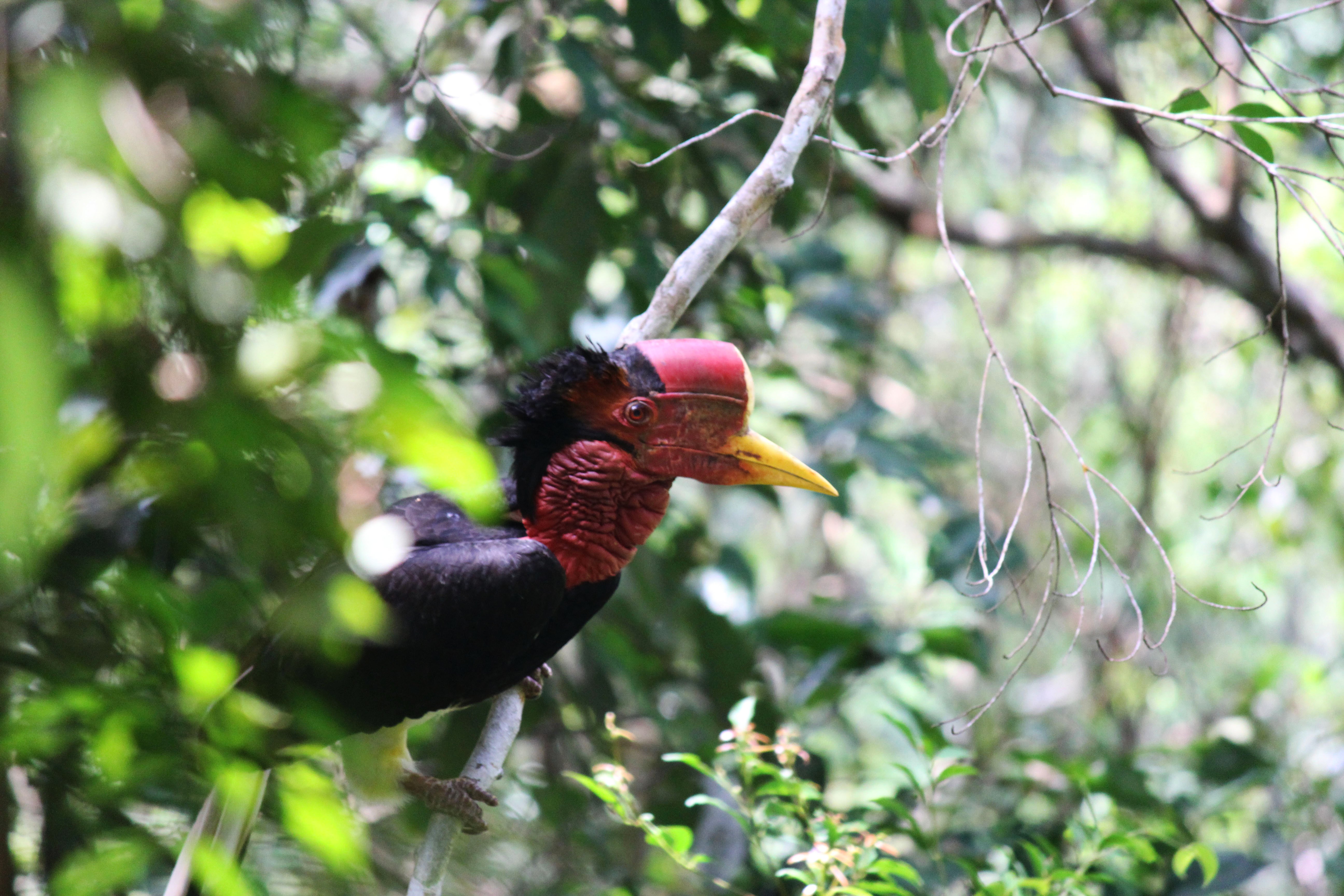
Critically endangered helmeted hornbills are unique—their solid keratin “horn,” called a casque, sets them apart from other hornbills. (Michaela Koschova, Wildscreen Exchange)
|
|
|
|
Species spotlight: Helmeted hornbill
|
|
|
|
|
With its striking yellow and red casque, the rare helmeted hornbill is found only in the lowland forests of Indonesia, Brunei, Myanmar, Malaysia, and southern Thailand. These birds—which can live to be 50—play a vital role in forest regeneration by dispersing seeds from the figs and other fruits they eat. Competing for mates, male helmeted hornbills engage in dramatic aerial jousts, ramming each other mid-flight with their solid “casques.” More valuable than elephant ivory, hornbill casques—“red ivory”—are carved into elaborate objects that can fetch hundreds of thousands of dollars. Widespread illegal hunting, coupled with habitat loss across Southeast Asia, has pushed helmeteds to the brink. Conservationist groups such as Birdlife International, Wildlife Conservation Society, Malaysian Nature Society, and Planet Indonesia are working to protect hornbills by combating poaching, preserving forest habitat, training hornbill guardian teams, and curbing demand for ivory throughout Asia. (To learn more, read WIRE executive editor Rachael Bale’s 2018 National Geographic article about this extraordinary bird.)
|
|
|
|
|
“People collect tarantulas as they collect Pokémons—they can’t stop with just one,” said a biodiversity researcher in Finland after more than 2,000 live tarantulas were found in a vehicle at the U.K. border. The discovery was a rare glimpse of the surging international spider trade, where legal sales can blur into a thriving black market siphoning rare species from the wild. (Source: The Times)
|
|
|
|
Like this newsletter? Share it!
|
|
|
|
|
|
|
|
Wildlife Investigative Reporters & Editors
Independent, nonprofit journalism exposing wildlife crime and exploitation of nature.
Get in touch: [email protected]
|
|
You received this email because you signed up on our website or made a donation.
|
|
|
|
|
|