|
|
Behind the scenes of the new film "Trade Secret"
|
͏ ͏ ͏ ͏ ͏ ͏ ͏ ͏ ͏ ͏ ͏ ͏ ͏ ͏ ͏ ͏ ͏ ͏ ͏ ͏ ͏ ͏ ͏ ͏ ͏ ͏ ͏ ͏ ͏ ͏ ͏ ͏ ͏ ͏ ͏ ͏ ͏ ͏ ͏ ͏ ͏ ͏ ͏ ͏ ͏ ͏ ͏ ͏ ͏ ͏ ͏ ͏ ͏ ͏ ͏ ͏ ͏ ͏ ͏ ͏ ͏ ͏ ͏ ͏ ͏ ͏ ͏ ͏ ͏ ͏ ͏ ͏ ͏ ͏ ͏ ͏ ͏ ͏ ͏ ͏ ͏ ͏ ͏ ͏ ͏ ͏ ͏ ͏ ͏ ͏ ͏ ͏ ͏ ͏ ͏ ͏ ͏ ͏ ͏ ͏ ͏ ͏ ͏ ͏ ͏ ͏ ͏ ͏ ͏ ͏ ͏ ͏ ͏ ͏ ͏ ͏ ͏ ͏ ͏ ͏ ͏ ͏ ͏ ͏ ͏ ͏ ͏ ͏ ͏ ͏ ͏ ͏ ͏ ͏ ͏ ͏ ͏ ͏ ͏ ͏ ͏ ͏ ͏ ͏ ͏ ͏ ͏ ͏ ͏ ͏
|
|
|
|
|
Voices and updates from the front lines of wildlife crime and exploitation of nature
|
|
|
|
|
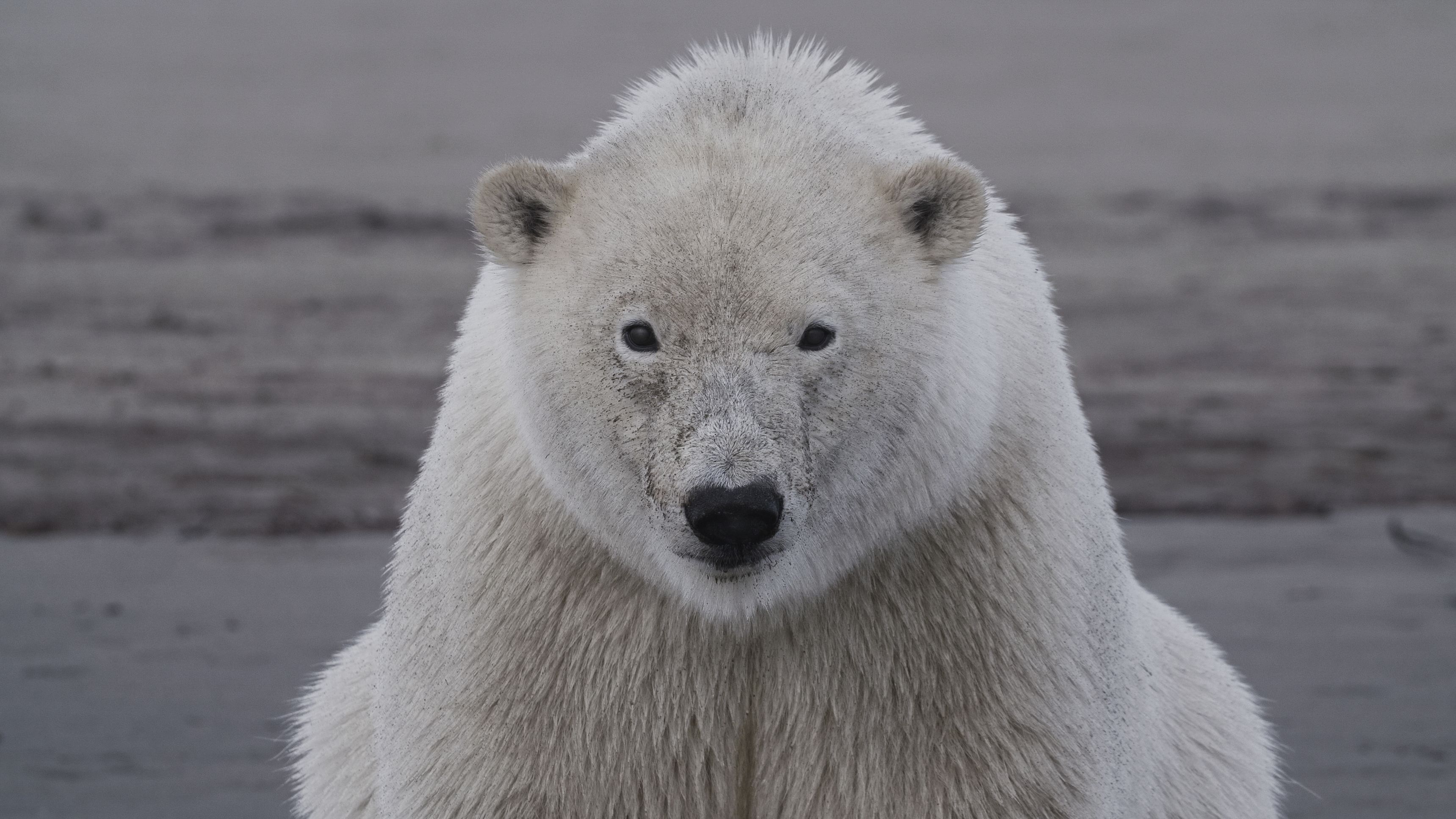
The documentary film Trade Secret investigates the sanctioned sale of hundreds of polar bear pelts around the world each year—and how some conservationists want the trade to continue. (Courtesy Trade Secret)
|
|
|
|
Behind Trade Secret: a 6-year investigation into the polar bear trade
|
|
|
|
|
By Rene Ebersole, Editor-in-Chief
January 30, 2026
|
|
|
|
|
A polar bear marooned on a shard of floating sea ice has become a familiar emblem of climate change’s rapid transformation of the Arctic—and the planet. Yet beyond the global meltdown lies another, largely hidden, peril: a commercial trade that exploits polar bears and intensifies the risks they face. The new documentary Trade Secret, now on the film festival circuit, follows three unlikely allies on a mission to protect polar bears from international trade and exposes the sanctioned sale of hundreds of polar bears—a threatened species—annually on the global market for their pelts. As the investigation deepens, it uncovers a disturbing truth: Those entrusted with safeguarding polar bears may be entangled in their continued commercialization.
Because consequential journalistic investigations paired with powerful visual storytelling are at the heart of what we do at WIRE, we believe film and photography can reach audiences in visceral, emotional ways that words alone sometimes cannot. It also guides how we present reporting in which images play a central role in conveying complex stories. In a conversation with WIRE, Trade Secret filmmaker Abraham Joffe shares his experiences working on this documentary—and his hopes for its beneficial effects.
|
|
|
|
|
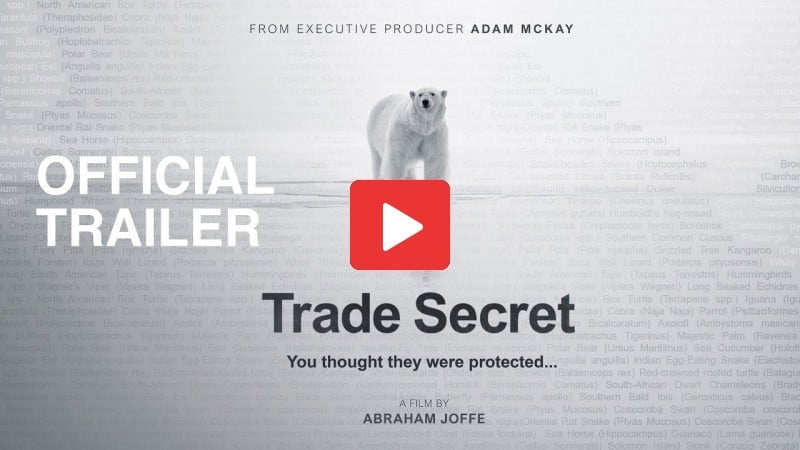
Watch the trailer for Trade Secret, an exposé of the polar bear fur trade.
|
|
|
|
|
WIRE: You spent more than six years and traveled across nine countries to make Trade Secret. What was the moment—or discovery—that convinced you this story demanded that level of time and persistence?
AJ: The origins of Trade Secret go back to 2013, on my very first trip to the high Arctic to see polar bears in the wild. It was of course an incredible experience. But it was on that same trip that I learned something that completely shocked me: If you had enough money, you could trophy hunt a polar bear or buy a skin and ship it internationally. I believed, like most people do, that polar bears are a protected species. It quickly became clear to me that this dark, little known reality ought to be exposed in a documentary of some form.
It took a few more years to find the right angle to approach the issue, and that came when I was introduced to Norwegian photographer and polar bear expert Ole J. Liodden. He had already committed years to researching the true extent of the polar bear trade, and I knew this was a way in. I could never have known it would take several more years to complete the film. But once we started documenting and learning more, we could not stop.
|
|
|
|
|
Did a friend forward this newsletter to you?
|
|
|
|
|
|
|
|
|
An undercover investigation in Tianjin, China, found numerous polar bear skins for sale that originated in Canada. Skins can sell for more than $60,000. (Courtesy Trade Secret)
|
|
|
|
|
WIRE: Most people associate polar bears’ decline almost exclusively with climate change. What does your film reveal about the lesser known role that international commercial trade still plays in the species’ survival?
AJ: It has long been clear that the climate crisis represents the greatest threat to the polar bear’s future survival. Sea ice continues to decline, and in fact February 2025 saw the smallest extent of Arctic sea ice since records began. This accelerating trend paints a grim outlook for a species so dependent on sea ice to hunt from.
There are also other threats polar bears face, including pollution, oil and gas exploration and extraction, and microplastics. However, what is far less widely known is that a legal international commercial trade in polar bear body parts persists. Hundreds of bears continue to supply the international market from Canada, with the vast majority sold to China, Norway, and several other European countries.
This trade exists in addition to around a hundred polar bears a year shot for “sport” by non-Indigenous trophy hunters. As with many other species around the world, the trade and trophy hunting disproportionately value and target the largest, most magnificent specimens. Some experts have warned that this kind of “unnatural selection” of the largest and fittest adds an additional layer of threat to a species already on the edge.
The film reveals at least one example of trafficked polar bear skins moving through Norway. Skins sold without documentation supposedly originating from Greenland and Russia. This mirrors what has been seen in other wildlife markets, such as ivory, where the existence of a legal trade has enabled illegal trade to flourish.
Unfortunately for the polar bear, precise population counts have long been impossible due to the species being a wandering apex predator spread across a vast area and multiple international borders. This lack of data makes it harder for those arguing that numbers are heading in the wrong direction. Of the 20 defined polar bear subpopulations, 10 are classified as Data Deficient, 3 are likely decreasing, 5 are likely stable, and 2 are likely increasing. Polar bears are listed as Vulnerable on the IUCN Red List but are classified as an Endangered Species under the U.S. Marine Mammal Protection Act.
|
|
|
|
|
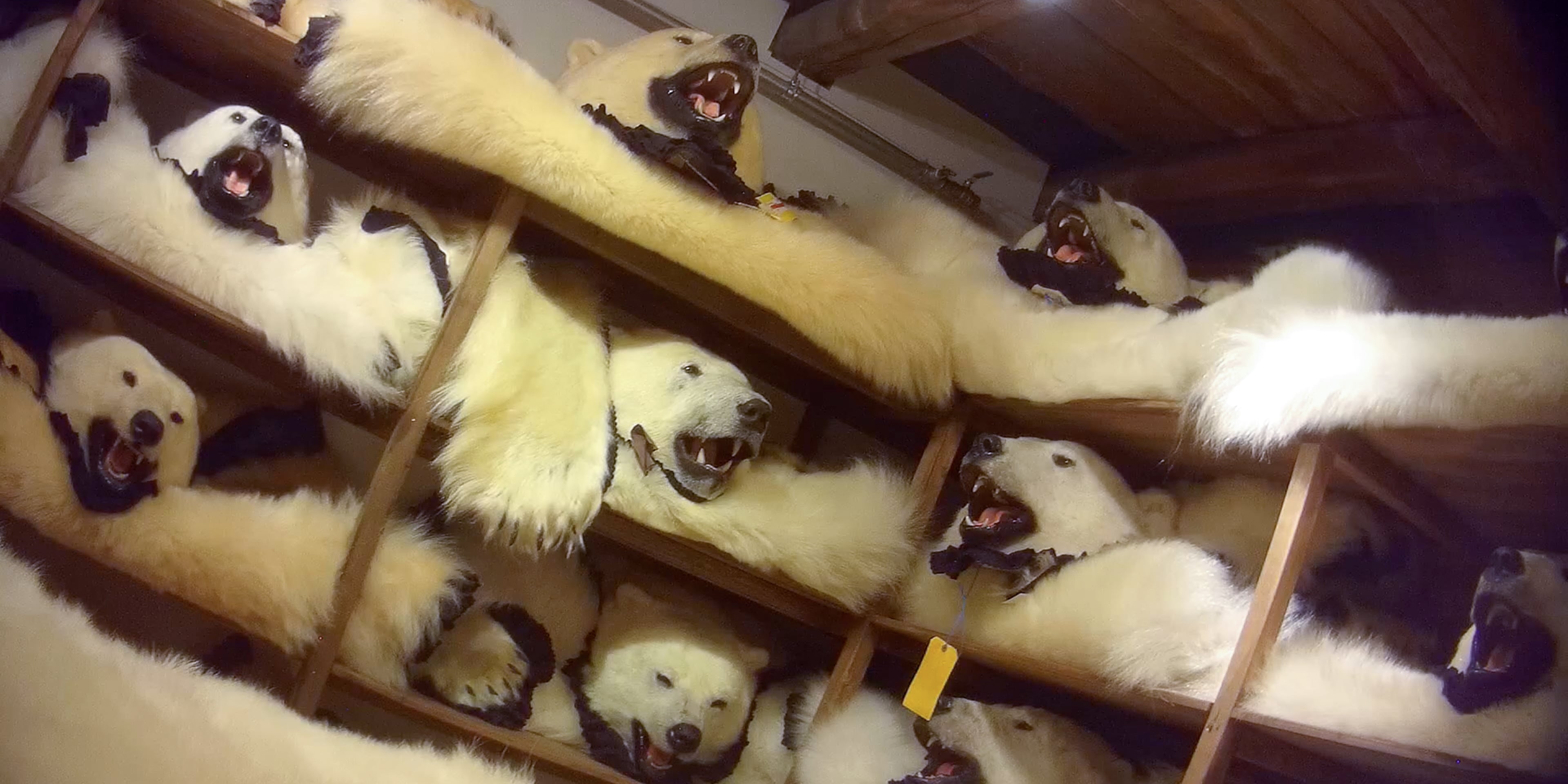
In a hidden room in Bergen, Norway, investigators discovered shelves stacked with polar bear heads and pelts. Many lacked the required CITES paperwork, a sign that they were traded illegally. (Courtesy Trade Secret)
|
|
|
|
|
WIRE: The film documents the ongoing legal trade in polar bears despite their threatened status. For viewers unfamiliar with CITES (the Convention on International Trade in Endangered Species) and its appendix listings, please explain what protections polar bears have now and what greater protections are available.
AJ: Polar bears currently have an Appendix II status under CITES. This means international trade is allowed and regulated, with CITES paperwork required to export and import the skins.
Should polar bears be “uplisted” to Appendix I, all international commercial trade would be prohibited. They would attain the same status as species such as leopards, black rhinos, and mountain gorillas. Canada, as a sovereign nation, could still decide to allow trade within its borders, but it would no longer be able to export polar bear body parts internationally.
Oddly, CITES does not consider trophy hunting as a commercial activity and therefore does not automatically regulate it. However many Appendix 1 species also have obtained strict CITES quotas for trophy hunting exports. What an Appendix I listing would mean for polar bears is that many countries would immediately ban or severely restrict imports, including the 27 EU member states.
WIRE: A central revelation in Trade Secret is that polar bears have not been uplisted to CITES Appendix I in part because of opposition from a certain conservation group. What did your reporting uncover about how and why that position is held?
AJ: Without spoiling the big reveal, yes—it was a very surprising discovery to find an organization claiming to protect polar bears is fighting against further protections for the species. Several years working on the film taught me that not all is as it appears at surface level. I went to my first CITES conference very naïve, thinking I was attending a conservation summit. I learned quickly that it is, first and foremost, a trade gathering. Most delegates seem to prioritize their countries’ trade interests, and many widely held assumptions about which species are protected are sorely misplaced. Despite continued claims (by some) that polar bears did not meet the biological criteria to justify an Appendix I uplisting, the evidence showed that they did. However, politics can heavily determine the final outcome of CITES votes and, in this case, the precautionary principle—which gives the benefit of the doubt to the species and is written into CITES itself—was ultimately disregarded.
Much of the film is about trying to understand why this focus on so-called “sustainable use” (that is, trade and trophy hunting) continues to be so fiercely defended by countries and certain parts of the conservation world.
WIRE: Investigating powerful institutions often brings legal, political, and ethical challenges. Were there moments during production when you faced pressure—explicit or implicit—to soften or redirect the film’s findings?
AJ: Because we were able to produce the film independently, without interference from any third parties, we did not experience any direct pressure to alter or censor the finished film. What we did encounter repeatedly were barriers to access. Certain policy meetings that we were initially able to attend were later closed to us. Some interviews took many months to secure, while others were ultimately refused. It became a marathon of persistence and patience.
One thing worth emphasizing is how rigorous we were in documenting and presenting reality. Every fact in the film had to be supported by multiple sources. We knew how consequential many of the revelations were, and it was essential to get them absolutely right. I’m proud of the rigor and care we brought to documenting and presenting the facts.
|
|
|
|
|
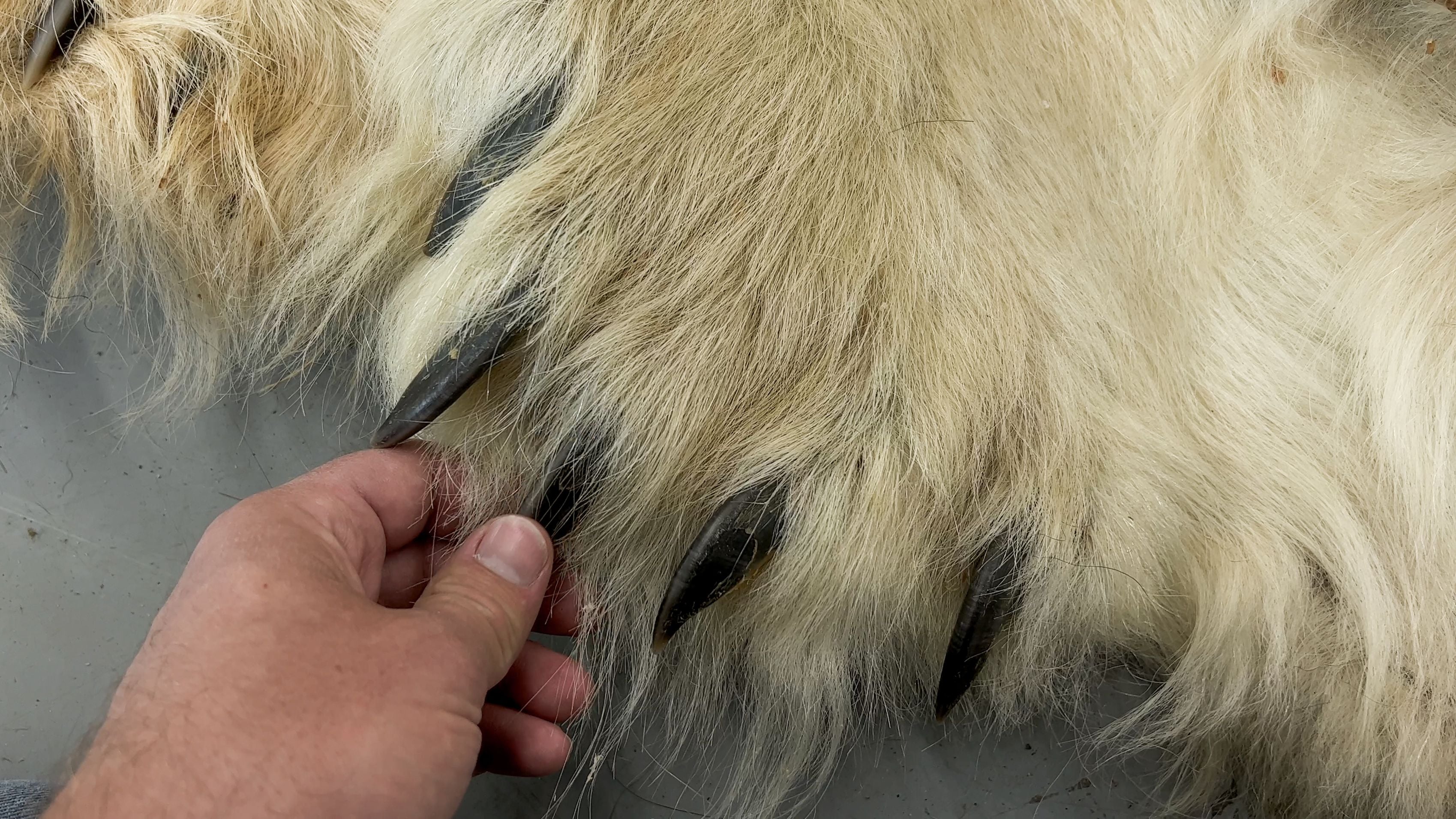
An investigator touches a polar bear's paw on a pelt in a warehouse in North Bay, Canada, awaiting sale on the international market. Canada is the only country that still supplies the global commercial trade in polar bears. (Courtesy Trade Secret)
|
|
|
|
|
WIRE: You follow three unlikely allies in the film. Why was it important to anchor this global investigation in individual characters, and how did their perspectives shape the reporting?
AJ: We realized this complex story would be most powerfully told by following the journeys of our three central characters—investigative journalist Adam Cruise, nature photographer Ole J. Liodden, and wildlife advocate Iris Ho. Because we had the luxury to follow the work closely, we were able to document their process and discoveries honestly as they unfolded in real time. Where the story ultimately goes is driven by Cruise’s reporting, and his determination to understand how and why polar bears remain a traded commodity.
We shot more than 2,500 hours of footage for Trade Secret, including around 240 interviews. That will probably surprise people who’ve seen the film, because there are very few traditional talking heads—only a handful across the entire feature. But those interviews weren’t wasted. In many ways, they became research-with-a-camera.
What I’ve always hoped to find as a filmmaker is a story that truly justifies the dedication required to tell it as it unfolds. One of the earliest films that amazed me was the Chicago-based basketball documentary Hoop Dreams. The fact that the filmmakers followed individuals over the course of years, without knowing where the story would lead, was astonishing to me. I remember being struck by that commitment—by the idea that someone would devote themselves so fully to a story in the truest documentary sense of the word.
It became clear fairly early on that Trade Secret was demanding that dedication—if we could find the resources to sustain it. I often think about other films that have deeply influenced me, like The Cove and Blackfish. They tackled hugely important subjects in a powerful, engaging way. It’s real life, and sometimes real life is shocking and hard to take. But that’s exactly when you need the courage to take out the cameras (or in some cases, conceal them) and go after the story.
WIRE: Over six years, the science, politics, and economics surrounding polar bears inevitably shifted. How did you navigate reporting a shifting landscape while maintaining narrative and investigative clarity?
AJ: That’s a great question. You’re right—the science, politics, and economics all shifted over the six years, but not in ways that fundamentally altered the trajectory or the underlying mission of our characters.
The science around polar bears has not improved over that time. Arctic sea ice has continued to deteriorate, and politically—particularly in the U.S.—conditions have not moved in a direction that would support stronger protection for the species.
Economically, some may point to the fact that fewer polar bears are being exported annually now than at the peak in 2012–13, when around 400 left Canada each year. What is tragically overlooked, however, is that hundreds of bears are still being killed annually with the intention of supplying the international commercial trade, even though many of those skins fail to sell at auction and therefore never appear in official international CITES trade data. A government subsidy scheme, which provides pre-payments regardless of whether a skin ultimately sells, appears to be perpetuating this supply chain.
In recent years, large stockpiles of unsold bear skins have been returned to northern communities from fur auction houses after failing to sell, due to smaller or lower-quality furs, weakening demand, or likely a combination of both.
To me, this represents one of the clearest examples of commercial trade pressure being applied to a vulnerable species without any meaningful economic justification. So yes, the story continues beyond where the film ends—but by almost every metric, the situation is only getting worse for polar bears.
WIRE: What has the response been from conservation groups, policymakers, or trade regulators since the film’s release—and have any of those reactions surprised you?
AJ: We’ve been extremely uplifted to see the conservation community step up to support the film. Almost a dozen prominent global environmental NGOs have agreed to join Trade Secret as “global partners.” This includes WildAid, Mission Blue, SeaLegacy, and Pro Wildlife, and the list continues to grow.
Ocean conservationist Sylvia Earle [a member of WIRE’s advisory board] offered to open Trade Secret at its international premiere during Climate Week in New York, calling it a “life-changing film.” That was a hugely significant moment for the film and its trajectory.
In October, the EU parliament adopted a resolution ahead of the upcoming CITES COP 20, urging all EU Member States to advocate for stronger protection of polar bears and to address the threats posed by the international trade in trophies and hides.
At the latest CITES COP, in Uzbekistan, we screened the film to a highly important room of delegates, including members of the EU, CITES member states, and NGO leaders. It was a hugely powerful moment, and what we hope is an inflection point for a polar bear Appendix I uplisting campaign at the next COP in three years time.
There have also been indications that certain conservation policies, particularly those with global influence, may be shifting in response to the film.
I’m cautiously hopeful that the film is already having a positive impact.
WIRE: After spending so long immersed in this issue, what do you most want audiences—particularly decision-makers—to take away from Trade Secret about how conservation actually works in practice, not just in principle?
AJ: We hope the film goes beyond its specific focus on polar bears and helps audiences understand how widespread so-called “sustainable use” policies have become—or, put more plainly, the exploitation of threatened species in the name of conservation. Over the past 50 years, the world has lost around 70 percent of its wild animals. That alone makes it clear the status quo is not working. Awareness is an important first step, but what’s ultimately required is real, tangible action from decision-makers if we’re to deliver lasting protection for wildlife.
We hope the film continues to find its way in front of those who have the power to effect change, and that it helps spark a global conversation about the true cost of exploitation and the urgent need to fully protect what remains.
Storytelling through film can be an extraordinarily powerful tool. If Trade Secret can play even a small role in securing greater protection for polar bears—and other species—that will mean more than any award. That’s the legacy we’re striving for.
To see a schedule of upcoming showings, visit www.tradesecretfilm.com.
|
|
|
|
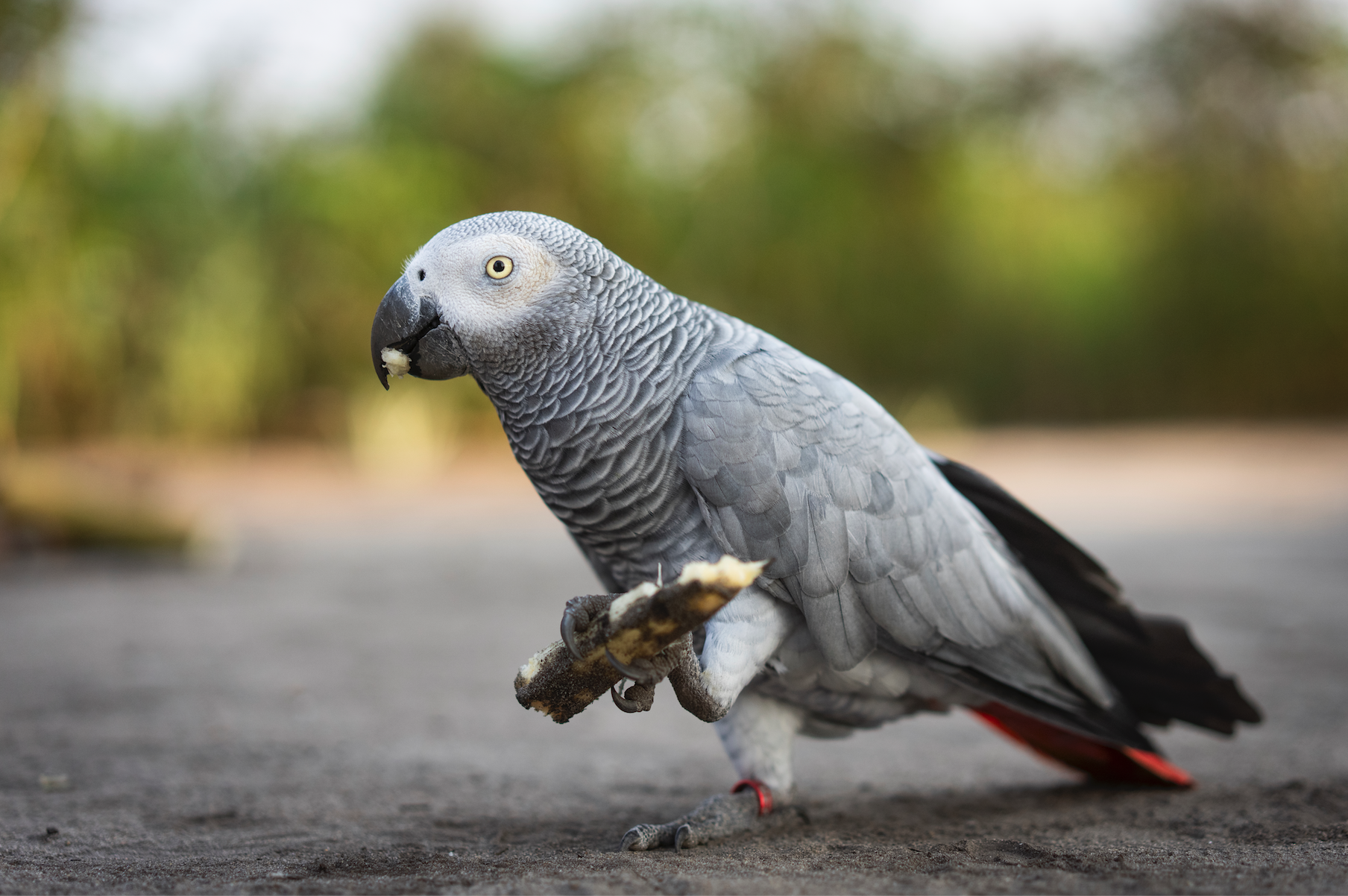
Reader question: Could a pet African grey parrot be rewilded?
|
|
|
|
|
Wild African grey parrots that have been trapped illegally can be released back into the wild, but what about one who has been living in captivity for years? (Karine Aigner)
|
|
|
|
|
A reader of WIRE’s investigation The Parrot Cartel, published in Rolling Stone’s December issue, asked: Could a pet African grey parrot ever be rewilded to its natural habitat? And if it could successfully survive in the wild, would it likely teach its flock to talk?
We put the question to animal behavior and cognition researcher Irene Pepperberg, most famous for her studies with an African grey parrot named Alex, who could use more than a hundred words.
“It wouldn't be at all easy,” Pepperberg says. The bird would need to be “fully trained to be independent,” because their survival would hinge on being able to forage on their own, get along with other parrots, and avoid predators. Building up endurance would also be critical, she says, because wild grey parrots can fly more than 37 miles in a day.
Would speech spread through the wild flock? That’s an interesting question, she says. In her lab, one African grey named Griffin learned some labels from Alex. But another bird named Athena didn’t learn from Griffin. Pepperberg believes it depends on the birds’ dominance hierarchy and whether they perceive human vocalization as useful. “Griffin saw how useful label learning was in order to get our attention and treats,” she says. “Athena just didn't care.”
At the Lincolnshire Wildlife Park in the UK, a few African grey parrots taught others in their captive flock to curse, “probably because of the attention that this behavior garnered them,” Pepperberg says. In the wild, she thinks it would depend on whether talking would give the birds some advantage. “If, for example, humans were more attracted to and more likely to provision parrots that chatted to them.”
Have a question or a story tip, send us an email: [email protected]
|
|
|
|
-
Wildlife CSI: Researchers from Western Sydney University and the University of Suffolk in the United Kingdom are using stable isotope analysis to determine whether reptiles such as freshwater turtles targeted in Australia’s illicit pet trade have been taken from the wild or bred in captivity—a major challenge for enforcing wildlife trade laws. By analyzing isotope ratios in turtle claw keratin, the team distinguished wild individuals from captive ones. The researchers say their findings will help investigators develop new evidence for prosecutions where origin claims are contested.
-
Golden State bust: California wildlife officers dismantled several linked trafficking operations following the interception of a falsely labeled shipment from Thailand containing four Asian elephant trunks, according to a press release from California governor Gavin Newsom’s office. Subsequent searches in Fresno County uncovered ivory, rhino horn, walrus tusks, saiga antelope parts, turtle shells, and suspected bear gall bladders
-
Scale seizure: In India, forest officials working in the Palamu Tiger Reserve confiscated more than 130 pounds of pangolin scales and arrested over 60 suspects allegedly involved in an interstate wildlife trafficking network. Authorities say the investigation is ongoing.
-
Caught in the act: At the Otay Mesa border crossing from Mexico last April, a U.S. federal agent searched a man with suspiciously bulky ankles. He found Lajud Libien, 54, hiding six orange-fronted parakeets—a protected species—wrapped in pantyhose inside his boots. Six more birds—three still alive—were later discovered concealed inside one of Libien’s Grand Cherokee’s seat cushions. Pleading guilty to wildlife smuggling charges, Libien was sentenced on January 26 to three years of supervised release and fined $2,300.
|
|
|
|
Strange, but true
A type of forest mushroom found in different places around the world can trigger a bizarre side effect if eaten undercooked: vivid hallucinations of tiny, elf-like figures marching across plates, climbing furniture, and slipping under doors. Every year, doctors in China’s Yunnan Province treat hundreds of patients experiencing so-called “lilliputian hallucinations,” named for the miniature people living on fictional Lilliput Island in the novel Gulliver’s Travels.
(Source: BBC)
|
|
|
|
Like this newsletter? Share it!
|
|
|
|
|
|
|
|
Wildlife Investigative Reporters & Editors
Independent, nonprofit journalism exposing wildlife crime and exploitation of nature.
Get in touch: [email protected]
|
|
You received this email because you signed up on our website or made a donation.
|
|
|
|
|
|