|
|
It began with a whale named Kathy…
|
͏ ͏ ͏ ͏ ͏ ͏ ͏ ͏ ͏ ͏ ͏ ͏ ͏ ͏ ͏ ͏ ͏ ͏ ͏ ͏ ͏ ͏ ͏ ͏ ͏ ͏ ͏ ͏ ͏ ͏ ͏ ͏ ͏ ͏ ͏ ͏ ͏ ͏ ͏ ͏ ͏ ͏ ͏ ͏ ͏ ͏ ͏ ͏ ͏ ͏ ͏ ͏ ͏ ͏ ͏ ͏ ͏ ͏ ͏ ͏ ͏ ͏ ͏ ͏ ͏ ͏ ͏ ͏ ͏ ͏ ͏ ͏ ͏ ͏ ͏ ͏ ͏ ͏ ͏ ͏ ͏ ͏ ͏ ͏ ͏ ͏ ͏ ͏ ͏ ͏ ͏ ͏ ͏ ͏ ͏ ͏ ͏ ͏ ͏ ͏ ͏ ͏ ͏ ͏ ͏ ͏ ͏ ͏ ͏ ͏ ͏ ͏ ͏ ͏ ͏ ͏ ͏ ͏ ͏ ͏ ͏ ͏ ͏ ͏ ͏ ͏ ͏ ͏ ͏ ͏ ͏ ͏ ͏ ͏ ͏ ͏ ͏ ͏ ͏ ͏ ͏ ͏ ͏ ͏ ͏ ͏ ͏ ͏ ͏ ͏
|
|
|
|
|
Voices and updates from the front lines of wildlife crime and exploitation of nature
|
|
|
|
|
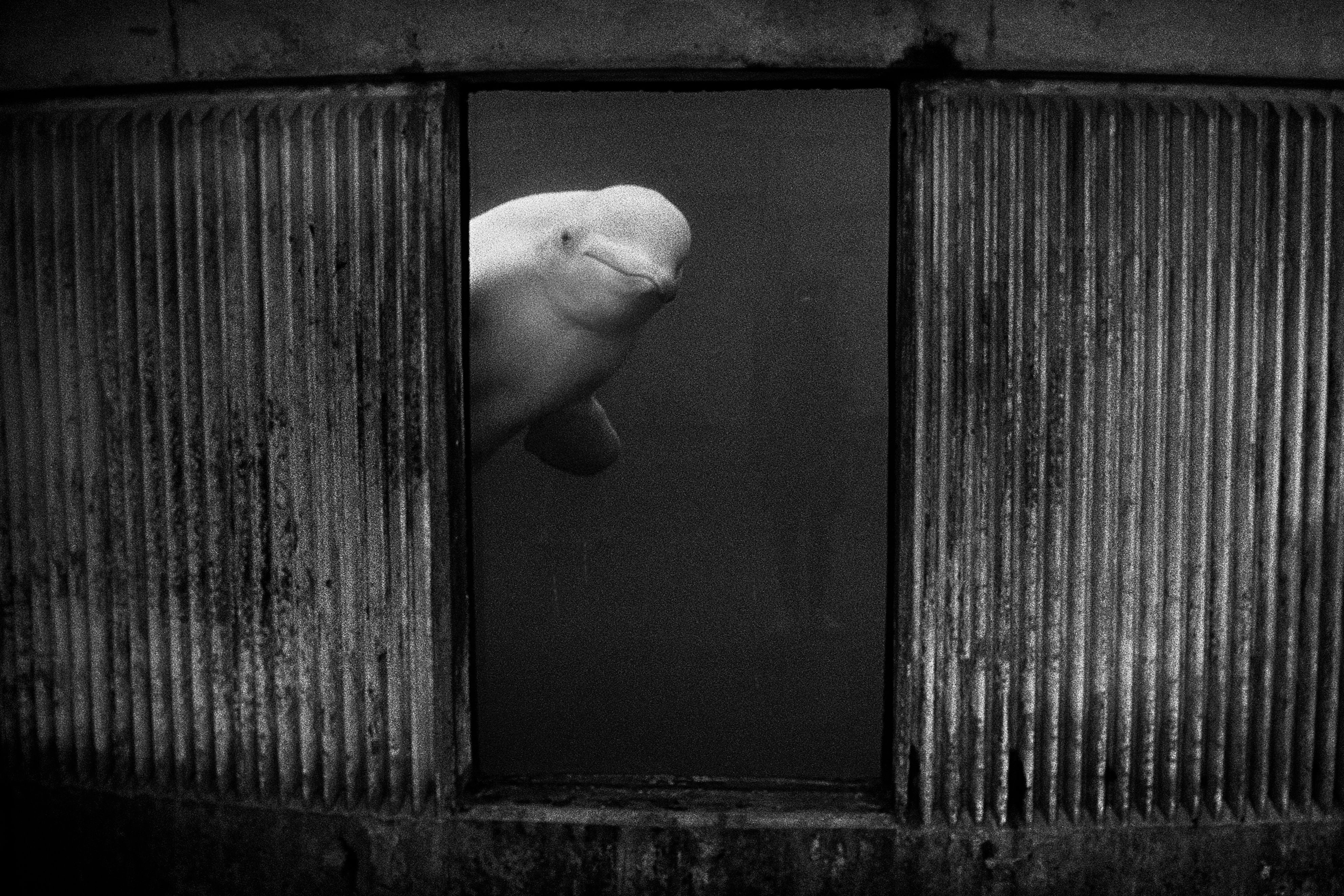
A beluga whale named Kathy, captured in Canada’s Hudson Bay when she was about four years old, lived at the New York Aquarium for 30 years until her death in 2004. The silhouette of photographer Britta Jaschinski is faintly reflected in the aquarium glass. (Britta Jaschinski)
|
|
|
|
A voice for the voiceless through Britta’s lens
|
|
|
|
|
By Rene Ebersole
February 27, 2026
|
|
|
|
|
It all began with a whale named Kathy.
A 12-foot beluga with a melon-shaped head living at the New York Aquarium in Coney Island, Brooklyn, New York. Encountering her on a visit to the aquarium in the summer of 1995, photographer Britta Jaschinski felt overwhelmed with sadness. Kathy had been captured when she was four years old in Canada’s Hudson Bay—470,000 square miles of open water. Now her life was confined to a chlorinated concrete tank. By then the aquarium’s “smiling ambassador” had spent more than two decades endlessly circling the enclosure, curiously observing visitors passing by.
Gazing at Kathy, Britta made a promise: “I’m going to try to end this bullshit,” she recounted when we spoke recently about the origins of her decades-long commitment to exposing wildlife exploitation and environmental crime through photography. “This is so wrong.”
|
|
|
|
|
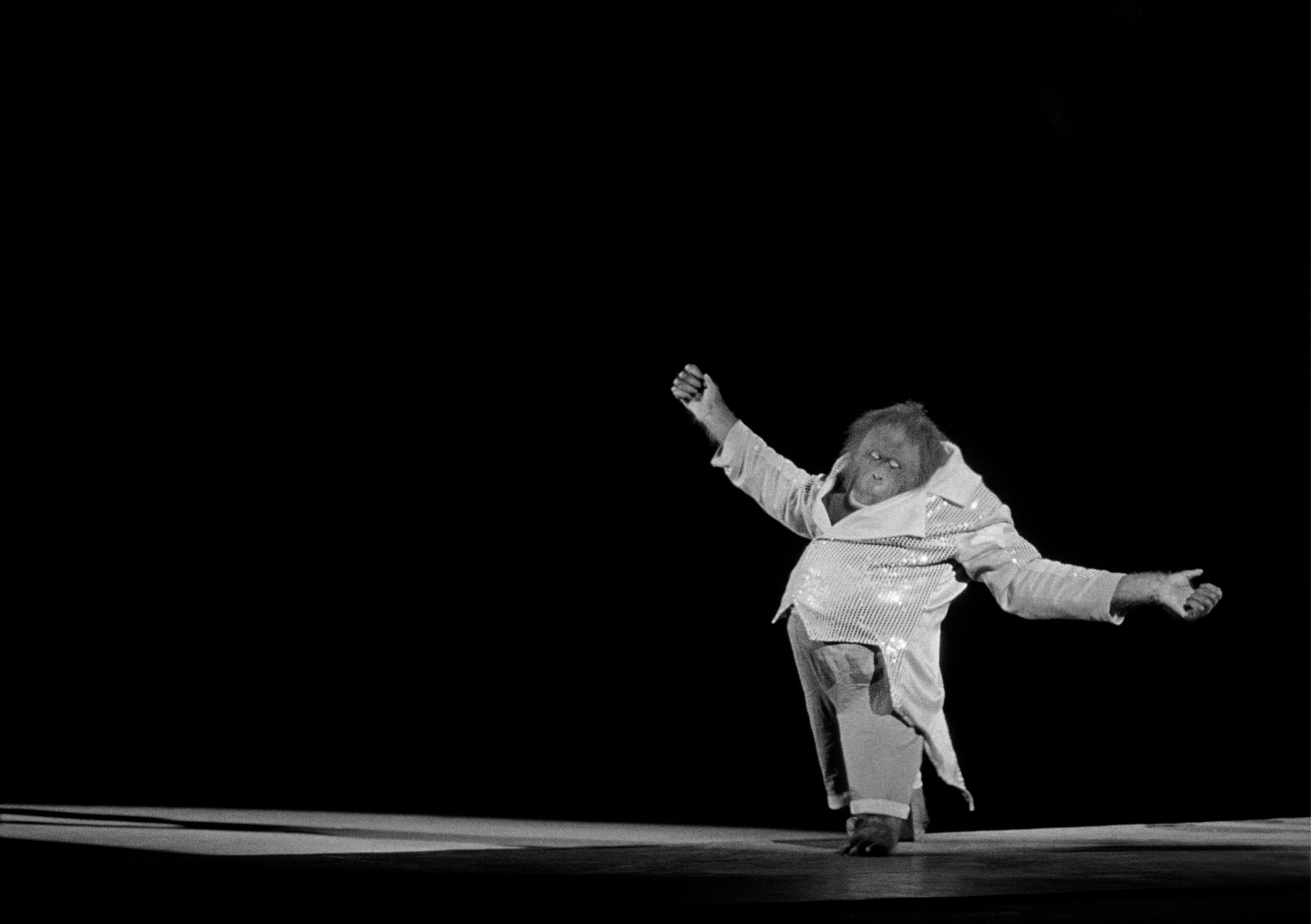
Jaschinski’s image of an orangutan performing at Chimelong International Circus in China was a 2016 finalist in the renowned Wildlife Photographer of the Year competition, hosted annually by the Natural History Museum in London, U.K. (Britta Jaschinski)
|
|
|
|
|
That moment underscored a shift in Britta’s career—from making images that sold products to making photographs that inspire change. Born in Germany and now based in London, her early work was in commercial photography, but she was becoming known for a stark, unflinching style of investigative photojournalism that exposes wildlife suffering and illegal trade. “I never felt superior to nature,” she says. “According to my parents, I used to scoop small insects out of my sandpit and carry them to safety when I was a young child, because I was worried I’d accidentally step on them. When I realized I was quite good in photography, I decided to use my camera as a tool to speak for the voiceless. It felt like an innate calling and the right thing to do.”
A year after she encountered Kathy, Britta’s first major wildlife project became the book ZOO, published by Phaidon Press. The 84-page hardcover features black-and-white portraits of captive animals: a furry hand gripping iron bars, sea lions suspended beneath the surface of a tank, a polar bear staring out from a barren enclosure—spare, unsentimental, troubling images. “I try to give dignity to these badly treated sentient beings,” Britta says.
She’s the co-founder of Photographers Against Wildlife Crime, an international collective of journalists and photographers who use reporting and visual evidence to expose wildlife trafficking and the criminal networks that sustain it. She is also the editor-in-chief of The Evidence Project. This photographer-led campaign is dedicated to documenting the impacts of climate change, the biodiversity crisis, and animal-borne disease outbreaks to inspire leaders in government and business, and everyday consumers, to make changes to preserve the planet and create a future in balance with nature.
|
|
|
|
|
Did a friend forward this newsletter to you?
|
|
|
|
|
|
|
|
|
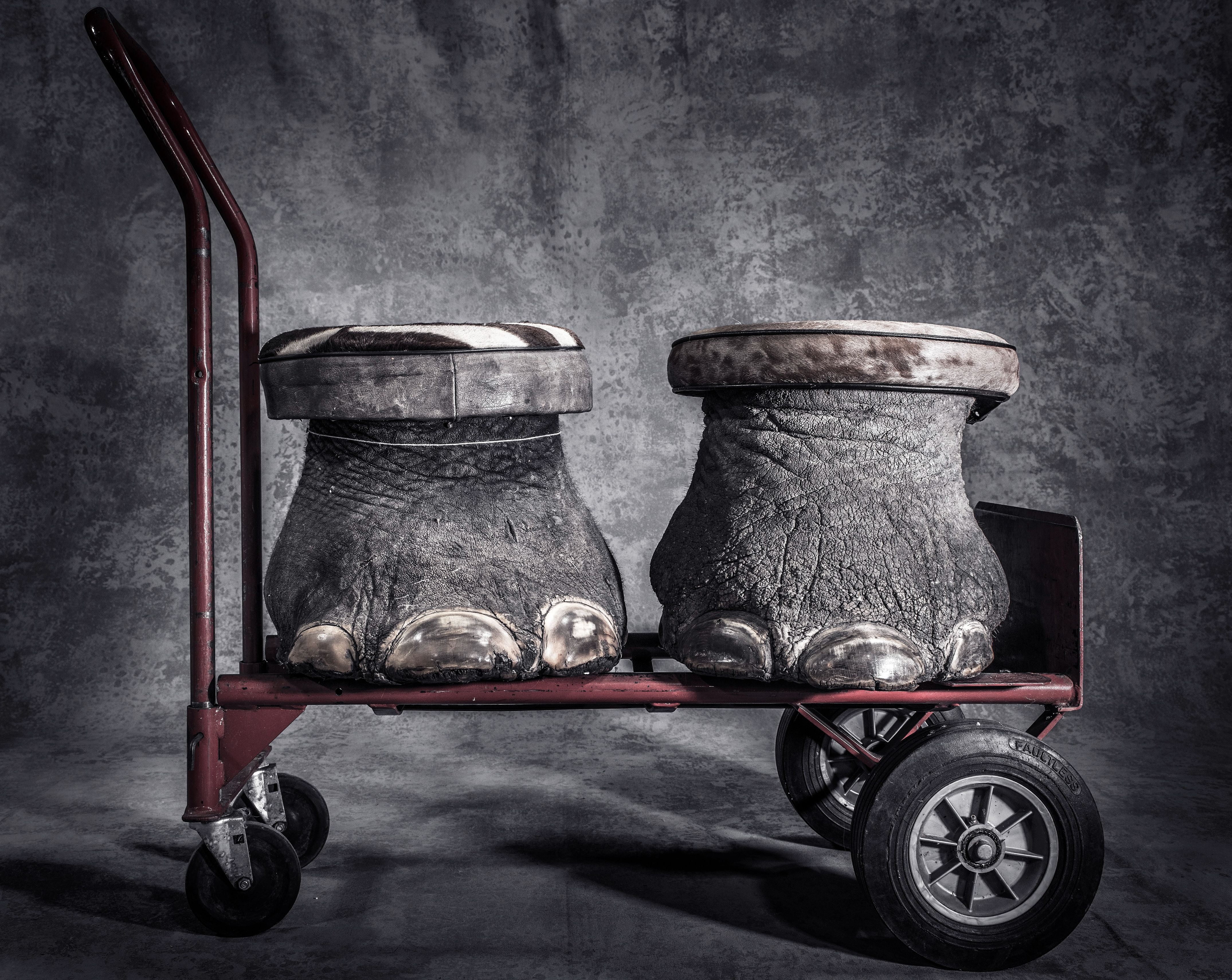
When Britta learned about the U.S. Fish and Wildlife Service’s vast National Wildlife Property Repository in Colorado, known as the "warehouse of horrors,” where confiscated ivory, skins, skulls, and taxidermied animals are cataloged and stored—she knew she wanted to go there. The facility is part evidence room, part graveyard: shelves lined with taxidermied tigers, drawers of claws and teeth, shopping carts and trollies used to move zebra mounts and elephant foot ottomans. An estimated 1.5 million seized items—tangible proof of a global illegal wildlife trade valued at billions annually.
|
|
|
|
|
Ottomans made from elephants’ feet are among the 1.5 million seized items stored in the U.S. Fish and Wildlife National Wildlife Property Repository, in Denver, Colorado. (Britta Jaschinski)
|
|
|
|
|
Training her lens on the tragic artifacts, Britta captured the essence of loss, waste, and greed that is wiping out species, from elephants and rhinos to birds, seahorses, and rare mollusks. The images—stark, clinical, stripped of sentimentality—have helped shift the conversation from poaching as a distant conservation issue to wildlife trafficking as transnational organized crime connecting poachers, middlemen, corrupt officials, and consumers. “The people who are involved in the illegal wildlife trade are the same people who are involved in child prostitution, money laundering, weapons, drug trading—it’s the same mafia,” Britta says. “They see where money can be made and they jump on it.”
|
|
|
|
|
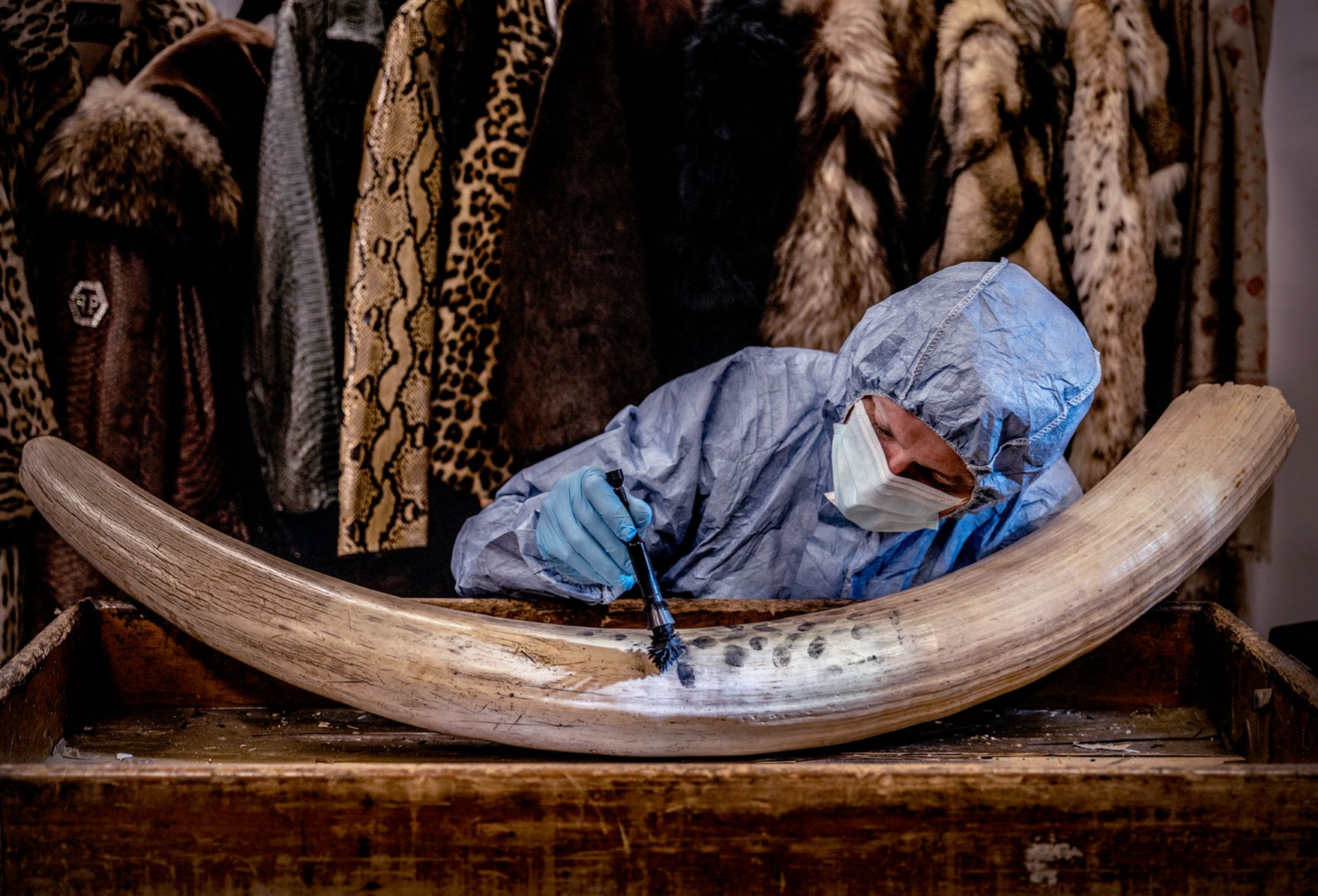
Using a special magnetic powder that he helped develop in 2015, London Metropolitan Police forensic investigator Mark Moseley reveals human fingerprints on an elephant tusk confiscated at Heathrow Airport. (Britta Jaschinski)
|
|
|
|
|
Britta’s work has not only been widely exhibited and published—in outlets from National Geographic to The Guardian—but also recognized with top honors in the international photography world. In 2024 she won the Wildlife Photographer of the Year award in the Photojournalism category for her image “Dusting for New Evidence” (above), showing an investigator at London’s Heathrow Airport using a newly developed magnetic powder to detect fingerprints on confiscated elephant tusks. This breakthrough technique can link trafficked ivory to specific handlers, strengthening prosecutions and helping dismantle criminal networks. It’s a “game changer,” Britta says.
She’s grateful that attention brought by photo awards and major news outlets—including her image of a human handprint illuminated by ultraviolet light on the shell of a green sea turtle that was featured on the cover of Time’s Top 100 photos of 2025—is helping draw attention to the stories behind her images. It’s rewarding, she says, that government leaders have used her photographs as proof of the urgent need to counter wildlife crime. Nearly three decades after watching Kathy circling in her tank, Britta is still trying to keep her promise—to use her camera as both witness and weapon, giving voice to animals who can’t speak for themselves.
|
|
|
|
|
We’re thrilled to share that WIRE is now featuring wildlife photography in this newsletter through a partnership with Wildscreen Exchange—a global digital library built to support conservation storytelling. With more than 25,000 images and clips from leading wildlife photographers and filmmakers, the platform gives nonprofits access to compelling visuals highlighting species, habitats, and urgent environmental issues. The result: visual storytelling that’s dynamic and engaging by photographers committed to protecting the natural world.
|
|
|
|
-
Whaling: Norway, one of only three countries that still allows commercial whale hunting, will allow up to 1,641 minke whales to be taken this year—235 more than last year. Conservationists criticized the decision, saying the hunt causes unnecessary suffering to intelligent animals, and that, with fewer than 500 killed last year, it appears to be more about the country defying international pressure than meeting Norwegians’ demand for whale meat.
-
Wildlife CSI: For the first time, DNA forensics has been used to convict lion poachers. When a lion’s tracking collar stopped working, authorities at Zimbabwe’s Hwange National Park traced its last location to a snare with lion fur—but no lion. Questioning people living nearby, investigators found two men with lion meat, claws, and teeth. DNA matched the missing lion, whose blood sample was already filed in a tracking database, giving prosecutors proof that the lion had been killed illegally.
-
It’s a record: For his role in smuggling hundreds of protected Australian reptiles out of the country, Neil Simpson, a Sydney man was sentenced to eight years in prison—the longest sentence ever given to an Australian wildlife smuggler.
|
|
|
|
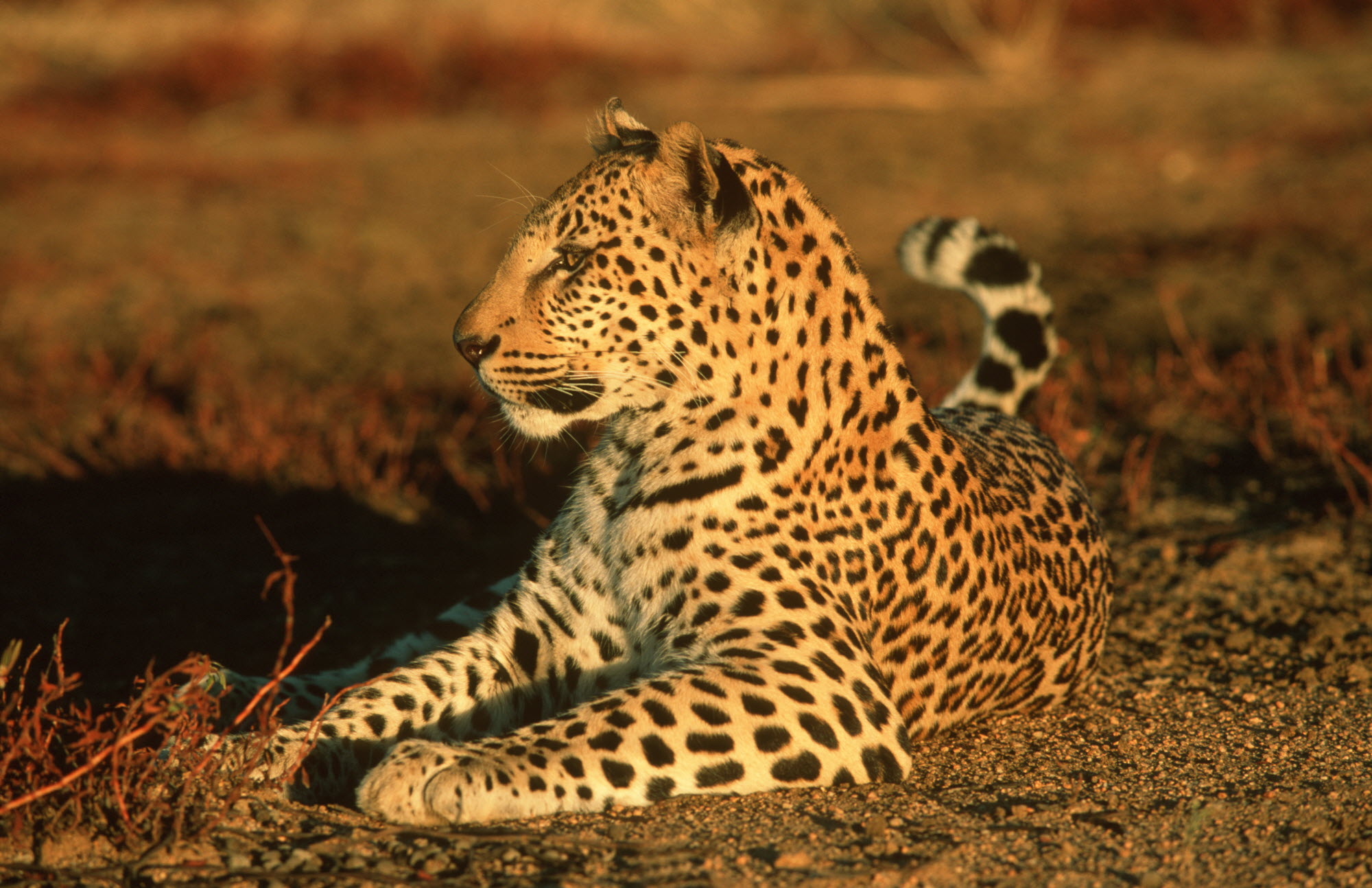
Species spotlight: Leopard
|
|
|
|
|
About 12,000 leopards and their parts were traded between 2020 and 2023, with bones often sold as substitutes for tiger parts for traditional medicine. (Martin Harvey, Wildscreen Exchange)
|
|
|
|
|
Found in forests, savannas, and deserts across sub-Saharan Africa and parts of the Middle East and Asia, the leopard is one of the world’s most famous—and elusive—predators. Powerful climbers and opportunistic hunters, these cats hoist prey into trees to avoid rivals. Yet despite their adaptability, leopards are in peril. Across much of their range, populations have declined more than 30 percent in roughly two decades as habitat is fragmented, natural prey disappears, and conflicts with people escalate when leopards attack livestock. Poached for their rosette-patterned skins, teeth, bones, and claws, leopards, after lions, are also the most heavily trafficked big cats for the pet trade—despite a global commercial trade ban under CITES, the international wildlife trade agreement. Conservation efforts include anti-poaching programs, stronger enforcement of wildlife trade laws, community-based initiatives that reduce killings by farmers, and long-term monitoring in protected areas such as South Africa’s Kruger National Park.
|
|
|
|
Strange, but true
There’s a lucrative black market for whale vomit. Yes, seriously. The substance, a waxy material that forms in sperm whales’ intestines, known as ambergris, is prized as a fixative ingredient in perfumes, helping scents last longer. A pound of this “floating gold” can fetch tens of thousands of dollars on the black market, but it’s a risky business. In the United States, ambergris is considered a protected byproduct of an endangered species, and anyone caught trafficking it faces steep fines—up to $100,000—and prison time.
|
|
|
|
Like this newsletter? Share it!
|
|
|
|
|
|
|
|
Support WIRE
WIRE runs on curiosity, persistence, and generous support from people who care deeply about what happens to wildlife when no one else is watching. Investigative reporting takes time, expertise, and financial resources, especially when stories cross borders and powerful interests. Our work is funded by readers like you who believe these stories matter. Monthly supporters give us the stability to report deeply, publish independently, and follow the consequences of our investigations. If that resonates, you can support our work here:
|
|
|
|
|
|
|
|
|
Wildlife Investigative Reporters & Editors
Independent, nonprofit journalism exposing wildlife crime and exploitation of nature.
Get in touch: [email protected]
|
|
You received this email because you signed up on our website or made a donation.
|
|
|
|
|
|